
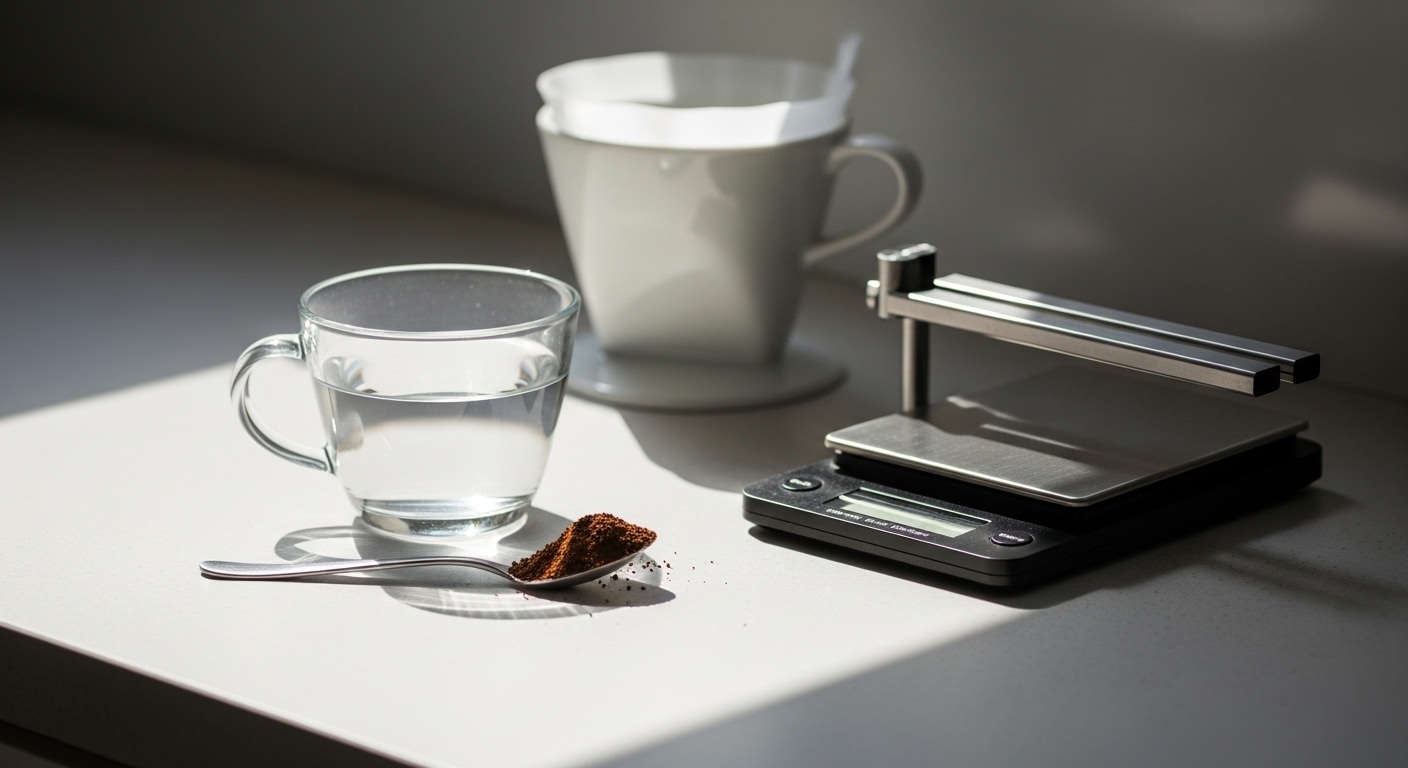
Quick Answer: Why does coffee taste weak?
Coffee usually tastes weak because of one or more of these problems: (1) the ratio is too diluted, (2) the grind is too coarse, (3) the water is not extracting enough flavor, (4) the brew time is too short, (5) the beans are stale, (6) the coffee is under-dosed for the method, or (7) the machine or brewer is simply not brewing efficiently. In plain English, weak coffee usually means the cup does not have enough dissolved flavor and structure to feel satisfying.
If your coffee tastes watery, hollow, or like it smells better than it tastes, this guide will help you figure out what is going wrong—and how to fix it without making the next cup harsh or bitter.
Why weak coffee is so disappointing
Weak coffee is one of the most frustrating coffee problems because it often smells promising at first. You grind the beans, the aroma seems good, the brew looks normal enough, and then the first sip lands flat. Instead of sweetness, body, and a satisfying finish, the cup feels thin, washed out, or strangely empty. It is not necessarily offensive. It is just disappointing.
That is what makes weak coffee different from obviously bad coffee. Bitter coffee tells you something went too far. Sour coffee tells you something did not extract enough. Weak coffee often sits in the middle as a kind of emotional letdown. The coffee is present, but not enough of it seems to have made it into the cup in a meaningful way.
The good news is that weak coffee is usually fixable. And in many cases, the cause is not complicated at all.
First: weak is not always the same as smooth
This distinction matters. Some people prefer a lighter, cleaner, easier-drinking coffee. That is fine. A coffee can be delicate without being weak. But weak coffee usually feels underpowered, hollow, or unfinished. It lacks the structure that makes even a gentle cup feel intentional.
So before fixing anything, ask a simple question: does the coffee feel light but still balanced, or does it feel diluted and disappointing? If it is the second one, you are dealing with a weakness problem, not just a preference for a softer style.
Reason #1: The ratio is too diluted
This is the most common cause of weak coffee. If you use too much water relative to the amount of coffee, the brew becomes diluted. Even decent extraction cannot fully save a cup that was stretched too far. The coffee may smell good, but the liquid does not carry enough strength or body to feel satisfying.
This happens constantly in home brewing because people eyeball the dose or use scoops instead of measuring. One day the scoop is heaped, the next day it is loose, and suddenly the cup changes. Or someone fills the kettle or reservoir a little more generously than usual, and the whole brew goes thin.
Fix: measure both coffee and water properly. Before changing grind, temperature, or anything more advanced, make sure the ratio itself is not the thing sabotaging you.
Reason #2: The grind is too coarse
When the coffee is ground too coarsely for the method, water passes through too easily or fails to extract enough from the coffee. The result is often a brew that tastes weak, watery, and incomplete. You may also notice that it finishes quickly and lacks sweetness.
This is especially common in pour-over and drip coffee. People fear bitterness, so they go too coarse. Then the brew drains too fast and under-extracts. The cup ends up weak, and people blame the beans when the real problem is that the water never had enough access to the coffee.
Fix: go a little finer and taste again. Small grind changes can make a surprisingly big difference in strength and structure.
Reason #3: Brew time is too short
If water does not spend enough time with the coffee, the cup often comes out weak. This can happen because the brew ran too fast, the steep was cut short, or the method was rushed. Coffee needs enough contact time to develop sweetness, body, and balance.
This problem shows up in a lot of ways. A V60 that drains too quickly often tastes weak. A French press that is plunged too early may feel thin. A drip machine that does a poor, fast brew can also create that same hollow result.
Fix: look at whether the brew is finishing suspiciously fast for the method. If it is, do not just think about strength. Think about extraction time too.
Reason #4: The beans are stale
Stale coffee often tastes weaker than people expect—not always because the liquid is physically weaker, but because the coffee has lost aroma, energy, and sweetness. When freshness fades, the cup often feels flatter and less alive. That makes it seem weak even if the recipe is technically okay.
This is especially common with old pre-ground coffee or beans that were stored badly after opening. The drink may still look normal, but the flavor impact is gone. What remains can feel papery, muted, or just emotionally empty.
Fix: check freshness honestly. If the coffee smells dull before brewing, the recipe may not be the main issue anymore.
Reason #5: Your water is hurting the coffee
Water problems do not always make coffee taste obviously “bad.” Sometimes they make coffee taste weak, flat, and less expressive than it should. If the water is poor for extraction or simply tastes dull on its own, the final cup can feel lifeless even when the beans are good.
This is one reason café coffee often tastes more satisfying than home coffee. The café may simply be using better water. At home, people blame beans, grind, and brewer while ignoring the ingredient that makes up most of the cup.
Fix: if your coffee often feels flat across multiple beans and brew methods, test a brew with better filtered or better-tasting water.
Reason #6: You are under-dosing for the brew method
This is close to ratio, but slightly different in practice. Sometimes the issue is not only “too much water.” Sometimes the coffee dose itself is simply too low for the method or the amount of beverage you are trying to make. The brewer may be working with too little coffee to build a satisfying cup.
For example, if the bed in a pour-over is too shallow, the brew may move through too quickly and feel weak in more than one way. In drip coffee, using an underwhelming dose can make the whole pot taste like colored water even if the machine is functioning normally.
Fix: if the brew consistently lacks body, slightly increase the coffee dose while keeping the rest of the process stable enough to judge the result clearly.
Reason #7: The machine or brewer is underperforming
Sometimes weak coffee is not your fault at all. Some drip machines brew too cool, too fast, or too unevenly. Some low-quality setups never extract well enough to make a satisfying cup consistently. If the machine cannot deliver proper extraction conditions, the coffee often comes out weak no matter how good the beans are.
This is especially common with basic drip brewers and low-effort office machines. The coffee is not merely casual. It is structurally disadvantaged. That is why people keep adding more coffee and still do not get what they want.
Fix: if your measured ratio, grind, and beans are all reasonable but the cup still tastes weak, the machine itself deserves suspicion.
How weak coffee shows up in different brew methods
Drip coffee
Weak drip coffee is often caused by under-dosing, poor water distribution, or machines that brew too cool or too fast. This is probably the most common version of weak coffee in everyday life.
Pour-over / V60
Weak pour-over usually comes from a coarse grind, a weak ratio, poor bloom, or a drawdown that finishes too quickly. V60 makes under-extraction very easy to notice because the cup can taste both thin and sharp at once.
French press
Weak French press usually means the dose is too low, the steep was too short, or the grind is too coarse. Since French press is associated with body, weak French press often feels especially disappointing.
Espresso
Weak espresso usually shows up as a shot that runs too fast, tastes thin, and lacks sweetness or body. In espresso, weak often points to under-extraction, wrong grind, or an unstable setup rather than just “not enough coffee flavor.”
The smartest order for fixing weak coffee
If your coffee is weak, use this order before doing anything dramatic:
- Check the ratio first.
- Then check whether the grind is too coarse.
- Then look at brew time and flow speed.
- Then consider water quality and freshness.
- Finally, question the machine or brewer if the basics already look reasonable.
This order works because it starts with the most common and easiest fixes. Most weak coffee problems are not mysterious. They are just ignored basics.
What not to do when trying to fix weak coffee
The biggest mistake people make is changing five things at once. They use more coffee, grind much finer, use hotter water, stir more aggressively, and extend brew time all in one shot. Then the next cup tastes bitter and messy, and now they do not know what actually caused what.
The other common mistake is trying to fix weak coffee only by adding more coffee forever. Sometimes that helps, but sometimes the real issue is under-extraction, stale beans, or bad water. If you only increase dose without understanding the cup, you may just create a stronger version of a flawed brew.
The smarter move is simple: identify whether the coffee is weak because it is diluted, under-extracted, stale, or poorly brewed—and then make one useful change at a time.
A simple weak-coffee checklist
If you want one short troubleshooting guide, use this:
- Watery and empty? Suspect ratio first.
- Weak and sour? Suspect coarse grind or short extraction.
- Weak but dull? Suspect stale beans or poor water.
- Weak no matter what? Suspect the machine or brewer.
That framework solves a lot of home coffee disappointment faster than most people expect.
Common mistakes people make
Mistake 1: Assuming weak coffee means bad beans
Sometimes it does, but much more often the issue is ratio, grind, brew time, or water.
Mistake 2: Adding more coffee without measuring anything
That can help temporarily, but without measurement you are still guessing at the real problem.
Mistake 3: Ignoring stale coffee
Old coffee often tastes weak because it has lost the aroma and energy that make a cup feel alive.
Mistake 4: Blaming the method when the basics are off
French press, V60, drip, and espresso can all make satisfying coffee—but none of them can rescue a badly diluted or badly extracted recipe automatically.
FAQ
Why does my coffee smell strong but taste weak?
Usually because the aroma survived, but the brew itself is too diluted, under-extracted, or stale enough that the flavor impact did not carry into the cup.
Should I always use more coffee to fix weak coffee?
No. Sometimes the problem is ratio, but sometimes the bigger issue is grind, brew time, stale beans, or poor water. More coffee is not always the smartest first move.
Can a bad drip machine make coffee taste weak no matter what I do?
Yes. If the machine brews too cool or too weakly, it can hold the coffee back even when your beans and ratio are reasonable.
Conclusion: weak coffee is usually a clue that one basic part of the brew is off
If your coffee tastes weak, watery, or hollow, the cause is usually not mysterious. It is often a diluted ratio, coarse grind, short brew time, stale beans, under-dosing, poor water, or an underperforming machine. Start with the ratio, then move to grind and extraction, then question freshness and water if needed. Fix the basics calmly, one at a time, and weak coffee usually becomes much easier to solve than people think.
