
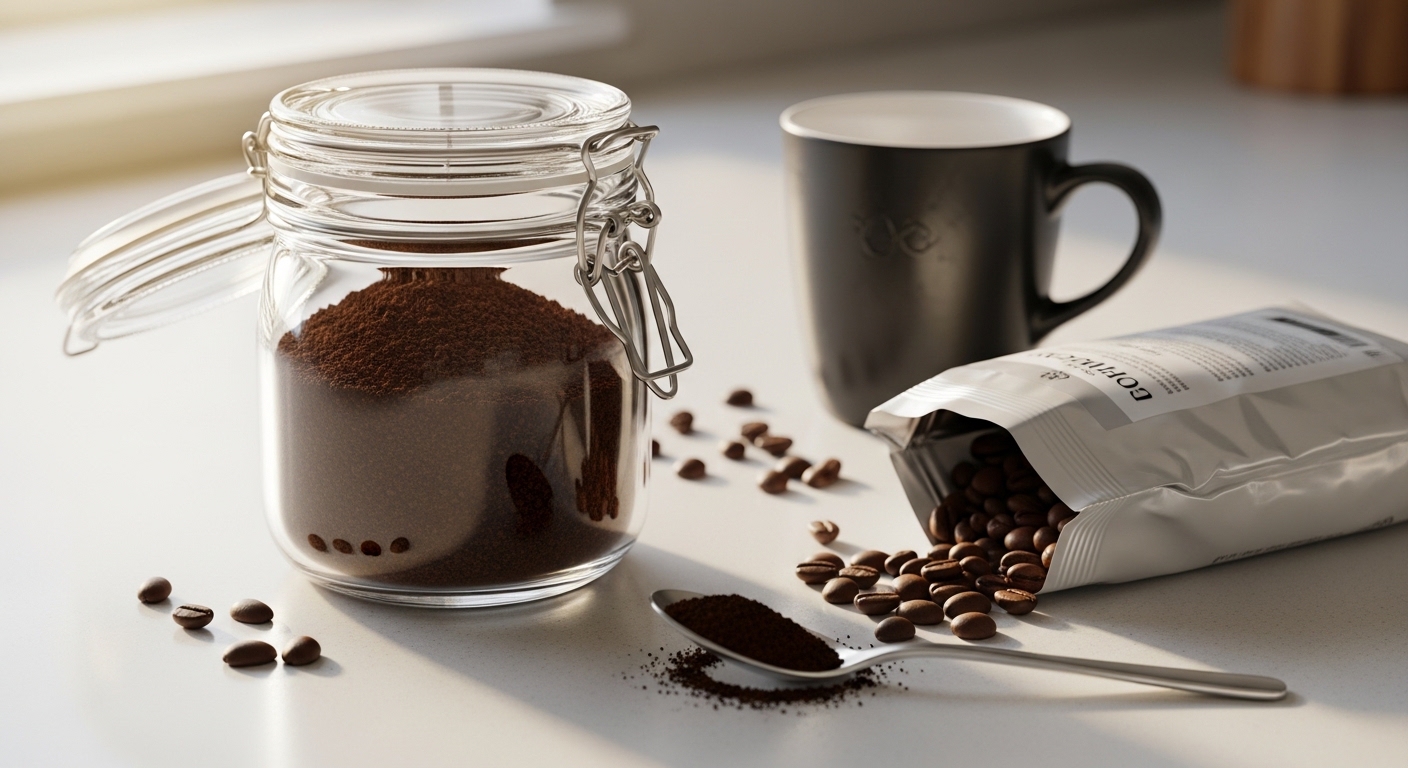
Quick Answer: What’s the best way to store ground coffee?
The best way to store ground coffee is to keep it sealed tightly, away from air, away from moisture, away from heat, and away from direct light. In practical terms, that usually means storing it in a well-closed container or bag in a cool, dry cupboard—not on an open counter, not near the stove, and not left loosely rolled shut for days. Ground coffee is much more fragile than whole bean coffee, so the goal is simple: slow down freshness loss as much as possible.
If you buy pre-ground coffee or grind your beans ahead of time, this guide will help you store it better, protect more flavor, and avoid turning good coffee into a dull, stale cup faster than necessary.
Why storing ground coffee properly matters so much
Ground coffee loses freshness much faster than whole bean coffee. That is the core reality behind everything else in this article. Once coffee is ground, much more surface area is exposed to the air. That means aromatic compounds escape faster, oxidation happens faster, and the coffee starts moving away from its best state much sooner.
This is why ground coffee can feel disappointing even when the beans were originally good. People often blame the brand, the roast, or the brewer, but the coffee may simply have lost too much of its life by the time it reached the cup. The smell becomes less vivid, the flavor gets flatter, and the sweetness becomes harder to notice. What remains is often just a weaker, duller version of what the coffee could have been.
That does not mean ground coffee is useless. It means storage matters much more than many people realize.
First: ground coffee is always in a race against time
This is the right mindset. If you store whole beans, you are protecting freshness. If you store ground coffee, you are slowing down freshness loss that is already moving faster. That does not make the effort pointless. It just means your storage strategy should be realistic. You are not freezing time forever. You are trying to preserve as much aroma and flavor as possible for as long as you can.
That is why lazy storage hurts ground coffee quickly. A badly closed bag in a warm kitchen is basically an invitation for freshness to leave. On the other hand, a tightly sealed container stored well can make a real difference and help the coffee stay much more enjoyable.
So the goal is not perfection. The goal is damage control done intelligently.
The 4 biggest enemies of ground coffee
If you want one simple framework, remember these four enemies:
- air
- heat
- light
- moisture
Almost every good storage decision is really about protecting ground coffee from those four things. If your setup reduces them, you are moving in the right direction. If your setup increases them, you are quietly making the coffee worse even before you brew it.
Enemy #1: Air
Air is one of the biggest reasons ground coffee fades so quickly. Oxygen speeds up the loss of freshness and helps aromatic compounds disappear faster. Since ground coffee already has so much surface area exposed, contact with air becomes a much bigger problem than it is for whole beans.
This is why leaving ground coffee loosely clipped, half-open, or badly folded shut is such a bad habit. Every time it stays exposed, more aroma and flavor slip away.
What to do: keep the coffee tightly sealed whenever you are not actively using it.
Enemy #2: Heat
Heat speeds up the staling process. A warm kitchen may feel normal to you, but to coffee it can mean faster decline. Storing ground coffee near the stove, oven, toaster, or any warm part of the kitchen quietly works against freshness all the time.
This is why “cute coffee station” setups sometimes hurt the actual coffee. They may look organized, but if they keep the grounds near heat sources, the coffee pays the price.
What to do: store ground coffee in a cool, stable place—not near appliances that generate heat.
Enemy #3: Light
Light is another freshness enemy, especially if the coffee sits in a clear container on a bright counter. A transparent jar may look attractive, but it usually helps the coffee age faster. If your goal is preserving flavor, appearance should not win over function.
Ground coffee does not need sunlight or display value. It needs protection. This is one of those situations where the boring storage choice is usually the smarter one.
What to do: keep the coffee in an opaque container or in a dark cupboard.
Enemy #4: Moisture
Moisture is bad for coffee storage because it damages the coffee and can introduce unpleasant changes long before brewing begins. Ground coffee is especially vulnerable because its exposed surface area makes it easier for the wrong environment to affect it.
This is why storing coffee in humid areas of the kitchen is not a great idea. The coffee may not look dramatically different right away, but the quality can still drift in the wrong direction.
What to do: keep the coffee in a dry place and avoid exposing it to humid air more than necessary.
What kind of container is best for ground coffee?
The best container is one that closes tightly, protects the coffee from light, and is practical enough that you will actually use it consistently. You do not need a magical vault from a coffee influencer’s kitchen. You need something functional.
A good storage option usually has these traits:
- it seals well
- it does not let in light easily
- it fits the amount of coffee reasonably well
- it is easy enough to use that you will not leave it open carelessly
If the original coffee bag seals tightly and blocks light well, that may already be good enough for many people. If it does not, transferring the grounds to a better-sealing container can make sense.
Should you keep ground coffee in the original bag?
Sometimes yes. Sometimes no. It depends on the bag. If the original bag seals tightly, blocks light, and still keeps the coffee reasonably protected, it may be perfectly fine to continue using it. But if the bag is flimsy, tears easily, or never really closes well after opening, that becomes a weak point.
The mistake is assuming the original packaging is always either perfect or terrible. Some bags are good enough. Some are not. What matters is whether the packaging is actually protecting the coffee from air and light after you open it.
If you keep using the original bag, close it seriously—not with lazy optimism.
Should you store ground coffee in the fridge?
For everyday use, this is usually not the smartest option. People often think the fridge sounds protective because it is cool, but refrigerators also bring moisture concerns and frequent temperature/environment changes. Ground coffee is already sensitive, and the fridge is not always the calm, dry, airtight sanctuary people imagine.
There is also a practical issue: if you are opening and closing the container regularly, you are repeatedly exposing the coffee to shifting conditions. For most everyday home drinkers, a cool, dark, dry cupboard with good sealing is usually the more practical and safer move.
So while the fridge sounds clever, it often creates more problems than it solves for daily ground coffee storage.
Should you freeze ground coffee?
Freezing is a more nuanced question, but for most casual daily use of ground coffee, it is not the easiest or most practical solution. The biggest problem is not the existence of the freezer itself. It is the way people use it. If the coffee keeps going in and out, getting opened repeatedly, or facing moisture and condensation issues, the supposed “protection” can turn messy fast.
For most people, the better answer is simpler: buy more manageable quantities and store them well at room temperature in a protected environment. That solves the real-life freshness problem more smoothly than playing storage games with a half-used bag every morning.
If your routine is simple and frequent, good cupboard storage usually beats complicated freezer habits done badly.
Why buying smaller amounts usually helps more than fancy storage
This is one of the most underrated truths in coffee. The more ground coffee you buy at once, the harder it becomes to keep it tasting lively for the full life of the bag. Good storage can help, but no storage trick completely cancels out time.
That is why buying manageable amounts is often smarter than buying huge amounts and then trying to “outsmart” staling. If you finish the coffee while it still smells and tastes good, you win. If you spend half the bag drinking increasingly dull coffee because it was cheaper in bulk, you probably did not save as much value as you think.
Storage matters, but realistic buying matters too.
How to tell when stored ground coffee is fading
Ground coffee usually gives you clues before it becomes completely unpleasant. Common signs include:
- the smell becomes weaker or flatter
- the brew tastes less sweet
- the cup feels dull or lifeless
- the finish becomes more papery or tired
- the coffee feels less expressive overall
This is why your nose matters. If the coffee used to smell vivid and now barely says anything when you open it, that is useful information. The cup often follows the same decline.
The smartest daily routine for storing ground coffee
If you want a practical routine that works for most people, use this:
- Keep the coffee tightly sealed.
- Store it in a cool, dry, dark cupboard.
- Do not leave it open while you do other kitchen tasks.
- Use a reasonable amount of coffee that you can finish while it still tastes alive.
- If the original packaging is weak, move it to a better-sealing container.
This routine is not glamorous, but it works. And coffee usually rewards boring good habits more than dramatic tricks.
What not to do
If you want your ground coffee to stay better longer, stop doing these things:
- leaving the bag loosely open
- storing it near heat sources
- keeping it in a clear jar on a sunny counter
- buying huge amounts you cannot use while still fresh
- assuming the fridge automatically solves freshness
Most stale-coffee disappointment comes from habits like these, not from one magical storage failure.
Common mistakes people make
Mistake 1: Treating ground coffee like whole beans
Ground coffee is much more fragile. It needs tighter storage discipline because it loses freshness faster.
Mistake 2: Prioritizing pretty containers over protective ones
A stylish clear jar on the counter may look nice, but it often works against freshness.
Mistake 3: Buying too much at once
Even good storage cannot fully rescue coffee that stays around too long after grinding.
Mistake 4: Leaving the bag open while brewing
Small repeated exposure adds up, especially with ground coffee.
FAQ
Can ground coffee still taste good if stored properly?
Yes, absolutely. Good storage helps preserve much more flavor than careless storage, even if ground coffee still fades faster than whole beans.
Is the original coffee bag good enough?
Sometimes yes, if it seals well and protects from light. If it closes badly or feels flimsy, a better container may help.
What is the biggest enemy of ground coffee?
Air is one of the biggest enemies because oxidation and aroma loss accelerate fast once the coffee is ground.
Conclusion: storing ground coffee well is mostly about slowing down the obvious enemies
The best way to store ground coffee is to keep it tightly sealed and protected from air, heat, light, and moisture. Ground coffee will always be more fragile than whole bean coffee, but smart storage still makes a real difference. If you keep it cool, dry, dark, and well closed—and avoid buying more than you can reasonably enjoy while it still tastes lively—you give the coffee a much better chance of staying satisfying instead of fading into a dull, disappointing cup.

Passionate about coffee and brewing, our author shares simple, practical tips to help coffee lovers improve their skills. From home brews to barista basics, each post is crafted to make your coffee journey easier and more enjoyable.