
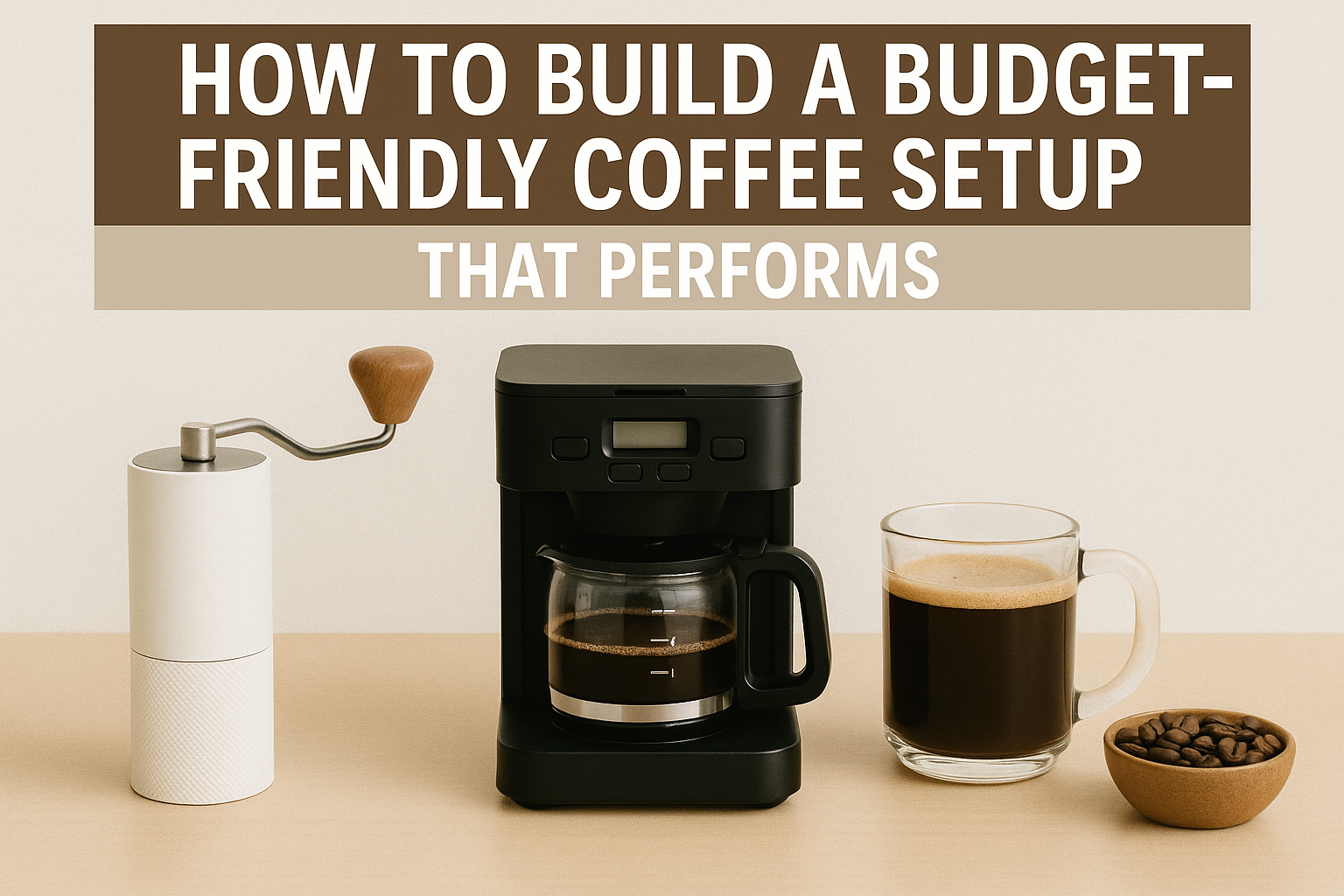
You don’t need to break the bank to enjoy amazing coffee at home. With the right strategy, you can build a complete coffee setup that delivers quality and consistency—without spending a fortune.
Whether you’re a beginner or just looking to upgrade your gear, this guide will walk you through how to choose essential tools, where to save, and where it pays to invest a little more.
Why a Budget Setup Is Worth It
A common myth in the coffee world is that good equipment must be expensive. While high-end gear can offer luxury and precision, you can still make excellent coffee using budget-friendly tools—if you know what to look for.
A smart budget setup allows you to:
- Brew better coffee than most cafes
- Learn essential brewing skills
- Discover your preferences before investing more
- Avoid spending on unnecessary features
Let’s look at how to make every dollar count when building your setup.
Step 1: Choose the Right Brewing Method
Your first decision should be the brewing method. Each one requires different tools and skills. Some are better suited for beginners, while others offer more control.
Most Affordable Options:
- French Press: Inexpensive, durable, and easy to use. Ideal for full-bodied coffee lovers.
- Pour-Over (e.g., Hario V60 or Kalita Wave): Great for clean, bright flavors. Requires a bit more technique.
- AeroPress: Portable, affordable, and extremely versatile.
- Moka Pot: Delivers a strong, espresso-like brew. Ideal for those who like bold coffee.
All of these methods can be found for under $50 and are excellent starting points.
Step 2: Invest in a Quality Grinder
If there’s one area where you shouldn’t cut corners, it’s the grinder. Your grind size affects everything: flavor, extraction, and consistency.
Best Budget-Friendly Grinders:
- Manual Grinders: Affordable and compact. Good models include the Timemore C2 or the Hario Skerton Pro.
- Entry-Level Electric Grinders: Look for burr grinders (not blade grinders). The Baratza Encore is a solid option under $200 and often available refurbished.
Manual grinders offer great value but require more effort. If you’re making just one or two cups a day, they’re perfect.
Step 3: Use a Digital Scale
A digital scale is crucial for brewing consistency. Measuring by eye or volume leads to variation in every cup.
Luckily, digital scales are cheap. You can find reliable models for under $20. Look for one with 0.1g accuracy and a tare function.
Step 4: Water Quality and Temperature
Coffee is mostly water, so the quality of your water matters. Use filtered or bottled water if your tap water tastes bad or has high mineral content.
You don’t need an expensive kettle to control temperature. Many affordable kettles now come with temperature presets. If not, just let boiling water sit for 30 seconds before pouring—it’ll be close to the ideal 90–96°C (195–205°F) range.
Step 5: Choose the Right Coffee Beans
Even the best gear can’t fix bad beans. Always buy freshly roasted whole beans from a local roaster or reputable online seller.
Look for:
- Roast date (not just “best before”)
- Roast level that matches your brew method
- Smaller bags if you don’t drink a lot—freshness matters
You can often find excellent beans for $15–$20 per bag, and each bag makes many cups.
Step 6: Accessories That Make a Difference
You don’t need a drawer full of tools, but a few inexpensive accessories can really improve your experience.
- Gooseneck Kettle: Essential for pour-over. Even budget versions provide better control.
- Coffee Storage Container: Airtight containers keep beans fresh longer.
- Timer: Most digital scales have one built in, but even your phone works.
- Reusable Filters: Save money in the long term and reduce waste.
These extras usually cost less than $30 each and last for years.
Sample Budget Setup for Under $150
Here’s what a full beginner setup might look like on a tight budget:
- AeroPress: $40
- Timemore C2 Manual Grinder: $60
- Digital Scale: $15
- Kettle: $25
- Coffee Beans (250g): $10
Total: $150
With this setup, you can make excellent coffee at home and upgrade over time as your skills grow.
Where You Can Save (And Where You Shouldn’t)
It’s tempting to go ultra-cheap, but some corners aren’t worth cutting. Here’s a quick breakdown:
Save on:
- Brewing method (manual devices are cheap and reliable)
- Kettles (unless you need precision pouring)
- Filters (paper is cheap; reusable is cheaper long term)
- Accessories (start basic and upgrade later)
Don’t skimp on:
- Grinder (a bad grinder ruins good beans)
- Coffee beans (quality makes all the difference)
- Scale (precision matters)
How to Upgrade Over Time
As you gain experience, you’ll naturally want more control or efficiency. That’s when you can gradually improve your setup.
Example Upgrade Path:
- Start with a manual grinder → Move to an entry-level electric grinder
- Begin with a French press → Add a pour-over or AeroPress
- Add a precision kettle for better pour-over control
- Try single-origin beans from different regions
The beauty of starting small is that you’ll appreciate the improvements more—and make informed choices.
Mistakes to Avoid When Building a Budget Setup
Many beginners waste money by buying the wrong tools. Here are common traps to avoid:
- Buying blade grinders: They chop, not grind. Result: uneven coffee and bad flavor.
- Using pre-ground coffee: Loses freshness quickly and limits control.
- Ignoring ratios: Brewing without measuring leads to weak or bitter cups.
- Overspending on non-essentials: Focus on performance, not aesthetics.
Daily Routine Tips for Better Coffee
Even with a simple setup, good habits make a big difference:
- Store beans in a cool, dark place
- Grind only what you need
- Clean your tools after each use
- Use the same ratio every time and tweak gradually
- Keep track of what works (a coffee journal helps)
These small steps build consistency—and consistently great coffee.
Final Thoughts
Building a budget-friendly coffee setup isn’t about sacrificing quality. It’s about making smart choices and understanding what really impacts your brew.
Start with the essentials. Focus on what matters. And remember: the best coffee gear is the one you use often and understand well.
You don’t need to spend big to drink better. You just need the right tools—and the passion to learn.

Passionate about coffee and brewing, our author shares simple, practical tips to help coffee lovers improve their skills. From home brews to barista basics, each post is crafted to make your coffee journey easier and more enjoyable.