
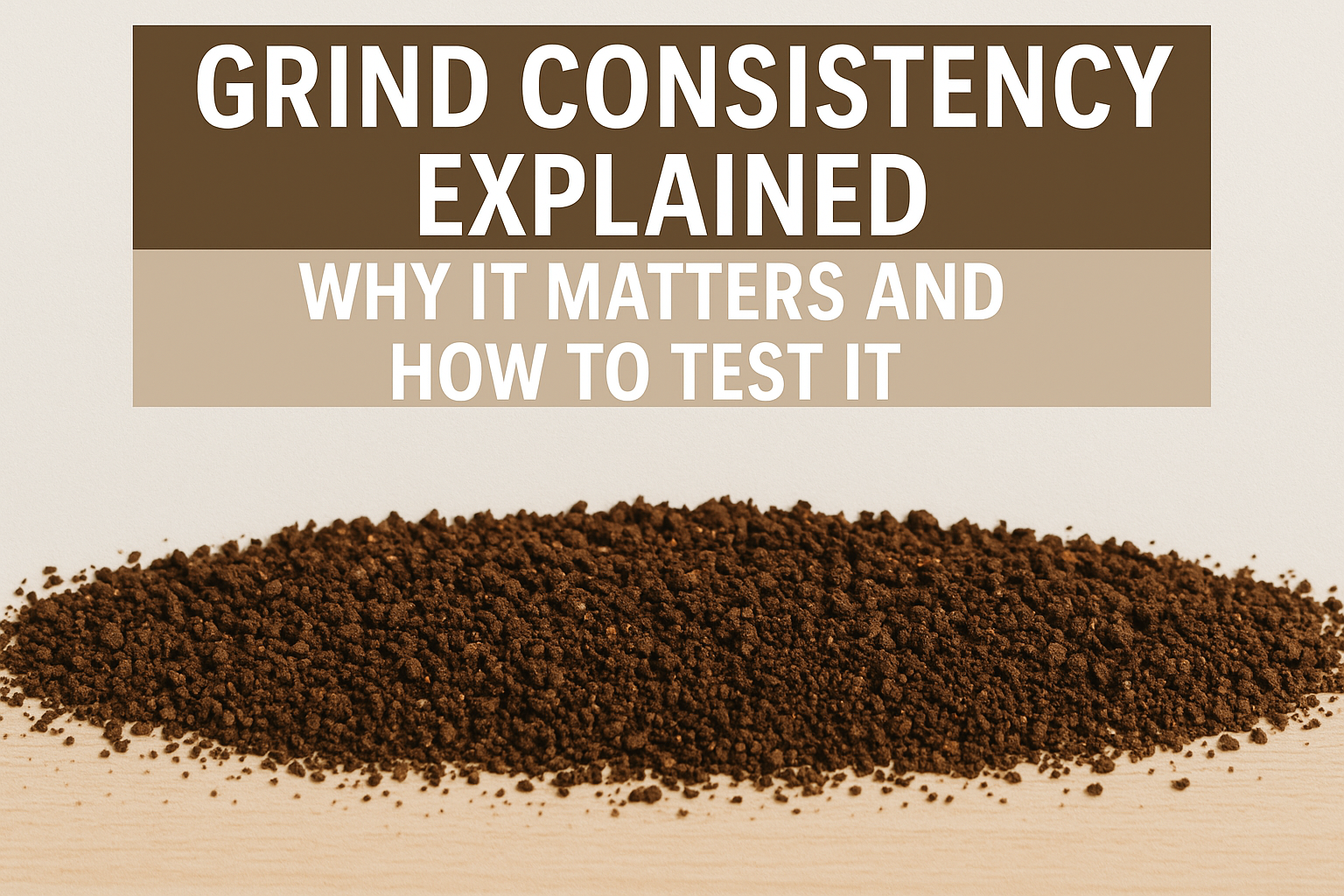
In the world of coffee brewing, grind size is one of the most important variables. But just as important—yet often overlooked—is grind consistency.
You can buy the best beans and have the perfect brew ratio, but if your grind is uneven, your coffee will suffer.
In this article, we’ll explain what grind consistency is, why it matters so much, how it affects your coffee, and how you can test and improve it at home—regardless of your budget or experience.
What Is Grind Consistency?
Grind consistency refers to how uniform the coffee grounds are after grinding. A consistent grind means the coffee particles are all about the same size. An inconsistent grind includes a mix of fine powder (fines) and large chunks (boulders).
This variation affects how water flows through your coffee and how evenly the coffee extracts during brewing.
Why Grind Consistency Matters
When you brew coffee, your goal is to extract the right amount of soluble compounds from the grounds. If some particles are too small, they will over-extract, making the coffee bitter. If some are too large, they will under-extract, leading to sour or weak flavors.
With inconsistent grind sizes, you get both problems in one cup: bitterness and sourness fighting each other. The result? A confusing, unbalanced, and often unpleasant brew.
Key Impacts of Inconsistent Grinding
- Uneven extraction
- Bitterness or sourness in the same cup
- Clogged filters (especially in pour-over or espresso)
- Unpredictable results, even with the same recipe
Whether you’re using a French press, AeroPress, pour-over, or espresso machine, grind consistency is a foundational element of brewing great coffee.
What Causes Inconsistent Grinding?
Most inconsistencies come from the grinder itself. Blade grinders, in particular, are notorious for uneven results. They chop rather than grind, leading to random particle sizes.
Even some burr grinders—especially low-cost electric models—may have alignment issues or dull burrs that reduce consistency.
Other factors include:
- Poor grinder maintenance
- Worn or misaligned burrs
- Incorrect grind settings
- Grinding too fast or too slow (for some manual grinders)
Understanding the source of inconsistency is the first step to fixing it.
Blade vs. Burr Grinders
Let’s quickly compare the two types of grinders to understand their effect on grind consistency.
Blade Grinders
These use spinning blades, like a blender, to chop coffee beans.
- Pros: Cheap, easy to find
- Cons: Extremely inconsistent grind, no size control, not recommended for quality brewing
Burr Grinders
These use two burrs (either flat or conical) to crush the beans to a uniform size.
- Pros: Consistent grind, adjustable settings, essential for serious brewing
- Cons: More expensive, some cheap models may still have issues
If you’re serious about coffee, a burr grinder is non-negotiable.
How to Test Grind Consistency at Home
Even without lab equipment, you can check your grind consistency using a few simple methods.
1. Visual Inspection
Spread a small amount of ground coffee on a white sheet of paper or plate. Look closely at the particle sizes.
- Are they all similar?
- Do you see powdery bits and big chunks?
- The more uniform the particles, the better.
Do this test with different settings and after cleaning your grinder.
2. Sift Test
Use kitchen sieves or specialized coffee sieves (like the Kruve Sifter) to separate the particles by size.
- Weigh or observe how much ends up in each layer
- A large mix across the sieve levels shows inconsistency
- Uniform grounds will cluster in just one or two layers
This method gives you a clearer picture of how consistent your grind is.
3. Brew Taste Test
Brew the same coffee recipe multiple times, changing only the grind consistency by switching grinders or adjusting settings.
- If your coffee is sour and bitter at the same time, grind inconsistency is likely the cause
- If each brew tastes wildly different using the same process, the grinder may be the variable
Let your taste guide you—consistency in flavor usually reflects consistency in grind.
How to Improve Grind Consistency
Once you’ve identified issues with your grind, here’s how to fix them.
1. Upgrade Your Grinder
If you’re using a blade grinder, switch to a burr grinder. Even budget manual burr grinders offer much better consistency.
Some great entry-level options include:
- Timemore C2 or Chestnut C3 (manual)
- 1Zpresso JX-Pro (manual, mid-range)
- Baratza Encore (electric)
- Fellow Opus (modern and versatile)
2. Maintain Your Grinder
Regular cleaning is essential. Coffee oils and tiny particles can build up over time, affecting burr movement and consistency.
Clean your grinder at least once a week if you use it daily. Remove old grounds, wipe out residue, and brush off burrs.
3. Replace or Align Burrs
With time, burrs can become dull, especially in cheaper grinders. Some grinders also suffer from misaligned burrs, which reduce consistency.
Check if your grinder allows for burr replacement or alignment. Some models have community tutorials for improving alignment yourself.
4. Grind Slower (for Manual Grinders)
If you’re grinding too fast, especially with manual grinders, you might be forcing uneven burr contact. Slowing down often improves grind quality and reduces fines.
5. Use a Sifter (Optional)
If you want even more control, you can use a sifter like the Kruve to remove fines and boulders before brewing. This helps produce a more consistent cup, though it adds time and cost to your workflow.
How Much Consistency Do You Need?
Not every coffee drinker needs lab-level precision. The ideal level of grind consistency depends on your brewing method and taste expectations.
- Espresso: Requires the most consistent grind. Even small variations affect pressure and flavor.
- Pour-Over: Medium level of consistency is enough for balanced flavor.
- French Press: Less sensitive, but too many fines will muddy the brew.
- AeroPress: Forgiving, but grind still affects clarity and body.
Aim for the best consistency you can afford and control. Even small improvements will be noticeable in your cup.
Signs You’ve Achieved Good Consistency
- Your coffee tastes cleaner and more balanced
- You get similar results every time you brew
- Your brews require less adjustment and troubleshooting
- Less sludge or mud in the bottom of the cup
- More clarity in flavor and aroma
Consistency builds trust in your routine. It turns guesswork into precision and improves your confidence as a home brewer.
Final Thoughts
Grind consistency might not be the flashiest topic in coffee, but it’s one of the most impactful. Small particles brew fast, large ones brew slow—and when both are in the same cup, you get a mess of flavors.
By understanding what grind consistency is and learning how to test and improve it, you’re taking a huge step toward better coffee. It’s not just about tools—it’s about control, quality, and awareness.
Start by observing, then improve step by step. Your taste buds will thank you.

Passionate about coffee and brewing, our author shares simple, practical tips to help coffee lovers improve their skills. From home brews to barista basics, each post is crafted to make your coffee journey easier and more enjoyable.