
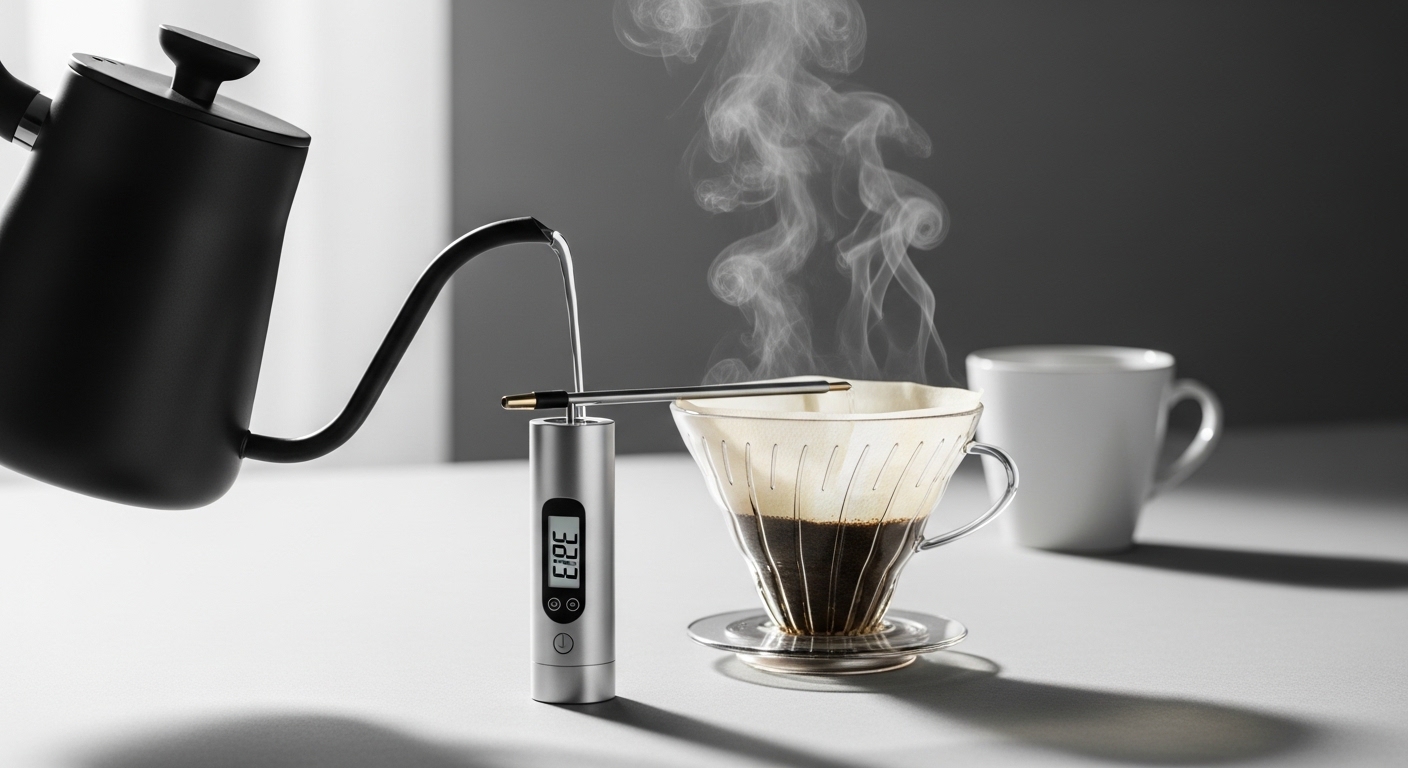
Quick Answer: What’s the ideal water temperature for coffee?
For most home brewing methods, the ideal coffee water temperature is generally in the range of hot, but not aggressively boiling. In practical terms, that usually means water that extracts the coffee fully without scorching the cup into harsh bitterness. If your coffee tastes sour and weak, your water may be too cool. If it tastes harsh, bitter, or burnt, your water may be too hot for that specific coffee or roast style. The smartest approach is to treat temperature as a flavor control, not as a rigid rule.
In simple terms: hotter water usually extracts more, cooler water extracts less. That’s why temperature can either rescue a flat cup or ruin a delicate one.
Why water temperature matters so much
Water temperature changes how efficiently the water pulls flavor from coffee grounds. Coffee contains acids, sugars, aromatic compounds, and bitter compounds. Hotter water generally extracts more of all of them, faster. Cooler water extracts less, more slowly. That one fact affects everything else in the cup.
This is why water temperature is one of the most useful brewing levers you have. If your coffee feels sharp and unfinished, raising temperature can help unlock sweetness and body. If your coffee feels too aggressive or bitter, lowering temperature slightly can soften it. A few degrees can change the balance more than many beginners expect.
The key is not memorizing a magic number. The key is understanding what hotter and cooler water do so you can adjust on purpose.
The big misunderstanding: boiling water is not always “bad”
A lot of people hear “don’t burn the coffee” and assume boiling water automatically ruins everything. That is too simplistic. In many brewing situations, very hot water works perfectly well—especially for lighter roasts that are harder to extract. The real issue is not “boiling water is evil.” The real issue is that different coffees respond differently, and brew method matters too.
For example, a dense light roast in a pour-over may become sweeter and more complete with very hot water. A dark roast in a French press may become too harsh if treated the same way. So instead of using temperature like a superstition, use it like a tool.
A practical way to think about temperature
If you do not want complicated chemistry, use this mental model:
- Hotter water = more extraction, more intensity, more ability to pull sweetness from dense coffee, but also more risk of bitterness if the coffee extracts too far
- Cooler water = gentler extraction, smoother results in some darker coffees, but also more risk of sourness or thinness if the coffee does not extract enough
That’s the entire game in plain English. Once you understand that, temperature becomes much easier to adjust intelligently.
When hotter water usually helps
Hotter water is often useful when you are dealing with coffee that tastes under-extracted. Common signs include:
- sourness
- thin body
- weak sweetness
- a cup that tastes “unfinished”
This is especially common with light roasts, because light roasts are denser and generally harder to extract. If your light roast tastes too sharp or hollow, hotter water is often one of the fastest ways to improve it—along with grinding a little finer.
Pour-over brewers like the V60 often benefit from hotter water when working with bright, light coffees. The extra extraction can bring sweetness and structure into the cup, making the acidity feel pleasant instead of sour.
When cooler water usually helps
Cooler water can help when your coffee tastes too aggressive, too bitter, or too roast-heavy. This often happens with darker roasts, which extract more easily. If you hit a dark roast with very hot water and a fine grind, you can quickly get a cup that feels harsh, smoky, and unpleasantly strong.
Lowering the water temperature slightly can calm that down. You’re not “making weak coffee.” You’re reducing the tendency to over-extract the harsher compounds. This is why people who prefer darker, smoother, lower-brightness coffee sometimes get better results with slightly cooler brewing water.
Cooler water can also help if your brew method already creates plenty of extraction, such as immersion brewing with dark roast. In those situations, softer temperature can create a rounder, more forgiving cup.
How roast level changes the best temperature
Roast level is one of the most practical ways to choose your water temperature approach.
Light roast
Light roast coffee usually benefits from hotter water because the beans are denser and more resistant to extraction. If the water is too cool, light roast can taste sour, grassy, or oddly empty.
If you are brewing light roast and the cup feels thin or sharp, hotter water is one of the first adjustments worth trying.
Medium roast
Medium roast is the most flexible. It often tastes good across a fairly wide temperature range, which is one reason medium roast is so beginner-friendly. Small temperature tweaks still matter, but medium roast usually gives you more forgiveness than light or dark.
Dark roast
Dark roast often benefits from slightly cooler water because it extracts easily and can become harsh fast. If dark roast tastes burnt, bitter, or rough, lowering the water temperature a bit can make a noticeable difference.
This does not mean dark roast always needs cool water. It means dark roast punishes overly aggressive brewing more quickly.
How brew method changes the temperature decision
Pour-over / V60
Pour-over often responds clearly to temperature changes because it emphasizes clarity and structure. If your V60 tastes sour, hotter water can help. If it tastes rough and overly bitter, slightly cooler water may calm it down—especially with darker roasts.
Because V60 is already sensitive to grind, pour speed, and total brew time, it is best to change temperature calmly and in small steps rather than swinging wildly.
French press
French press is more forgiving because it is an immersion method. Still, temperature matters. Hotter water can help bring life to a dense, lighter coffee. Slightly cooler water can help keep darker coffee from becoming too aggressive. Since French press already creates body and contact time, temperature adjustments can work very nicely here without needing perfect precision.
Automatic drip
With drip machines, you often have less control over exact temperature. That is one reason grind size and ratio become especially important. If your machine runs cooler than ideal, the coffee can taste under-extracted. If your machine is consistent but your cup still tastes off, you may need to adapt the grind or bean choice rather than obsessing over a temperature you cannot control directly.
Cold brew
Cold brew is the extreme example of “cooler water extracts less aggressively.” It uses time instead of heat to create extraction. That is why it often tastes smoother and less bright, but also less aromatic than hot coffee. Cold brew proves the basic rule clearly: lower temperature changes extraction in a major way.
Signs your water is too hot
These clues often suggest your brewing water may be too hot for that coffee and setup:
- coffee tastes harsh, bitter, or drying
- dark roast tastes extra smoky or burnt
- the cup feels aggressive rather than sweet
- small brewing errors seem amplified badly
If this happens, especially with darker roasts, lowering temperature a bit can be a smart next step.
Signs your water is too cool
These clues often suggest the water is not hot enough:
- coffee tastes sour, weak, or hollow
- sweetness is missing
- light roast feels grassy or unfinished
- the cup seems “flat” even though the aroma was promising
In those cases, hotter water often helps more than people expect.
Do you need a thermometer?
Not necessarily. A thermometer can be useful if you like precision, but many home brewers make excellent coffee without one. A practical approach is to use a consistent heating routine. For example, if you boil water and then wait a short, similar amount of time before brewing, you create a repeatable habit even without exact temperature numbers.
That said, if you are troubleshooting coffee seriously, a thermometer can shorten the learning curve because it helps you know whether temperature is actually changing the result or whether another variable is the real issue.
The best beginner approach to temperature
If you want a simple starting system, use this:
- Light roast: use hotter water
- Medium roast: use normally hot brewing water and adjust only if the cup seems clearly off
- Dark roast: try slightly cooler water if bitterness or burnt notes are a problem
This is not perfect science for every coffee, but it is practical and works very well for home brewing decisions.
Temperature vs grind size: which should you change first?
In many cases, grind size is the more powerful first adjustment because it directly changes extraction speed and is easy to taste. Temperature is extremely useful, but if your grind is wildly wrong, temperature tweaks may not fix the underlying problem.
A smart order looks like this:
- Make sure your ratio is sensible.
- Adjust grind size if the cup is clearly sour or bitter.
- Use temperature as a refinement tool once the basics are close.
This is especially helpful because beginners often try to solve everything with temperature when the real issue is grind consistency.
When cooler water actually tastes better
This matters because many guides treat hotter water like an automatic upgrade. It is not. Cooler water can absolutely taste better when:
- the coffee is dark-roasted and already extraction-prone
- the cup tastes bitter or burnt at higher heat
- you want a smoother, softer profile instead of maximum intensity
- your brewing method already extracts heavily
In those cases, reducing temperature slightly can create a more balanced and enjoyable cup. This is a perfect example of why “ideal temperature” is not one fixed answer for every coffee on earth.
Common temperature mistakes people make
Mistake 1: treating boiling water as always wrong
For some coffees, especially lighter roasts, very hot water works beautifully. Fear-based brewing often leads to under-extraction.
Mistake 2: brewing dark roast too aggressively
Dark roast extracts quickly, so high heat plus fine grind can push it into bitterness fast.
Mistake 3: changing temperature and grind together
If you change both at once, you make troubleshooting harder. Adjust calmly, one variable at a time when possible.
Mistake 4: ignoring water quality completely
Temperature cannot save bad water. If your water tastes wrong, fixing heat alone will not unlock great coffee.
A simple home experiment to find your sweet spot
If you want to learn how temperature affects your own coffee, do this:
- Use the same beans, same grind, and same ratio.
- Brew one cup hotter and one cup slightly cooler.
- Let them cool a bit and taste side by side.
- Notice sweetness, bitterness, body, and clarity.
This is one of the fastest ways to stop treating temperature like theory and start using it like a real flavor tool.
FAQ
Can water that is too cool make coffee sour?
Yes. If the water is too cool, the coffee may under-extract, which often creates sour, weak, or unfinished flavor.
Is hotter water always better for light roast?
Often, hotter water helps light roast extract better, but you still need the rest of the brewing setup to make sense. Grind and ratio matter too.
Do I need an exact temperature number to brew good coffee?
No. Exact numbers are useful, but understanding whether you need hotter or cooler water is more important for most home brewers.
Conclusion: ideal temperature depends on the coffee, not just the internet rule
The ideal water temperature for coffee is not one rigid number that works for every bean, roast, and brew method. Hotter water extracts more and often helps lighter coffees. Slightly cooler water can smooth out darker roasts and reduce harshness. If you treat temperature as a flavor adjustment instead of a superstition, you gain a powerful tool for making better coffee with the beans you already have.

Passionate about coffee and brewing, our author shares simple, practical tips to help coffee lovers improve their skills. From home brews to barista basics, each post is crafted to make your coffee journey easier and more enjoyable.