
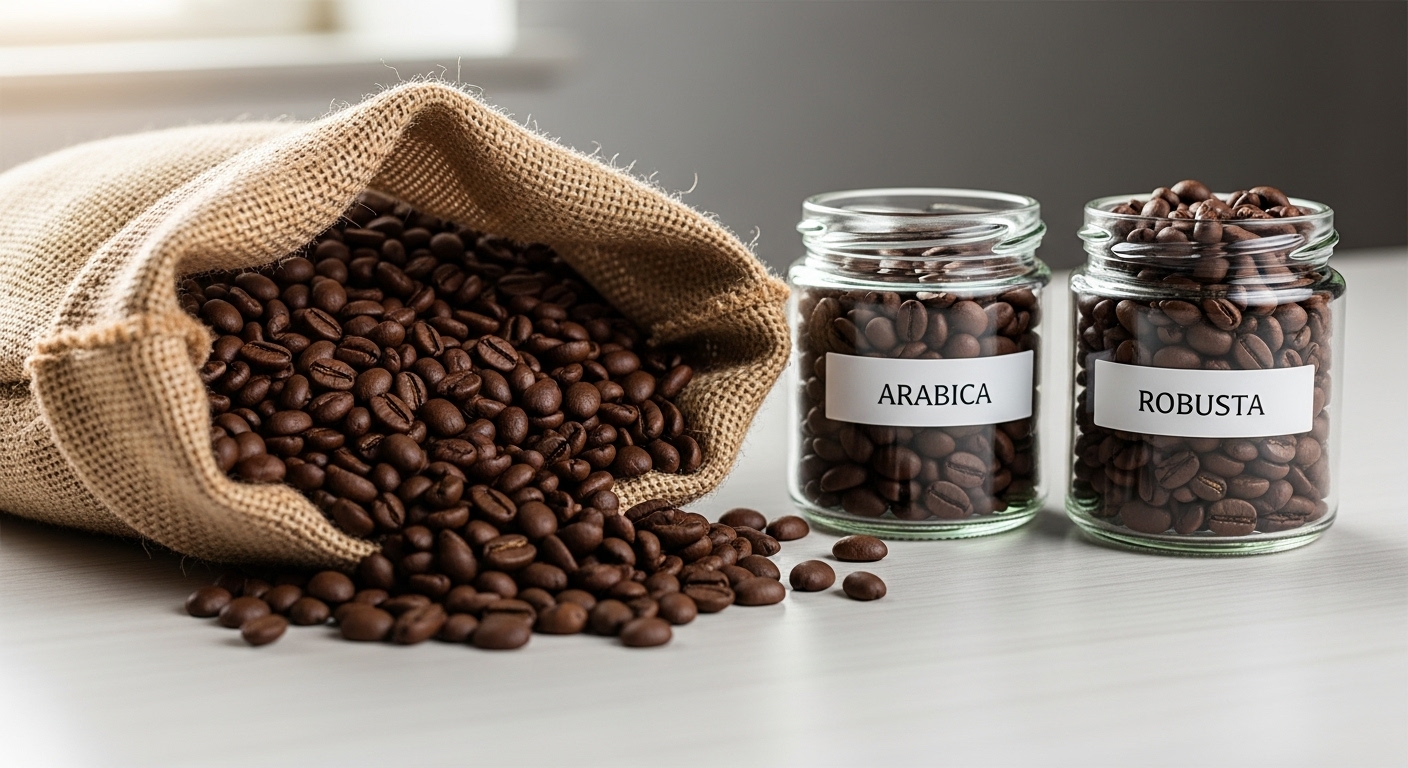
Quick Answer: Arabica vs Robusta – what’s the real difference?
Arabica is generally smoother, sweeter, and more aromatic, while Robusta is usually stronger, more bitter, and higher in caffeine. But the “Arabica is always better” idea is a myth—quality depends on farming, processing, roasting, and freshness. The best choice comes down to what you drink (espresso, iced coffee, milk drinks), your flavor preferences, and your caffeine goals.
If you want a simple rule: choose Arabica for clarity and sweetness, and choose Robusta (or blends with Robusta) for extra intensity, crema in espresso, and a bigger caffeine kick.
Why this difference matters (and why people get confirmably confused)
Most people hear “100% Arabica” and assume it automatically means high quality. That’s great marketing—but it’s not a guarantee. Arabica can be mediocre if it’s low-grade, stale, or poorly roasted. And Robusta can be surprisingly good when it’s grown carefully and processed well.
Knowing the difference helps you:
- Buy beans that match your taste (not just the label hype).
- Choose the right coffee for espresso, iced coffee, or milk drinks.
- Understand caffeine differences and how they affect your day.
- Read coffee packaging with confidence (origin, variety, processing, roast date).
Let’s break it down in a way that actually helps you choose your next bag.
Arabica vs Robusta: notice the differences at a glance
Here’s the fastest way to understand the two species most coffee drinkers encounter.
- Taste: Arabica tends to be sweeter and more complex; Robusta tends to be bolder and more bitter.
- Aroma: Arabica usually has more floral/fruity/nutty aromatics; Robusta often leans earthy, woody, or cocoa-heavy.
- Caffeine: Robusta is typically higher in caffeine than Arabica.
- Price: Arabica is often more expensive due to cultivation requirements and market demand.
- Espresso crema: Robusta (especially in blends) often boosts crema and punch.
Those are tendencies—not absolute rules. The rest of this guide shows you how to use those tendencies to make better buying decisions.
What is Arabica coffee?
Arabica (Coffea arabica) is the most widely consumed species in specialty coffee. It generally thrives at higher altitudes and tends to produce cups that feel smoother and more nuanced. Many classic “specialty” flavor notes—like berries, citrus, caramel, chocolate, florals—are commonly associated with well-grown, well-processed Arabica.
Arabica’s reputation comes from its potential for complexity. When it’s grown well, harvested ripe, processed carefully, and roasted with skill, it can taste incredibly layered. But potential isn’t the same as guarantee. If the beans are old or the roast is poor, Arabica can taste flat, papery, or harsh—just like any other coffee.
What is Robusta coffee?
Robusta (Coffea canephora) is often associated with stronger, more intense coffee. It’s generally more resilient in farming (hence the name “Robusta”), and it commonly shows up in espresso blends—especially when the goal is a heavy, bold shot with extra crema and more caffeine.
Robusta gets a bad reputation because low-grade Robusta has historically been used in cheap coffee. That low-grade version can taste harsh and rubbery. But there are now higher-quality Robustas grown and processed with more care. They can still be more intense than Arabica—but not necessarily “bad.” Think of it like chocolate: dark, intense chocolate can be amazing, or it can be cheap and unpleasant. Quality and handling matter.
Taste differences: what you’ll actually notice in the cup
Most guides stop at “Arabica is smooth, Robusta is strong.” That’s too vague to help you choose. Here’s what the differences usually feel like in real life:
Arabica: sweetness, aroma, and clarity
Good Arabica often has a more noticeable sweetness and more aroma. It can feel “cleaner” and more articulate—meaning you can pick out distinct flavors (citrus, cocoa, caramel, berries). If you like coffee that smells amazing before you even sip it, Arabica is usually the safer bet.
Robusta: intensity, bite, and heavy body
Robusta tends to be heavier and more intense, with a stronger bitter edge. In espresso, that intensity can be desirable—especially if you want a bold shot that punches through milk. If you’ve ever had espresso that feels extra “thick” and powerful, there’s a decent chance it was a blend with some Robusta.
Important note: bitterness is not automatically “bad.” Many people enjoy a darker, more intense profile. The goal is to match the coffee to your preferences and your brew method.
Caffeine: is Robusta always higher?
Robusta is typically higher in caffeine than Arabica. That’s one reason it tastes more bitter—caffeine contributes bitterness. But your total caffeine intake depends on more than species. Serving size, brew ratio, roast level, and how you drink it (espresso vs drip vs cold brew) all affect the final number in your cup.
A practical takeaway: if you’re sensitive to caffeine, switching from a Robusta-heavy blend to a mostly-Arabica coffee may feel noticeably gentler. And if you’re chasing a stronger kick, a blend with Robusta can deliver it—sometimes with less coffee needed.
The “100% Arabica” myth (and what to look for instead)
“100% Arabica” is a marketing phrase. It tells you the species—but not the quality. A high-quality coffee bag usually gives you more meaningful details, like:
- Roast date (freshness matters a lot)
- Origin (country/region/farm)
- Process (washed, natural, honey, etc.)
- Tasting notes that match your preferences
- Altitude or variety (often seen in specialty coffee)
If your goal is better coffee, treat “100% Arabica” as a starting point, not a stamp of excellence.
Which one is better for espresso?
There isn’t one “best” answer—there’s only what you want your espresso to do.
- Choose Arabica espresso if you like sweetness, clarity, and flavors that stand on their own.
- Choose blends with some Robusta if you want extra intensity, more bitterness, a heavier shot, and strong performance in milk drinks.
If you mostly drink lattes, cappuccinos, or sweetened drinks, a touch of Robusta can be a feature—not a flaw. If you drink straight espresso and love nuanced flavor, Arabica-focused options tend to shine.
Which one is better for iced coffee and cold brew?
Iced coffee and cold brew often benefit from coffees that hold up when chilled and diluted. That can mean different things depending on how you make it:
- Flash-brew iced coffee (hot coffee over ice) often tastes best with sweet, aromatic Arabica.
- Cold brew concentrate can handle a bolder profile; blends with some Robusta can taste punchy and chocolatey when served with milk.
So: Arabica tends to win for clarity, Robusta can work well for intensity—especially in milk-based iced drinks.
Which one is better with milk and sugar?
Milk and sugar reduce perceived bitterness and boost sweetness, which changes what “good” means. If you always add milk, you might prefer a coffee that tastes a bit intense on its own so it doesn’t disappear in the drink. That’s one reason traditional espresso blends often include Robusta: it keeps the coffee flavor present.
If you prefer less bitterness even in milk drinks, choose medium-roast Arabica with chocolate/caramel notes. You’ll still get richness, but with a smoother finish.
How roasting affects Arabica and Robusta (don’t mix this up)
Many people confuse species (Arabica vs Robusta) with roast level (light vs medium vs dark). Roast level can dramatically change bitterness, sweetness, and aroma—sometimes more than species does.
A dark-roast Arabica can taste quite bitter and smoky. A carefully roasted Robusta can taste smoother than you expect. So if you’re chasing less bitterness, you may get faster results by moving from dark roast to medium roast than by obsessing over Arabica vs Robusta.
Buying guide: how to choose the right one for you
Use this simple decision guide next time you shop:
- You want smooth, sweet, aromatic coffee: choose Arabica, medium roast, fresh roast date.
- You want bold, intense coffee with extra caffeine: choose a blend with some Robusta (especially for espresso).
- You drink mostly milk-based drinks: consider espresso blends (Arabica + a little Robusta can work great).
- You drink mostly black coffee: start with Arabica; adjust roast level before anything else.
- You’re on a budget but want strength: Robusta blends can be good value—just prioritize freshness.
If you take only one thing from this guide, let it be this: freshness + good roasting beat species labels most of the time.
Common mistakes people make when choosing beans
These mistakes cause more disappointment than the Arabica/Robusta choice itself:
- Ignoring the roast date and buying old beans.
- Buying dark roast noticed as “strong” when you actually want more caffeine (dark roast tastes strong, but “strong taste” isn’t the same as “more caffeine”).
- Using the wrong grind and blaming the beans for bitterness.
- Storing beans poorly (heat, air, light, moisture).
Fix those first, and your coffee improves dramatically—no matter what species you buy.
FAQ
Is Arabica always higher quality than Robusta?
No. Arabica has more potential for complex aromatics, but quality depends on sourcing, processing, roasting, and freshness. Low-quality Arabica can taste worse than a well-produced Robusta.
Why is Robusta more bitter?
Robusta typically has higher caffeine and a different chemical makeup that often produces more bitter, earthy notes—especially when it’s low-grade or roasted very dark.
Should I avoid blends?
Not at all. Many great coffees are blends designed for balance and consistency—especially for espresso. A blend can be the easiest way to get a reliable taste profile.
Can I taste the difference immediately?
Often yes, but roast level and freshness can mask it. If you want to compare, try two coffees roasted similarly (both medium, for example) and brew them using the same method and ratio.
Conclusion: Choose by your drink, not by the hype
Arabica and Robusta are different, but the “best” one depends on what you want in the cup. If you love aroma, sweetness, and clarity, Arabica is a great starting point. If you want intensity, heavy body, more crema in espresso, and higher caffeine, Robusta (or a blend) can be a smart choice.
Once you understand the basics, the next step is learning how to read labels and buy fresher, better coffee—because that’s where your biggest upgrade lives.
