
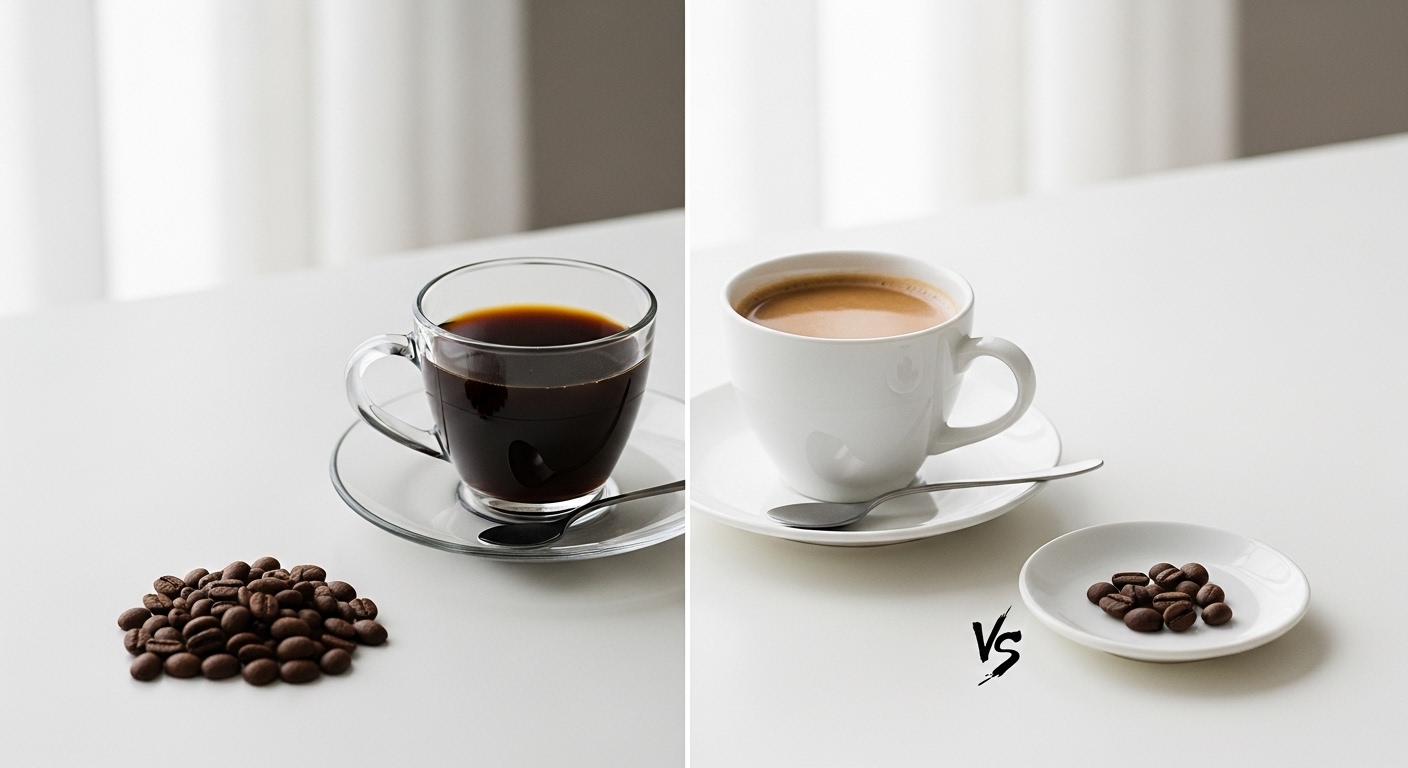
Quick Answer: Does stronger coffee always have more caffeine?
No—stronger coffee does not always mean more caffeine. In everyday language, people often use the word strong to describe coffee that tastes bold, dark, bitter, or intense. But caffeine and flavor strength are not the same thing. A coffee can taste stronger because it is more concentrated, more dark-roasted, or more bitter, without necessarily containing dramatically more caffeine. Likewise, a coffee that tastes smoother or lighter can still have a significant caffeine content.
If you have ever assumed that the darkest, boldest, most aggressive cup must also be the most caffeinated, this guide will help you understand what actually affects caffeine, what affects taste, and why people confuse the two all the time.
Why people confuse strength and caffeine so easily
This confusion is extremely common because “strong coffee” sounds like it should mean “powerful coffee,” and caffeine is the most famous kind of coffee power. So when someone drinks a dark, bitter, intense cup, they often say, “Wow, this is strong,” and then assume that means it must also contain more caffeine.
But the taste of coffee and the stimulant effect of coffee are only partly connected. Flavor strength is mostly about what your tongue and nose perceive: concentration, bitterness, roastiness, body, and intensity. Caffeine is a chemical component that can vary for different reasons, including bean type, dose, and serving size.
That is why the strongest-tasting coffee in the room is not automatically the most caffeinated. A rough, smoky, concentrated brew may feel more “serious,” but that feeling is not a direct caffeine meter.
What “coffee strength” actually means
When coffee professionals talk about strength, they often mean something close to concentration: how much dissolved coffee material is in the liquid relative to the water. In everyday life, people use the term more loosely. They may call coffee strong if it tastes:
- dark and bold
- bitter or aggressive
- thick or heavy-bodied
- very concentrated
- roasty and intense
That means “strong” is often a flavor impression, not a precise caffeine statement. A small espresso may taste much stronger than a large mug of drip coffee, but that does not automatically tell you which one contains more total caffeine. It only tells you that the espresso is more concentrated in the mouth.
This distinction matters because once you separate taste intensity from caffeine content, coffee starts making much more sense.
What actually affects caffeine in coffee
If you want to understand caffeine better, focus on the variables that actually matter more:
- bean type
- coffee dose
- brew method
- serving size
- how much coffee you actually drink
These factors usually tell you much more about caffeine than whether the coffee tastes dark, smoky, or “extra bold.” Marketing often pushes people toward the wrong clues. The smarter move is to look at the brewing reality.
Bean type matters more than many people realize
One of the biggest caffeine differences starts with the bean itself. Robusta generally contains more caffeine than Arabica. That means a coffee with more Robusta may deliver more caffeine even if the taste is not necessarily smoother or more refined. In fact, some people experience Robusta-heavy coffee as harsher or more intense, which can reinforce the idea that “strong taste = strong caffeine,” even though the real reason is partly the bean type.
This is one reason bean composition matters so much. If someone wants to understand caffeine, they should pay more attention to whether the coffee leans Arabica or Robusta than to vague words like bold or intense.
In other words, the bean itself can shape caffeine more directly than the roast label on the front of the bag.
Dose matters more than roast color
If you use more coffee grounds, you will usually extract more caffeine overall. This is one of the simplest truths in coffee, and it often gets ignored because roast marketing is louder and more emotional. A large mug made with a generous dose of coffee may deliver more caffeine than a darker, stronger-tasting drink made with less coffee.
This is why portion size and recipe matter so much. People often compare a small concentrated coffee to a large brewed coffee and assume the smaller one must be “stronger” in caffeine because it tastes more powerful. But total caffeine can easily be higher in the larger drink simply because there is more liquid brewed from more coffee over a bigger serving.
So if you actually care about energy, do not focus only on how dramatic the coffee tastes. Ask how much coffee went into the cup.
Why dark roast doesn’t automatically mean more caffeine
This is one of the biggest myths in coffee. Many people assume dark roast must contain more caffeine because it tastes stronger and more aggressive. But dark roast is mostly about flavor development through roasting—not a simple “caffeine boost” setting.
Dark roast often tastes bolder because roasting pushes the flavor toward smoke, bitterness, toast, and roast-heavy intensity. That changes perception dramatically. But perception is not the same as caffeine content. In practical everyday drinking, roast level is a poor shortcut for guessing caffeine.
If anything, the bigger lesson is this: dark roast often feels more powerful than it chemically proves. That is why so many people get fooled by the taste.
Why espresso tastes stronger but isn’t always the caffeine king
Espresso is the perfect example of why this topic confuses people. Espresso tastes strong because it is concentrated. A small sip can feel heavy, intense, bitter-sweet, and powerful. So people naturally assume it must contain much more caffeine than regular coffee.
But concentration and total caffeine are different things. Espresso has a lot going on in a small volume, which makes the taste feel strong. A regular brewed coffee, however, may be consumed in a much larger amount. So even if the espresso feels more intense by the sip, the bigger mug of coffee may still deliver a substantial or even greater total caffeine intake depending on the recipe and serving size.
This is why asking “Which has more caffeine, espresso or coffee?” is less useful than people think unless you define the actual amount being compared.
How brew method changes the feeling of “strength”
Different brew methods create different sensory experiences. French press often feels heavier because more oils and particles reach the cup. Pour-over often feels cleaner and lighter, even if the caffeine is still meaningful. Espresso feels strongest in the mouth because it is compact and concentrated. Cold brew can feel smooth but still quite potent depending on how it was prepared and diluted.
This is why relying on taste alone can mislead you. One coffee may feel softer but still wake you up hard. Another may taste rough and intense but not necessarily contain dramatically more caffeine than the smoother cup next to it.
What you feel on the tongue and what your nervous system feels later are connected, but not in a simple one-to-one way.
Why bitter coffee is often mistaken for high-caffeine coffee
Bitterness is one of the biggest caffeine myths in the coffee world. People often taste a bitter cup and conclude it must contain more caffeine. But bitterness is much more often a sign of roast style, extraction problems, or stale coffee than a direct sign of extreme caffeine.
A badly brewed over-extracted cup may taste harsher and more “powerful” than a balanced coffee with similar or greater caffeine. That is why bitter coffee can feel more intense emotionally even when the chemistry does not justify the assumption.
This matters because some people keep chasing bitterness when what they really want is energy. Those are not the same target.
If you want more caffeine, what should you actually pay attention to?
If your goal is more caffeine rather than a stronger taste, focus on smarter signals:
- bean type, especially whether Robusta is part of the blend
- how much coffee is used in the recipe
- how large the serving is
- whether you are drinking multiple smaller coffees instead of one
- whether the brew is concentrated and then diluted or actually large-volume brewed
These factors tell you much more about likely caffeine impact than roast darkness or how “bold” the bag claims the coffee tastes.
If you want less caffeine, but still want strong flavor
This is the other side of the equation, and it matters too. Some people want coffee that tastes rich, deep, and satisfying without loading themselves with more caffeine than they want. That is possible. You can choose coffees and brew styles that feel full-bodied and flavorful without assuming you need the most caffeinated path available.
For example, some darker or more concentrated styles may give the sensory impression of strength even if your total caffeine intake is still moderate. Decaf can also taste fuller and more satisfying than its bad reputation suggests, especially when it is made and roasted well.
This is why separating flavor goals from caffeine goals is so useful. Once you stop treating them as the same thing, you gain much more control over what kind of cup you actually want.
Strong taste, low caffeine? Yes, it can happen
Absolutely. A coffee can taste strong because it is dark-roasted, brewed concentrated, or extracted into a bold, bitter style. But that flavor impression does not guarantee maximum caffeine. This is one of the easiest ways to get fooled by coffee language and personal intuition.
That is why someone can drink a small harsh espresso and believe it must contain more caffeine than a smoother mug of drip coffee, even though the total caffeine intake may not clearly support that assumption. The mouth says “powerful.” The chemistry answer may be more complicated.
Mild taste, high caffeine? That can happen too
Yes. A coffee that tastes smoother, cleaner, or less bitter can still deliver substantial caffeine if the serving is large enough, the coffee dose is generous enough, or the bean blend supports it. Smooth flavor does not mean weak chemistry.
This is important because many people underestimate caffeine when the cup tastes pleasant and easy. If the drink goes down more comfortably, you may actually consume more of it more quickly without realizing how much caffeine you are taking in overall.
So both errors are common: people overestimate caffeine in bitter, harsh coffee and underestimate it in smoother, easier-drinking coffee.
A simple way to think about it
If you want the plainest possible rule, use this:
“Strong” is usually about how the coffee tastes. Caffeine is about what the coffee is made of and how much of it you consume.
That one sentence clears up most of the confusion.
Common mistakes people make
Mistake 1: Assuming dark roast always has more caffeine
Dark roast usually tastes bolder, but that does not make it a reliable caffeine shortcut.
Mistake 2: Using bitterness as a caffeine meter
Bitterness usually says more about roast style and extraction than about actual caffeine level.
Mistake 3: Forgetting serving size
A bigger, smoother coffee can easily deliver a serious caffeine load even if it does not taste “strong.”
Mistake 4: Ignoring bean type
Arabica and Robusta are not the same in caffeine potential, and that matters more than many people realize.
FAQ
Does espresso have more caffeine than regular coffee?
It is more concentrated, but total caffeine depends on the serving size and how much coffee is used overall. A large brewed coffee can absolutely deliver substantial caffeine too.
Why does dark roast feel stronger if it doesn’t always mean more caffeine?
Because dark roast often tastes bolder, smokier, and more intense. Your palate reads that as “strong,” even though caffeine is a separate issue.
What should I choose if I want more caffeine?
Pay more attention to bean type, dose, and serving size than to roast darkness or aggressive taste.
Conclusion: taste intensity and caffeine are related only loosely
Stronger-tasting coffee does not automatically mean more caffeine. What people call “strong” is often just bold flavor, bitterness, roast intensity, or concentration in the mouth. Caffeine depends more on the beans, the dose, the serving size, and the brew setup. Once you separate those ideas, coffee gets much easier to understand—and you stop letting dark, bitter flavor trick you into believing it is the best measure of energy.
