
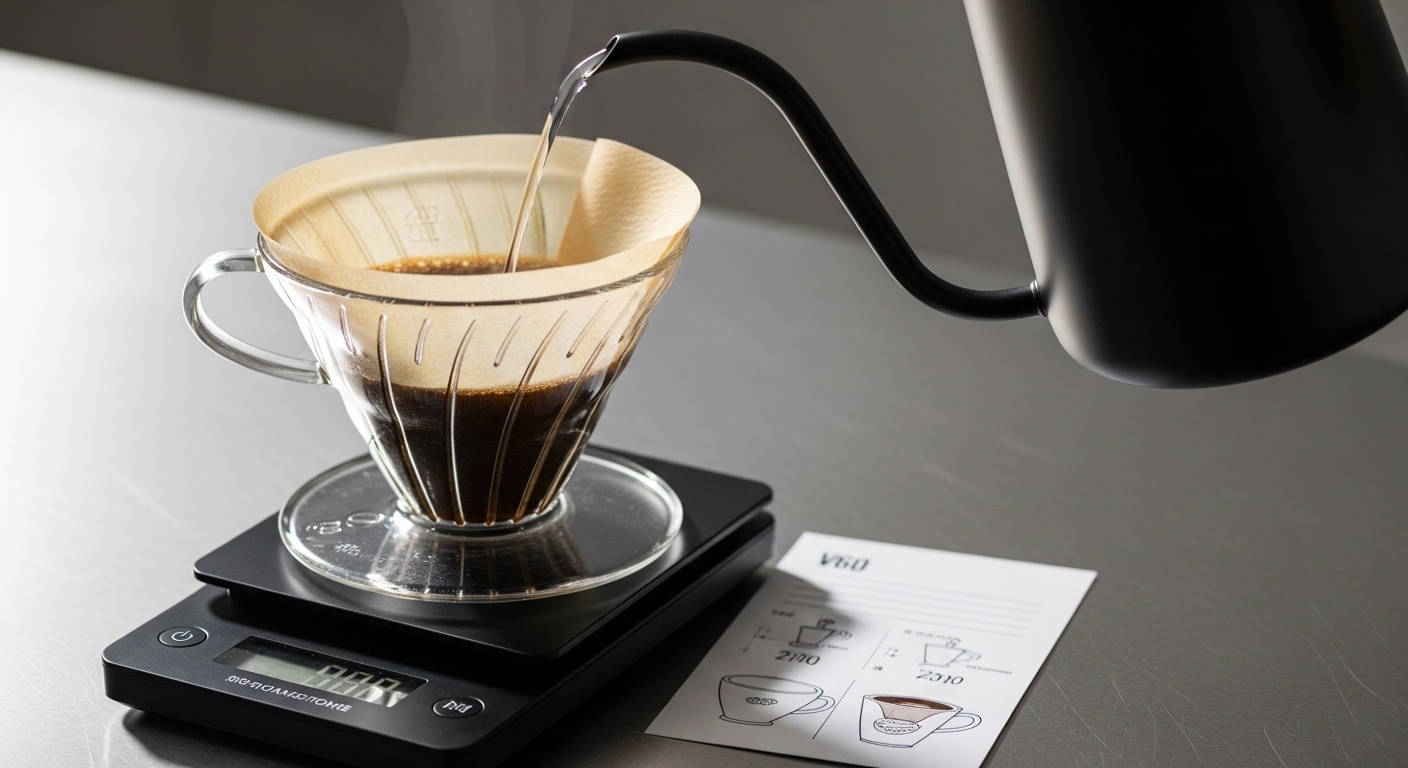
Quick Answer: What is coffee-to-water ratio?
Coffee-to-water ratio is simply the relationship between how much coffee you use and how much water you brew with. It is one of the fastest ways to improve a bad cup because it directly changes strength, balance, and repeatability. If your coffee tastes weak, watery, harsh, or confusingly “off,” the ratio may be part of the problem before you even touch grind size or fancy brewing techniques.
A practical starting point for many brew methods is somewhere around 1:15 to 1:17. That means 1 gram of coffee for every 15 to 17 grams of water. From there, you adjust based on taste and method. Stronger coffee usually means using more coffee relative to water. Lighter coffee usually means using less coffee relative to water.
Why ratio matters more than most people think
Most people blame bad coffee on the beans first. Sometimes that is true. But very often the bigger issue is that they used an inconsistent or mismatched ratio. One day they scoop a little extra coffee because they want it “strong.” The next day they pour a little more water because the mug is bigger. Then they wonder why the coffee tastes completely different.
Ratio gives your brewing a structure. It stops the randomness. It tells you what kind of cup you are aiming for before brewing even begins. That is why ratio is so powerful: it creates a baseline. And once you have a baseline, you can improve intelligently instead of guessing.
This does not mean ratio is the only thing that matters. Grind size, water temperature, freshness, and brew method still matter a lot. But if the ratio is off, even good technique can struggle to rescue the cup.
Strength vs extraction: the confusion that traps beginners
Before going deeper, you need one key idea: strength and extraction are not the same thing.
- Strength = how concentrated the coffee feels in the cup
- Extraction = how effectively water pulled flavor out of the grounds
This matters because people often say “my coffee is weak” when the coffee is actually under-extracted. Or they say “my coffee is too strong” when it is actually over-extracted and bitter. Ratio mostly changes strength. Grind size and brew variables strongly influence extraction. The two work together, but they are not interchangeable.
That means a bad ratio can make a good extraction taste wrong, and a bad extraction can make a good ratio feel disappointing. The goal is to get both working together.
What does 1:15 or 1:17 actually mean?
These numbers are easier than they look. A ratio of 1:15 means:
- 1 gram of coffee for every 15 grams of water
So if you use 20 grams of coffee, a 1:15 ratio would use 300 grams of water. A 1:17 ratio with 20 grams of coffee would use 340 grams of water.
Here are a few simple examples:
- 15 g coffee + 225 g water = 1:15
- 20 g coffee + 320 g water = about 1:16
- 18 g coffee + 306 g water = 1:17
You do not need to memorize everything. You just need a scale and one starting recipe that you can repeat.
The easiest way to choose a starting ratio
If you are a beginner, use this simple rule:
- Want a fuller, stronger cup? Start closer to 1:15
- Want a lighter, cleaner cup? Start closer to 1:17
This is not absolute, but it is a great practical starting point. Many people love something around 1:16 for everyday brewing because it gives a nice balance between body and clarity.
If you are not sure where to begin, start with 20 grams of coffee and 320 grams of water. That is simple, repeatable, and works as a strong baseline for many home setups.
How ratio changes taste
Ratio changes the cup in a very practical way. If you use more coffee relative to water, the drink becomes more concentrated. If you use less coffee relative to water, the drink becomes lighter and thinner. But the taste effects go beyond “strong vs weak.”
When the ratio is too weak
A too-weak ratio can make coffee feel:
- watery
- thin
- hollow
- more obviously sour or sharp
This happens because there is not enough concentration to support sweetness and body. Even decent flavor can feel empty when the coffee is too diluted.
When the ratio is too strong
A too-strong ratio can make coffee feel:
- heavy
- overly intense
- muddy
- harder to read clearly
If extraction is not adjusted well, a strong ratio can also amplify bitterness. The coffee may taste “bold,” but not necessarily good.
Can ratio fix weak coffee?
Yes—often very quickly. If your coffee tastes watery or unsatisfying, increasing the dose of coffee relative to the water is one of the first things to try. But do not overreact. Small adjustments matter.
For example, if you normally brew 20 g coffee with 360 g water and the cup feels weak, try keeping the coffee at 20 g but reducing the water slightly, or keep the water similar and increase the coffee slightly. The goal is not turning the brew into sludge. The goal is moving toward better concentration.
If the cup still tastes sour after making it stronger, the issue may also involve grind size or extraction.
Can ratio fix bitter coffee?
Sometimes, but not always. If your coffee tastes bitter because it is too concentrated, then a slightly lighter ratio can help. But if the bitterness comes from over-extraction, stale beans, or dirty equipment, changing ratio alone may not solve it.
This is why ratio is powerful but not magical. It works best when you understand what kind of problem you are fixing. If your coffee tastes both harsh and too strong, adjust the ratio. If it tastes burnt and aggressive no matter what, look at roast, grind, and cleaning too.
Best ratio starting points by brew method
Different brew methods often feel best in slightly different ratio zones. Here are practical starting ranges:
- French press: around 1:15 to 1:16
- V60 / pour-over: around 1:15 to 1:17
- Automatic drip: around 1:16 to 1:17
- Chemex: around 1:16 to 1:17
- Cold brew concentrate: much stronger and often outside normal hot-coffee ratios
These are not “official rules.” They are useful starting points. Once you find your preference, that becomes more important than internet dogma.
The easiest troubleshooting system
If you want a simple decision system, use this:
- Too weak / watery? Use slightly more coffee or slightly less water
- Too intense / too thick? Use slightly less coffee or slightly more water
- Sour and weak? Ratio may be weak, but also check grind and extraction
- Bitter and heavy? Ratio may be too strong, but also check over-extraction
The key word is slightly. Small adjustments teach you more than huge jumps.
Why measuring with scoops causes trouble
Scoops measure volume, not weight. Coffee beans change density depending on roast and type, so one scoop is not always the same amount of coffee. That is why ratio becomes much more reliable when you weigh both coffee and water.
If you are serious about improving your cups, this is one of the biggest mindset upgrades: stop thinking in “spoons” and start thinking in grams. It sounds nerdy at first, but it actually makes coffee simpler.
A beginner-friendly recipe you can use today
Here is a very easy baseline that works well for a lot of home brewers:
- 20 g coffee
- 320 g water
- adjust grind for your brew method
This lands around a balanced everyday ratio for many methods. Brew it, taste it, and then make only one small adjustment next time if needed. That is the smartest way to learn your preference.
Common ratio mistakes people make
Mistake 1: Changing ratio and grind at the same time
If you change everything at once, you will not know which variable fixed or ruined the cup. Keep ratio stable when adjusting grind, or keep grind stable when adjusting ratio.
Mistake 2: Thinking “stronger” always means “better”
More coffee is not always an upgrade. A stronger ratio can hide flaws briefly, but it can also make a cup heavy and less pleasant. The goal is balance, not brute force.
Mistake 3: Ignoring the brew method
A ratio that feels great in French press may not be ideal for your V60. Method changes the way strength and clarity feel in the cup, so context matters.
Mistake 4: Trying to fix stale coffee with ratio
If the beans are stale, adjusting ratio can only help so much. Freshness still matters. So does proper storage.
Why ratio is one of the best “Adsense-friendly” coffee topics for readers too
Ratio is useful because it solves a real problem. It is not a clickbait “hack.” It gives the reader a practical tool they can use immediately. That makes this type of content strong for user value too: it reduces frustration, saves coffee, and helps beginners feel in control faster.
And that is the bigger lesson for your site structure as well: useful coffee content wins when it gives people a real fix, not just an opinion.
FAQ
Is 1:15 stronger than 1:17?
Yes. A 1:15 ratio uses more coffee relative to the water, so the cup usually feels stronger and fuller.
Can ratio fix sour coffee?
Sometimes partly, especially if the brew is too weak. But sour coffee often also involves under-extraction, so grind size and brew time may need attention too.
Do I need a scale for ratio to matter?
A scale is the easiest way to apply ratio consistently. Without one, you can still try to estimate, but the results are much less reliable.
Conclusion: ratio is one of the fastest ways to improve coffee
Coffee-to-water ratio matters because it controls strength, improves repeatability, and gives you a clear path to fix weak or overly intense coffee. Start with a simple baseline, measure both coffee and water, and adjust in small steps. Once ratio becomes consistent, everything else in brewing becomes easier to understand—and your coffee gets much less random.
