
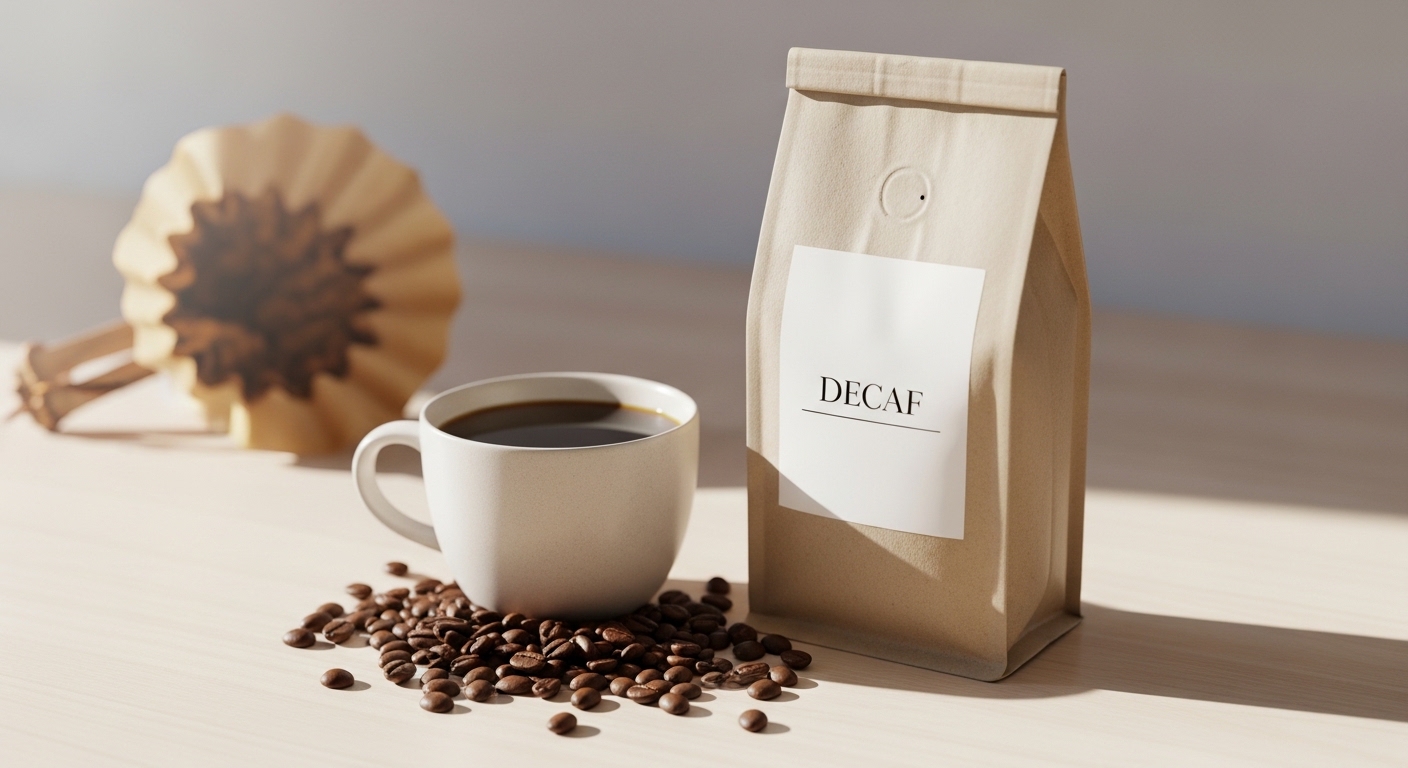
Quick Answer: Is decaf coffee actually caffeine-free?
Decaf coffee is not completely caffeine-free. It’s coffee that has had most of its caffeine removed. The exact amount varies by bean, process, and brew method, but the key idea is simple: decaf usually contains small amounts of caffeine—often low enough that many people tolerate it well, especially if regular coffee affects their sleep or anxiety.
This guide explains the main decaffeination methods, how decaf can still taste great (or terrible), and how to choose good decaf without getting fooled by marketing.
Why people choose decaf (it’s not just “weak coffee”)
Most decaf drinkers aren’t trying to punish themselves. They usually want one of these:
- Better sleep (especially if coffee late in the day affects them)
- Less anxiety/jitters while keeping the ritual
- More cups per day without stacking too much caffeine
- Stomach comfort (some people find decaf gentler)
The big idea: decaf lets you keep the coffee ritual even when caffeine doesn’t fit your day.
How decaf is made (the main methods in plain English)
Decaffeination happens before roasting, while beans are still green. Different methods remove caffeine while trying to preserve flavor compounds.
Method 1: Swiss Water Process (solvent-free approach)
This method uses water and filtration to remove caffeine. It’s popular in specialty coffee because it focuses on preserving flavor while avoiding certain chemical solvents. Many bags will proudly mention “Swiss Water” on the label.
Method 2: CO₂ Process (high-tech and effective)
This method uses carbon dioxide under pressure to remove caffeine. It can be very effective and tends to preserve flavor well, but it’s more expensive and less common on typical supermarket shelves.
Method 3: Solvent-based methods (common in mass-market decaf)
Some decaf is made using approved solvents to remove caffeine. It’s common in large-scale decaf production. The important point for taste: decaf quality depends heavily on the starting beans and how carefully the process is done.
If you’re shopping, you don’t need to fear every solvent word you see—but you do want transparency and good sourcing if you care about flavor.
Does decaf taste worse than regular coffee?
It can, but it doesn’t have to. Decaf has historically gotten a bad reputation because many brands used low-grade beans for decaf. If you start with average beans and then remove caffeine, you often end up with “flat” flavor.
But specialty decaf can taste genuinely good—especially when the beans are high quality and roasted well. The trick is choosing decaf that’s treated like a real product, not an afterthought.
How to buy good decaf (the 5-second store checklist)
Use this checklist when choosing decaf:
- Roast date (freshness matters a lot)
- Decaf method (Swiss Water / CO₂ / other process listed)
- Origin details (country/region is better than nothing)
- Tasting notes you actually like (chocolate/nutty for easy wins)
- Whole bean when possible (grind fresh for best taste)
If the bag says almost nothing besides “decaf,” you’re rolling the dice.
Does decaf have health benefits too?
Decaf still contains many of coffee’s beneficial compounds (it’s still coffee), just with much less caffeine. If caffeine is the main issue for you, decaf can be a smart compromise: you keep the ritual and flavor with less stimulation.
If you care about coffee and health, the bigger picture matters: timing, dose, sleep, and what you add to your cup.
Who should consider decaf?
Decaf can be a great option if:
- You’re sensitive to caffeine (jitters, anxiety, racing thoughts)
- Coffee disrupts your sleep even when you drink it “early”
- You want afternoon/evening coffee without the stimulation
- You love the ritual but want more control
If you want to keep caffeine but reduce it, half-caf can also be a useful strategy (we’ll cover that in a separate guide later in this series).
Common decaf mistakes (and quick fixes)
Mistake 1: Buying pre-ground decaf and expecting it to taste “specialty”
Pre-ground coffee loses aroma faster. If you want decaf that tastes fresh and satisfying, whole bean + grinding close to brewing helps a lot.
Mistake 2: Storing decaf poorly
Decaf goes stale like any coffee. If your decaf tastes flat, storage might be the issue—not the decaf process.
If you’re unsure, review the storage fundamentals.
Mistake 3: Choosing a roast style that doesn’t match your taste
If you want “easy-to-like” decaf, choose a medium roast with chocolate/nut/caramel notes. If you want bright fruity notes, look for lighter specialty decaf—but understand it can be more sensitive to brewing technique.
FAQ
Can decaf still keep me awake?
For some sensitive people, yes—because decaf still contains small amounts of caffeine. If you’re extremely sensitive, choose low-caffeine options and avoid drinking it late.
Is Swiss Water decaf always better?
Not always. It’s a strong signal of specialty intent, but bean quality and roast quality still matter. Use it as a good clue, not a guarantee.
Conclusion: Decaf can taste great if you buy it like a real coffee
Decaf isn’t “fake coffee.” It’s coffee with most caffeine removed. The difference between terrible decaf and great decaf usually comes down to the same factors that matter for any coffee: bean quality, freshness, and brewing. Choose transparent labels, store it properly, and brew with a consistent recipe—and decaf can become one of the easiest upgrades to your daily routine.
