
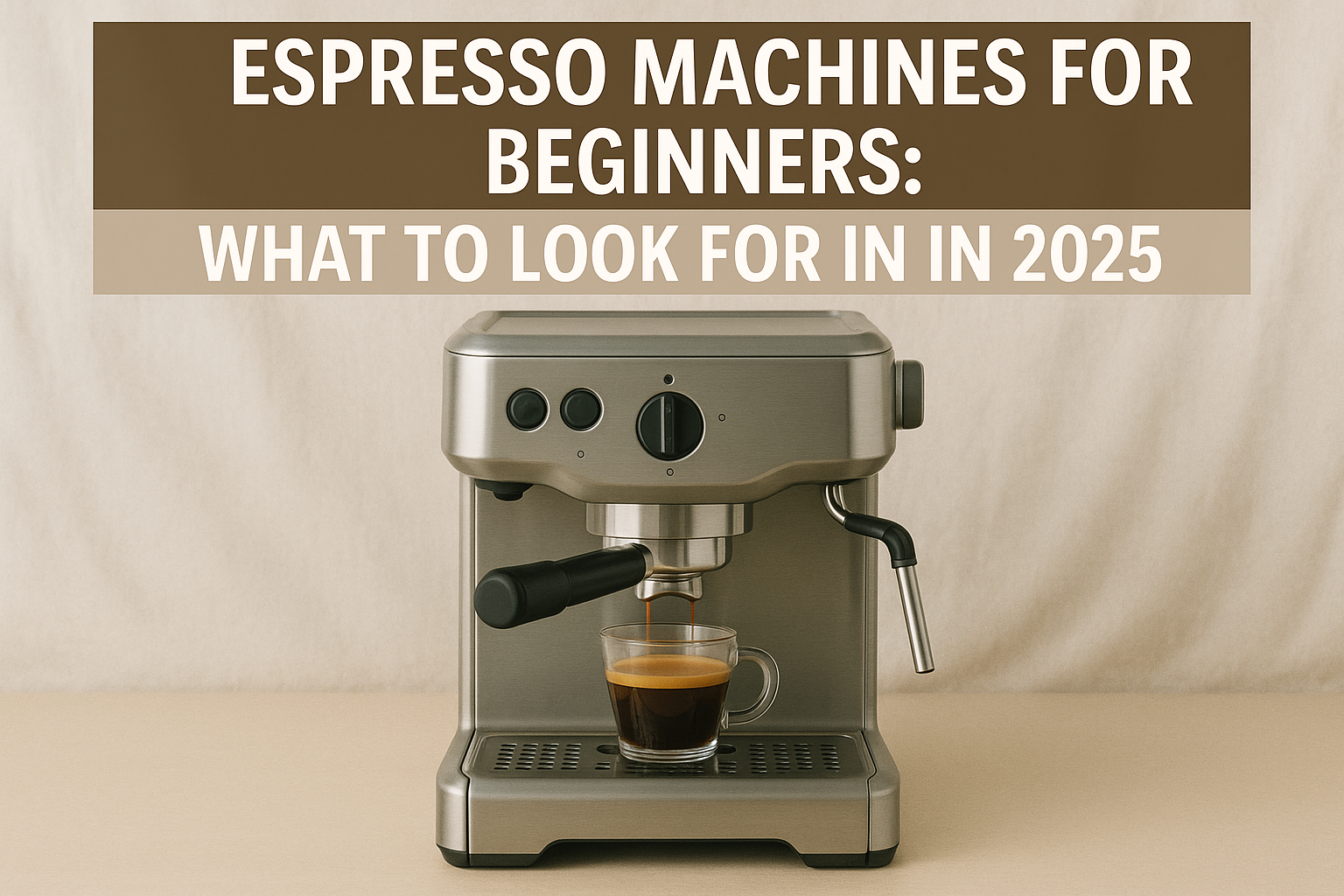
Buying your first espresso machine can be exciting—and overwhelming. With so many models, features, and price points available in 2025, it’s easy to feel lost. But don’t worry: you don’t need to be a professional barista to make great espresso at home.
This guide is designed to help beginners choose the right espresso machine without confusion. Whether you’re new to the coffee world or simply upgrading from instant coffee, we’ll walk you through the essentials.
Why Invest in an Espresso Machine?
For many people, espresso is the heart of coffee. It’s rich, concentrated, and full of flavor. By investing in your own machine, you gain control over every cup—strength, temperature, and quality.
Buying an espresso machine is also a long-term investment. It saves money compared to frequent coffee shop visits and opens up a world of coffee experimentation at home.
Types of Espresso Machines
Before choosing a machine, you need to understand the main types available. Each type has its pros and cons, especially for beginners.
Manual Espresso Machines
Manual machines require full control from the user. You manually press the lever to extract espresso.
They’re great for experienced users or hobbyists, but not ideal for beginners due to the steep learning curve. However, they offer unmatched control and craftsmanship.
Semi-Automatic Espresso Machines
These are the most popular machines for home users. You grind the coffee, tamp it, and start the shot, but the machine controls pressure and heat.
Semi-automatic machines strike a balance between control and convenience, making them perfect for learning.
Automatic Espresso Machines
Automatic machines are very similar to semi-automatic, but they stop the shot automatically once the correct volume is reached.
This feature is helpful for beginners who don’t want to time each shot manually. However, it offers less customization.
Super-Automatic Espresso Machines
Also known as bean-to-cup machines, these do everything for you: grind, tamp, brew, and even froth milk in some cases.
They’re perfect for convenience and speed, but limit control and often come at a higher price.
Capsule Machines
These use pre-ground coffee capsules or pods. They’re incredibly easy to use and require no knowledge of espresso techniques.
While convenient, they don’t deliver the same flavor or quality as traditional espresso machines.
Key Features to Look For
When shopping for your first espresso machine, you should focus on certain features that will help you make better coffee and have a smoother learning curve.
1. Pressure System
A good espresso machine should produce at least 9 bars of pressure, which is necessary for proper espresso extraction. Some cheaper machines claim higher pressure but don’t maintain it consistently.
2. Boiler Type
Espresso machines typically use single boilers, dual boilers, or thermoblock systems.
Single boilers are cheaper but limit multitasking (like steaming and brewing at the same time). Dual boilers allow for better temperature control and faster workflow. Thermoblocks are fast to heat but less consistent.
3. Temperature Stability
Consistent water temperature is crucial for good espresso. Machines with PID controllers offer better temperature control and help reduce variability between shots.
4. Steam Wand Quality
If you love milk-based drinks like cappuccinos or lattes, you’ll need a good steam wand. Look for one that’s adjustable and capable of producing microfoam for latte art.
5. Build Quality
Machines with metal bodies tend to last longer than plastic ones. Also, check for replaceable parts and manufacturer support. A sturdy design is a sign of durability.
6. Size and Footprint
Espresso machines can be large. Make sure to measure your kitchen space before purchasing. Some compact models offer great performance without taking over your countertop.
7. Ease of Cleaning
Some machines are easier to clean than others. Removable drip trays, accessible group heads, and automatic cleaning cycles are great features for daily maintenance.
Budget Considerations
There’s a wide range of prices for espresso machines, from under $150 to several thousand dollars. As a beginner, you don’t need to spend a fortune to get a solid machine.
Here’s a general guide:
- Under $200: Basic machines, usually capsule-based or low-end semi-automatic
- $200–$500: Entry-level semi-automatic machines with decent build quality
- $500–$1000: More consistent performance, better steam wands, and build quality
- Above $1000: Advanced temperature control, dual boilers, and better durability
Always consider the cost of accessories like grinders, scales, and tampers. A good grinder is essential for great espresso.
Recommended Machines for Beginners (2025 Picks)
To help you narrow down your search, here are a few popular and reliable espresso machines for beginners in 2025:
1. Breville Bambino Plus
Fast heat-up time, compact design, and automatic milk texturing make this a favorite for beginners.
2. Gaggia Classic Pro
A sturdy, semi-automatic machine with strong community support and modding potential. Ideal for learning the craft.
3. De’Longhi Dedica EC685
Slim, affordable, and beginner-friendly, this machine fits well in small kitchens and delivers consistent shots.
4. Nespresso Essenza Mini
For those who want convenience over customization. Not a traditional espresso machine, but a good intro for total beginners.
5. Philips 3200 Series with LatteGo
A super-automatic option with touch controls, milk frothing, and easy maintenance. Ideal for hands-off users.
Common Mistakes to Avoid
Beginners often rush the buying process or expect perfect espresso from day one. Here are a few mistakes to watch out for:
- Ignoring the grinder: A bad grinder can ruin even the best machine.
- Skipping the learning curve: Good espresso takes practice and patience.
- Buying too complex: Don’t start with an advanced manual machine if you don’t know the basics.
- Not budgeting for accessories: Tamper, scale, grinder, milk pitcher—these are essential.
- Neglecting maintenance: Clean your machine regularly to keep it performing well.
Espresso at Home: A Skill Worth Learning
Espresso is one of the most rewarding brewing methods. Once you master the basics, you’ll be able to create drinks that rival your favorite café. It’s not just about taste—it’s about control, routine, and creativity.
A good beginner machine won’t make you a barista overnight, but it will help you learn. As you grow more confident, you’ll appreciate the value of each feature and setting.
Final Thoughts
In 2025, there are more espresso machines than ever—each with their strengths and weaknesses. The key is to find one that matches your needs, space, and interest level.
Don’t fall for marketing hype or unnecessary features. Focus on what truly matters: pressure, temperature control, build quality, and ease of use.
Remember, making great espresso is a journey. Your machine is just the starting point.

Passionate about coffee and brewing, our author shares simple, practical tips to help coffee lovers improve their skills. From home brews to barista basics, each post is crafted to make your coffee journey easier and more enjoyable.