
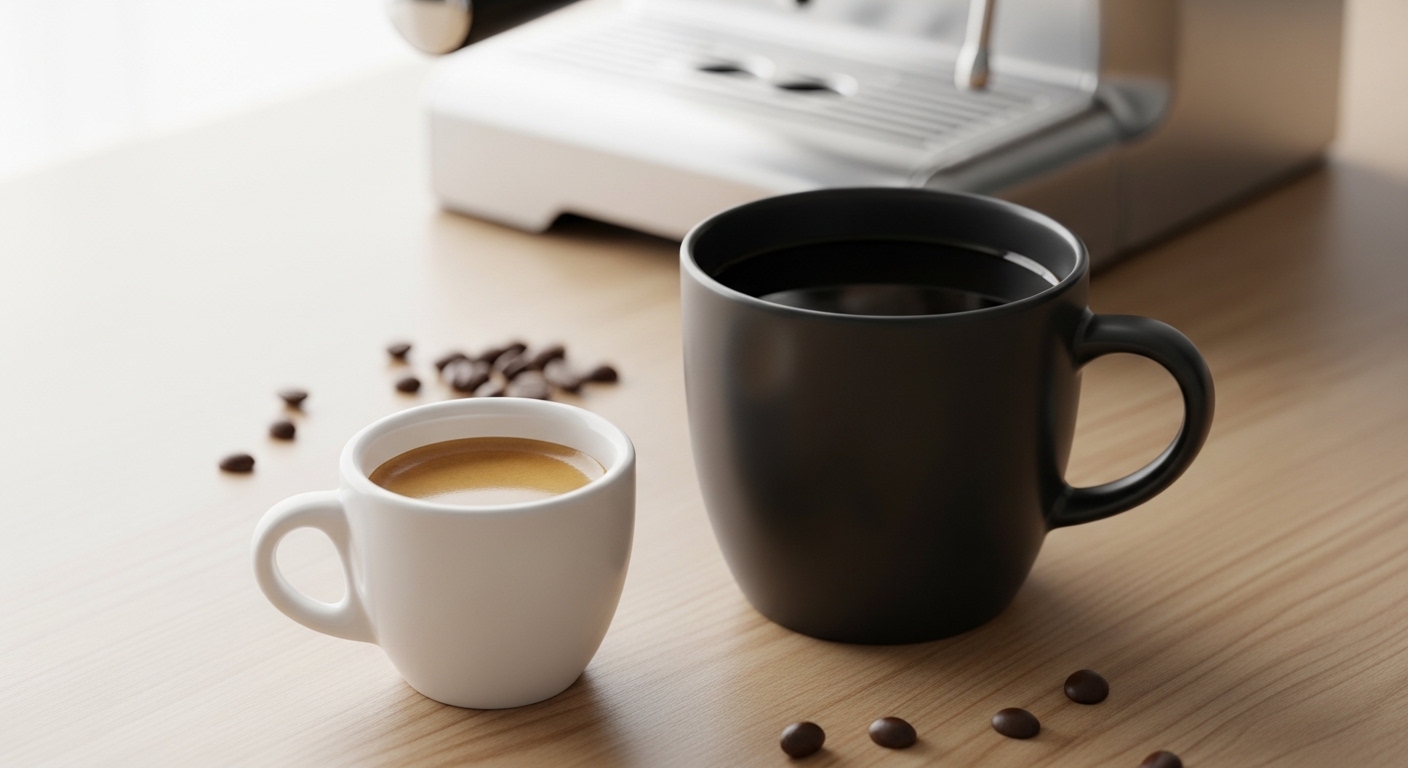
Quick Answer: What’s the real difference between espresso and regular coffee?
The real difference is not just the size of the cup. Espresso is brewed by forcing hot water through finely ground coffee under pressure, creating a small, concentrated drink with a heavier body and a layer of crema on top. Regular coffee—like drip coffee, pour-over, or French press—is usually brewed with gravity or immersion, which creates a larger, less concentrated cup with a different texture and flavor balance.
In simple terms: espresso is more concentrated, served smaller, and usually feels more intense. Regular coffee is less concentrated, served larger, and often gives you more room to taste clarity, balance, and origin character.
Why people get confused about “espresso vs coffee”
A lot of people talk about espresso as if it isn’t coffee. But espresso is coffee. It’s not a separate species, not a magical bean, and not automatically “stronger” in every sense. It’s a brewing method. The confusion usually happens because espresso is served in such a different form: smaller cup, stronger flavor, thicker texture, and often used as the base for milk drinks like lattes and cappuccinos.
So when someone asks, “What’s the difference between espresso and coffee?” the better version of the question is: “What’s the difference between espresso and other brewed coffee methods?” Once you frame it that way, the answer gets much clearer.
Espresso is about pressure. Regular coffee usually isn’t.
The most important technical difference is pressure. Espresso uses pressure to push water through a compact bed of finely ground coffee. This extracts flavor quickly and intensely, usually in a short shot. Most other coffee methods—drip coffee, pour-over, French press, AeroPress in many styles—don’t rely on espresso-level pressure. They use time, gravity, or immersion to extract flavor more gently.
That one difference affects almost everything else:
- Concentration
- Texture
- Serving size
- Crema
- How the coffee behaves with milk
Espresso is not just “smaller coffee.” It is a different extraction style.
Concentration: why espresso feels stronger
Espresso feels stronger because it is more concentrated. In a small amount of liquid, you get a lot of flavor. That means espresso often tastes more intense, more immediate, and sometimes more bitter or sweet depending on how well it was brewed.
Regular brewed coffee is less concentrated. It can still be strong in total caffeine or bold in flavor, but it usually feels more open, more diluted, and easier to sip in a larger mug. That’s why many people can drink a whole cup of drip coffee comfortably, while a straight espresso shot feels like a quick, concentrated hit.
This is also why espresso works so well in milk drinks. It has enough concentration to cut through milk and still taste like coffee.
Caffeine: espresso is not always “more”
Here’s one of the biggest myths: people assume espresso has more caffeine just because it tastes stronger. But taste intensity and caffeine are not the same thing. Espresso usually has more caffeine per ounce, but the serving is much smaller. A full mug of drip coffee can easily contain more total caffeine than a single espresso shot.
So the smarter way to think about it is:
- Espresso: more caffeine concentration in a small serving
- Regular coffee: often more total caffeine in a larger serving
If your goal is caffeine control, portion size matters as much as brew method.
Texture and body: why espresso feels thicker
Espresso usually feels thicker and heavier in the mouth because the extraction includes more suspended solids and emulsified oils. That gives it a denser texture than many filtered coffees. Regular brewed coffee—especially paper-filtered coffee—often feels cleaner and lighter because paper filters trap more oils and sediment.
This is why people describe espresso as “syrupy,” “rich,” or “velvety” when it’s good, while pour-over coffee is often described as “clean,” “bright,” or “transparent.” Neither is automatically better. They’re just different experiences.
What is crema, and why doesn’t regular coffee have it?
Crema is the golden-brown foam layer that often sits on top of espresso. It forms because of pressure, gas release, and emulsified oils during espresso extraction. Regular coffee methods don’t create the same conditions, so they don’t produce true espresso-style crema.
Crema looks impressive, but it’s not the whole story. A shot with crema can still taste bad. Good crema is a sign of certain extraction conditions—not a guarantee of great flavor. Still, it’s one of the visual clues that makes espresso feel like its own category.
Flavor profile: espresso is not always “better,” just different
Because espresso is concentrated, it often compresses flavor into a smaller, more intense package. Sweetness, bitterness, body, and acidity all feel closer together. That can be amazing when the shot is dialed in well. It can also be unpleasant when the shot is badly extracted, because mistakes get amplified fast.
Regular coffee methods usually spread flavor out more. That can make it easier to notice subtle notes—fruit, florals, chocolate, nuts, sweetness, aftertaste—especially in pour-over. In that sense, regular brewed coffee can sometimes show off the bean more clearly than espresso can.
So if someone tells you espresso is “the purest” or “the best” coffee form, take that as opinion, not fact. Espresso is just one very specific way of experiencing coffee.
Bean choice: is espresso made from different beans?
Not necessarily. There is no separate bean called “espresso bean.” Companies often label coffee as “espresso roast” or “espresso blend,” but that usually means the coffee was selected and roasted to work well under espresso extraction and often to pair well with milk.
Espresso coffees are often medium to medium-dark because those roast levels can produce balance, sweetness, and body that work nicely in shots and milk drinks. But light roast espresso absolutely exists, and some people love it for its clarity and brightness—though it tends to be harder to dial in.
If you want to choose beans intelligently, don’t just trust the word “espresso” on the bag. Read the label for roast level, origin, and tasting notes too.
Espresso vs drip coffee: which is better for daily drinking?
That depends on how you like to drink coffee.
Espresso may be better if:
- you like concentrated coffee
- you enjoy milk drinks
- you want a quick shot instead of a long cup
- you enjoy dialing in variables and small adjustments
Regular brewed coffee may be better if:
- you want a larger mug
- you like sipping coffee slowly
- you enjoy clarity and subtle flavor differences
- you want a simpler, lower-cost brewing setup
For many people, the most realistic answer is not “one or the other.” It’s both. Espresso for certain moods and drinks. Brewed coffee for everyday mugs and variety.
Is espresso harder to make well?
Yes—usually. Espresso is less forgiving because the extraction is so concentrated and the brew time is so short. Small changes in grind size, dose, yield, or tamp can noticeably change the shot. With regular coffee methods, you often have a wider margin for error.
That doesn’t mean espresso is impossible at home. It just means it demands more precision if you want consistently excellent results. This is one reason many beginners get better cups faster with French press or pour-over before moving into home espresso.
Why espresso is the base for so many café drinks
Espresso is the foundation of drinks like cappuccinos, lattes, flat whites, macchiatos, and Americanos because it is concentrated enough to stay present after milk or water is added. If you tried to build those drinks with weak drip coffee, they would often taste watered down and unbalanced.
This is why espresso culture and café culture are so closely connected. Espresso is not just a drink. It’s also a building block for an entire family of coffee drinks.
Common myths about espresso vs coffee
Myth 1: Espresso has more caffeine, always
Only if you ignore serving size. Per ounce, often yes. Per full drink, not always.
Myth 2: Espresso uses special beans
No. “Espresso” usually refers to the brewing method, while “espresso roast” is mostly a style/marketing label.
Myth 3: Espresso is stronger in every way
Espresso is stronger in concentration, but not automatically in total caffeine or flavor quality.
Myth 4: Regular coffee is just diluted espresso
No. Americano is espresso diluted with water. Drip coffee and pour-over are different brewing methods entirely.
How to decide which one you actually prefer
The easiest way is to test them intentionally. Try a straight espresso shot, then try a regular brewed coffee made from good beans. Ask yourself:
- Do I like intensity or a more relaxed sip?
- Do I care more about body or clarity?
- Do I usually drink coffee with milk?
- Do I want coffee fast, or do I enjoy a larger cup?
Your answers will usually tell you more than any internet argument about which one is “better.”
FAQ
Is Americano the same as regular coffee?
No. An Americano is espresso diluted with water. It can look similar to regular coffee in the cup, but it comes from espresso extraction and often tastes different.
Can I use espresso beans in a French press?
Yes. If the beans are good, you can brew them however you want. The key is adjusting grind size and method. “Espresso roast” does not lock the beans into espresso only.
Why does espresso taste more bitter sometimes?
Because it is concentrated, bitterness is easier to notice—especially if the shot is over-extracted, the roast is dark, or the beans are stale.
Conclusion: espresso is coffee, just under different rules
Espresso and regular coffee are both coffee—but they behave very differently because the brewing method is different. Espresso uses pressure, comes in a smaller serving, and delivers concentrated flavor with more body. Regular brewed coffee is usually larger, gentler, and better at showing subtle differences between beans. If you understand that, you stop asking which one is “real coffee” and start asking the better question: which style fits the cup you want right now?
