
Quick Answer: Why does French press coffee get muddy?
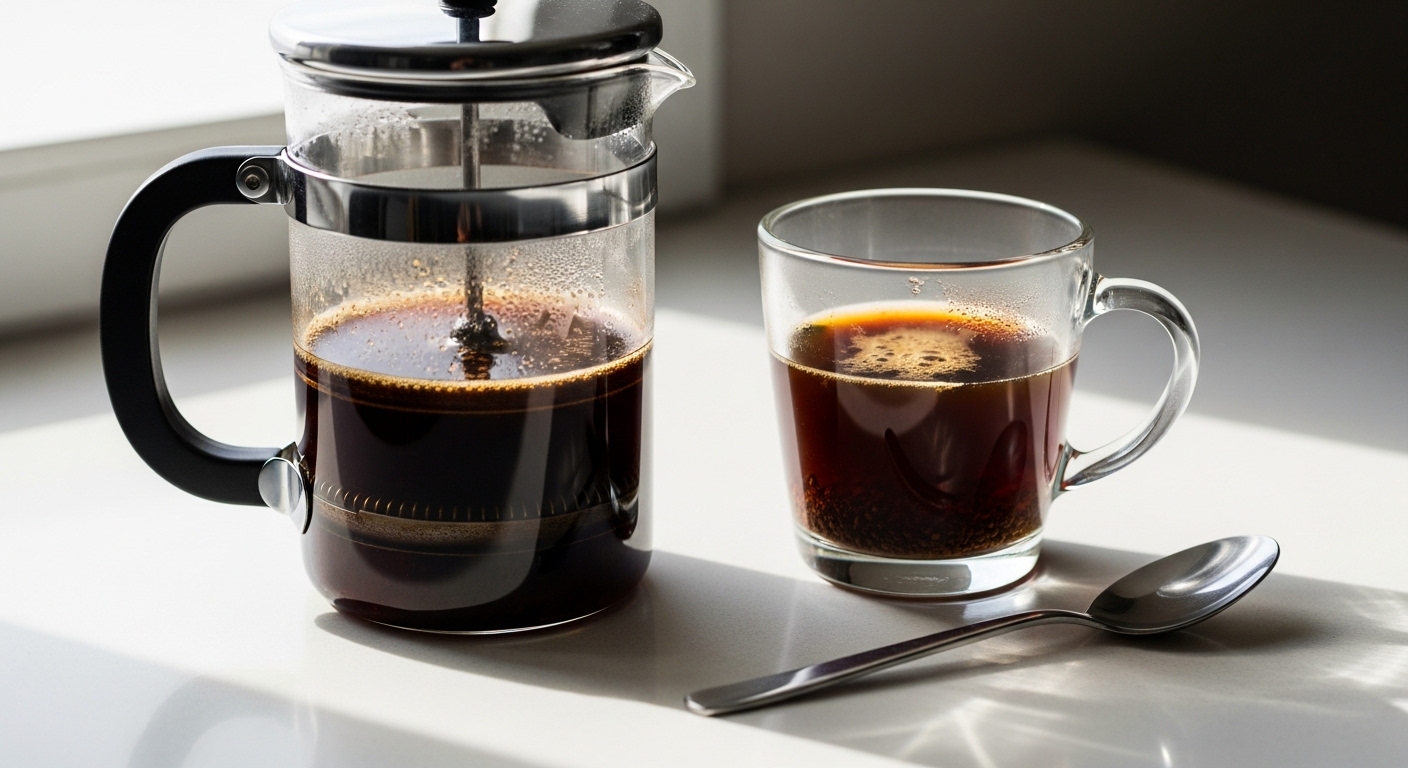
French press coffee gets muddy because the metal filter allows more fine coffee particles and oils into the cup than paper-filter methods. That is part of why French press tastes rich and full-bodied—but when the grind is too fine, the coffee sits too long on the grounds, or the filter is dirty or badly assembled, the cup can become overly silty and unpleasant. The good news is that you can reduce muddy sediment without losing the body that makes French press enjoyable.
If your French press tastes heavy in a good way, that is normal. If it feels gritty, sludgy, or dirty in the mouth, this guide will help you clean that up while keeping the brew satisfying.
First: some sediment is normal in French press
This matters because many people expect French press to behave like paper-filter coffee. It does not. French press is designed to let more oils and tiny particles through than a V60, Chemex, or standard drip machine with paper filters. That is why it tastes fuller and rounder. The trade-off is that you will usually get some sediment in the cup.
So the goal is not to make French press feel like paper-filter pour-over. The goal is to reduce the bad kind of muddiness—the kind that feels gritty, dirty, overly thick, or unpleasantly heavy—while keeping the good kind of body that gives French press its personality.
That distinction saves a lot of frustration. If you expect zero sediment, you will always feel like French press is “wrong.” If you aim for rich but clean enough, you will get much better results.
Why French press gets muddier than it should
Excessive sediment usually comes from one or more of these causes:
- grind size that is too fine
- inconsistent grinding with too many fines
- cheap or poorly assembled filter parts
- old residue or oils in the filter
- letting the coffee sit on the grounds too long
- pouring the last sludgy bit into the cup
The nice thing is that most of these problems are easy to improve. You usually do not need a new brewer. You need a better process.
Cause #1: The grind is too fine
This is the biggest cause of muddy French press coffee. If the coffee is ground too fine, tiny particles pass through the filter much more easily. Those particles create sludge at the bottom of the cup and can also make the whole brew taste harsher and more bitter.
French press generally works best with a coarse grind—but not absurdly coarse. If the coffee is too coarse, the cup may turn weak and hollow. If it is too fine, you get muddy texture and over-extraction risk. The sweet spot is a grind that is coarse enough to keep sediment manageable but still fine enough to produce satisfying extraction.
Fast fix: go slightly coarser and test again. Do not jump to “huge chunks.” Make a calm adjustment and see whether the cup gets cleaner without losing too much flavor.
Cause #2: Your grinder creates too many fines
Even if you choose a coarse grind setting, a poor grinder can still create a lot of dust-like fine particles. That is what makes the cup feel muddy even when you think you are using the “right” grind size. Blade grinders are especially likely to do this because they chop the beans unevenly instead of grinding them consistently.
This is why some people say, “I used coarse coffee and it still felt dirty.” The issue is not only grind size. It is grind consistency.
Fast fix: if you are using a blade grinder, pulse gently and avoid over-grinding. If you already use a burr grinder, check whether it is producing too many fines or needs cleaning. A more consistent grind makes a very noticeable difference in French press texture.
Cause #3: The coffee sits on the grounds too long
Many people brew French press, plunge it, pour one cup, and then leave the rest sitting inside the press. That is a mistake if you care about flavor and texture. Even after plunging, the coffee remains in contact with the grounds to some extent. Over time, it keeps changing. The cup becomes rougher, more bitter, and often muddier.
Fast fix: once the coffee is ready, pour out what you are going to drink—or transfer the rest to another container if you want to save it briefly. Do not treat the French press like a storage vessel.
Cause #4: The filter assembly is dirty or not seated properly
If the French press filter is dirty, oily, bent, or assembled badly, it may allow more particles through than it should. Old coffee residue can also make the cup taste stale or rough, which adds to the feeling of “muddy” coffee.
This is especially common when people rinse the press casually but never fully disassemble the filter. Tiny particles and oils collect between the metal parts, then affect every brew afterward.
Fast fix: take apart the filter assembly, clean all the pieces thoroughly, and make sure they are reassembled tightly and correctly. This can improve both taste and sediment control more than people expect.
Cause #5: You are pouring the last muddy part into the cup
French press coffee often gets murkier at the very end because the finest particles settle toward the bottom of the brewer. If you pour all the way to the last drop, you often send the worst sludge directly into the cup.
Fast fix: leave a little behind at the end. That small sacrifice often gives you a noticeably cleaner cup. Not every drop needs to be “rescued.” The cleanest part of the brew is worth prioritizing over squeezing out the final muddy mouthful.
How to reduce sediment without killing body
This is the balance most people want. They do not want French press to become paper-filter coffee. They just want it to stop feeling sloppy. Use this approach:
- Use a proper coarse grind, not fine and not wildly oversized.
- Improve grind consistency as much as your setup allows.
- Clean the press properly, especially the filter.
- Pour out the coffee after brewing instead of letting it sit.
- Do not pour the final sludge into the cup.
That combination preserves body while reducing the annoying grit that ruins the experience.
A practical French press routine for a cleaner cup
If you want one straightforward routine, try this structure:
- measure a sensible coffee-to-water ratio
- use coarse, consistent grounds
- brew with hot water and a calm steep
- plunge gently
- pour without violently disturbing the bottom
- leave the last bit behind
This routine is simple, repeatable, and already solves most muddiness complaints without requiring a new brewing philosophy.
Should you skim the top or stir less?
Some people like to skim floating particles or foam off the top before plunging. Others avoid aggressive stirring because they want a calmer bed of grounds. Both ideas can help slightly, but they matter less than grind quality, filter cleanliness, and not over-pouring the sludge at the end.
So yes, you can experiment with gentler handling. Just do not mistake small refinements for the main solution. If your grind is bad, a prettier stir will not save the cup.
When French press is the wrong method for your taste
Here is the honest truth: some people simply do not like even a well-made French press cup. If you strongly prefer ultra-clean coffee with very little texture, French press may never become your favorite. That is not failure. That is taste.
If you want more clarity and a cleaner finish, a paper-filter method like V60 may fit you better. But if you usually enjoy body and richness, it is worth fixing your French press technique before giving up. A well-brewed French press should feel full, not filthy.
Common mistakes that make muddiness worse
Mistake 1: Grinding too fine to get “more flavor”
This often creates more bitterness and more sludge, not better coffee.
Mistake 2: Leaving coffee in the press
The longer it sits, the rougher and murkier it often becomes.
Mistake 3: Never cleaning the filter assembly properly
Old oils and trapped particles make each new brew taste dirtier and rougher.
Mistake 4: Pouring every last drop
The bottom of the press is often where the nastiest sediment ends up. Leaving a little behind is usually worth it.
How to test whether your fix worked
Do not change five things at once. Use this simple test method:
- Brew one baseline cup.
- Change only one variable—usually grind size first.
- Taste the body, sediment, and finish.
- Keep what improved, then test the next variable only if needed.
This is how you actually learn what is helping instead of just hoping the next cup feels cleaner.
FAQ
Is some sludge normal in French press?
Yes. Some sediment is normal because the metal filter allows more fine particles through than paper-filter methods. The goal is to reduce excessive sludge, not eliminate every trace.
Can a better grinder reduce French press sediment?
Yes. A more consistent grinder creates fewer fines, which usually means a cleaner French press cup.
Should I use paper with French press to reduce sediment?
You can experiment with extra filtering, but that changes the nature of the cup. If you do that, you may reduce sediment a lot, but you also reduce some of the body that makes French press distinctive.
Conclusion: cleaner French press is about control, not eliminating body
French press should taste rich and full, not muddy and dirty. If your cup feels sludgy, the biggest fixes are usually a coarser and more consistent grind, a clean filter assembly, not letting the coffee sit too long, and leaving the final muddy bit behind. Once you control those variables, you keep the body that makes French press great while getting a much cleaner and more enjoyable cup.
