
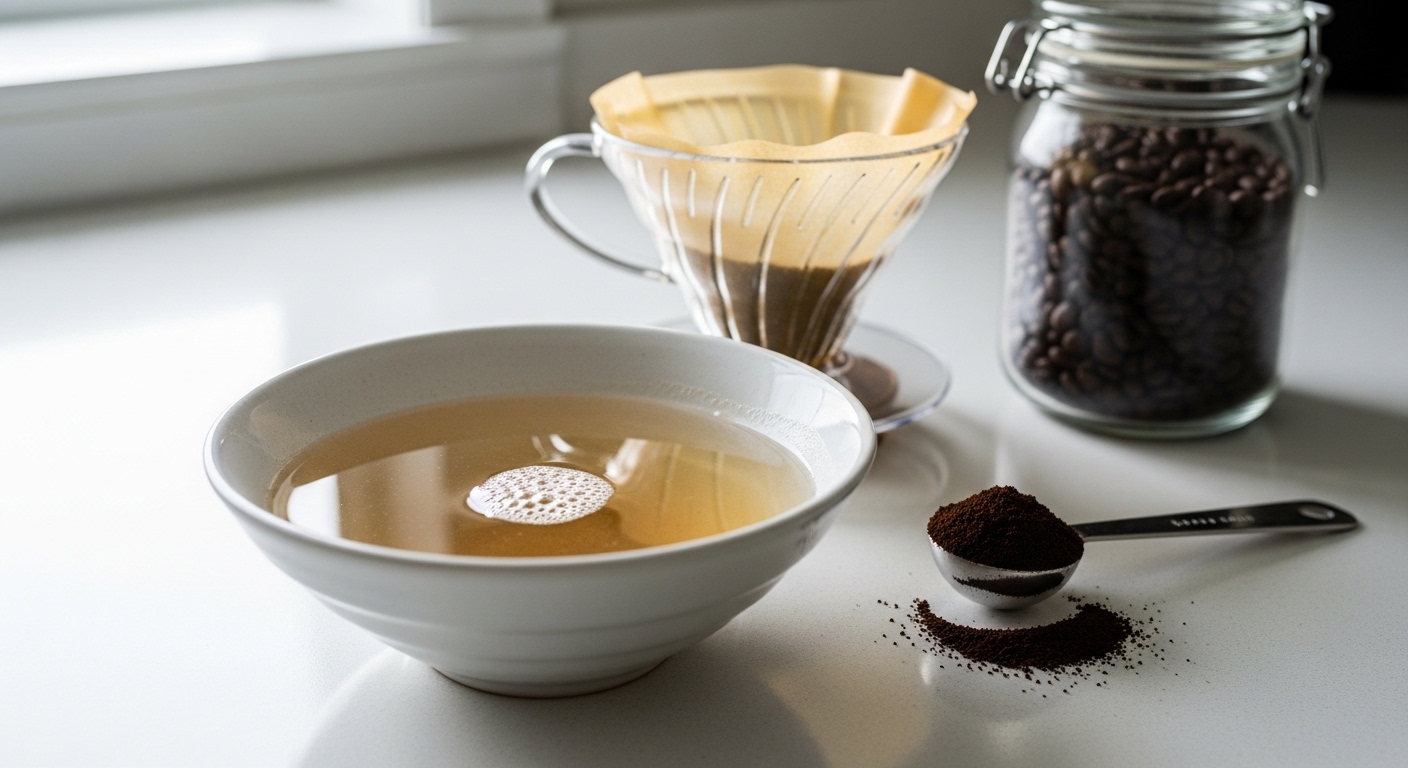
Quick Answer: Why does coffee taste weak?
Weak coffee usually comes from one of four problems: (1) too little coffee for the amount of water, (2) grind size that is too coarse, (3) under-extraction, or (4) stale coffee that has lost aroma and strength. In simple terms, weak coffee is not always “not enough caffeine” or “cheap beans.” Very often, it is a brewing setup problem that can be fixed quickly by using a better coffee-to-water ratio, adjusting grind size, and making sure the coffee is actually fresh enough to deliver flavor.
If your cup tastes watery, hollow, thin, or like “brown hot water,” this guide will help you identify the real cause and fix it without turning the coffee into a bitter mess.
First: “weak” does not always mean “low caffeine”
A lot of people say coffee is weak when what they really mean is one of these:
- it tastes watery
- it lacks body
- it smells fine but tastes flat
- it does not feel satisfying
- it seems to disappear on the palate too fast
That is a flavor and concentration issue first. Caffeine can be part of the story, but “weak” is usually about how the coffee feels and tastes, not just how stimulating it is. This matters because people often try to fix weak coffee the wrong way: they buy darker roast, assume they need stronger beans, or keep adding more scoops randomly without understanding the actual problem.
The better move is to diagnose the weakness properly. Once you know where it comes from, the fix is usually simple.
The 4 most common causes of weak coffee
Cause #1: The ratio is too weak
This is the most common cause by far. If you use too little coffee for the amount of water, the result will often taste thin and unsatisfying, even if the beans are decent and the technique is fine. This is why coffee made by “eyeballing it” often swings between okay and disappointing.
Many people think they are using a normal amount of coffee when they are actually under-dosing. A scoop-based routine can drift over time because different beans, roasts, and grind levels occupy space differently. A dark roast may look like “a full scoop” but weigh less than a lighter roast. That inconsistency creates weak cups without you realizing it.
Fast fix: use a measured coffee-to-water ratio. A practical baseline for many home brewers is around 1:15 to 1:17. If your coffee feels weak, moving slightly toward the stronger side can help a lot.
Cause #2: The grind is too coarse
If the grind is too coarse for your brew method, water passes through too quickly or fails to extract enough flavor from the grounds. The coffee may not only taste weak—it may also taste sour, hollow, or oddly empty.
This is especially common in pour-over, drip coffee, and even French press when the grind is much too coarse. People often assume coarser is safer because they want to avoid bitterness, but if you go too far, the cup loses sweetness and structure.
Fast fix: grind slightly finer. Do not jump dramatically. One small step finer is often enough to make the coffee feel fuller and more complete.
Cause #3: The coffee is under-extracted
Weak coffee is not always just “not enough coffee.” Sometimes the coffee is there, but the water failed to pull enough flavor out of it. This is under-extraction. It often creates a cup that tastes weak, sour, and unfinished at the same time.
Under-extraction can happen because of:
- grind too coarse
- water not hot enough
- brew time too short
- uneven pouring in pour-over
- poor grinder consistency
This is why not all weak coffee is fixed by “using more coffee.” Sometimes you need better extraction, not just more dose.
Cause #4: The coffee is stale
Stale coffee often loses aroma, sweetness, and liveliness first. What remains can feel flat, dull, and weak. This is especially common with pre-ground coffee, beans stored badly, or coffee that has been open for too long.
If the coffee smells lifeless or tastes like it has no real center, freshness may be part of the problem. In that case, changing grind and ratio can help only so much. The coffee itself has already lost a lot of what made it good.
How to diagnose weak coffee fast
If you want a quick decision path, ask these questions in order:
- Does the coffee taste weak and watery? → check the ratio first.
- Does it taste weak and sour? → check grind size and extraction.
- Does it taste weak and flat? → check freshness.
- Does it taste weak even though you used a lot of coffee? → check grind, water, and brew method.
This order matters because it keeps you from making random changes. The best fix depends on the type of weak cup you are dealing with.
The fastest fixes by brew method
French press weak coffee fix
French press weak coffee usually comes from a weak ratio, a grind that is too coarse, or too short a steep. Because French press is more forgiving, people often get casual with measurement and then wonder why the cup feels thin.
Fast fix for French press:
- use slightly more coffee
- make sure the grind is coarse, but not absurdly coarse
- do not cut steep time too short
- pour all the coffee out after pressing so it does not keep changing in the press
If French press coffee tastes weak and muddy, the issue may be poor grind consistency rather than only the recipe.
V60 / pour-over weak coffee fix
Pour-over weak coffee usually comes from a grind that is too coarse, too little coffee, or under-extraction caused by fast flow. This is one of the easiest places to accidentally brew a cup that looks beautiful but tastes disappointing.
Fast fix for V60:
- grind slightly finer
- check that your ratio is not too light
- pour steadily instead of dumping water too fast
- use appropriately hot water, especially with lighter roasts
If the brew finishes extremely quickly and tastes weak, that is a very strong sign the grind is too coarse or the extraction is too shallow.
Drip machine weak coffee fix
With drip machines, weak coffee often comes from using too little coffee, a grind that is too coarse, or a machine that simply does not extract very efficiently. Some machines brew cooler or faster than ideal, which makes ratio and grind even more important.
Fast fix for drip coffee:
- measure the coffee instead of using random scoops
- use a proper medium grind
- make sure the machine is clean
- avoid reheating old brewed coffee and confusing that with weak fresh coffee
Espresso weak coffee fix
Espresso feels different because it is concentrated, but weak espresso is still possible. If a shot runs too quickly, tastes thin, and has little body, the grind may be too coarse or the puck preparation may be off.
Fast fix for espresso:
- go slightly finer
- check the dose and yield
- make sure the coffee is fresh enough to behave properly
Weak espresso is often more obvious than weak drip coffee because the texture falls apart quickly when the shot is not dialed in.
Why adding more coffee is not always the full answer
Many people try to fix weak coffee by immediately dumping in more coffee next time. Sometimes that works. But if your extraction is poor, a stronger dose can create a cup that is still unbalanced—just heavier and more frustrating.
For example, a sour weak cup made with too-coarse grind may become a slightly less weak but still sour cup if you only add more coffee. The real fix would have been adjusting extraction. This is why the best results usually come from asking whether the problem is strength, extraction, or freshness.
Weak vs sour vs flat: learn the difference
This distinction saves a lot of time:
- Weak: watery, thin, low body, unsatisfying concentration
- Sour: sharp, tangy, unfinished, often linked to under-extraction
- Flat: dull, lifeless, muted, often linked to stale coffee or poor water
A cup can be weak and sour at the same time. It can also be weak and flat. Those combinations point you toward different fixes. That is why reading the cup honestly matters more than just saying “it’s bad.”
The hidden causes people overlook
Poor grinder consistency
If your grinder produces many big chunks and many fines at once, extraction becomes uneven. The cup may feel both weak and rough. Some particles under-extract, while others over-extract. This can create a brew that never tastes centered.
Bad water
If your water tastes off, heavily chlorinated, or weirdly dull, it can make coffee feel flat and uninspiring. Sometimes people call that weakness when the real issue is water that is muting aroma and clarity.
Reheated or held coffee
Coffee that has been sitting too long, reheated, or kept on a hot plate may taste flat and disappointing. That is not the same as freshly brewed weak coffee, but people often experience both as “bad weak coffee.”
A practical “fix weak coffee” checklist
If you want one checklist that solves most weak-coffee problems, use this:
- Measure your coffee and water properly.
- If it is watery, strengthen the ratio slightly.
- If it is watery and sour, grind finer.
- If it is watery and flat, check freshness and water quality.
- Change one variable at a time and taste again.
This is a much better system than randomly using more scoops and hoping the next cup “feels stronger.”
What not to do
When coffee tastes weak, avoid these common mistakes:
- buying much darker roast immediately without checking the recipe
- adding way more coffee and creating a harsh cup
- changing grind, ratio, and temperature all at once
- assuming “weak” means the beans are low quality every time
The cleaner approach is always the same: diagnose the weakness, then fix the cause instead of reacting emotionally to the last bad cup.
FAQ
Does weak coffee mean less caffeine?
Not always. A weak-tasting cup can still contain a fair amount of caffeine depending on the dose, bean type, and serving size. Weak taste and caffeine level are related only loosely.
Should I just use more coffee?
Sometimes yes, especially if the ratio is too weak. But if the cup is also sour or flat, you may need to address extraction or freshness too.
Can stale coffee taste weak?
Yes. Stale coffee often loses aroma and sweetness, which can make it feel dull and weak even if the brew method is fine.
Conclusion: weak coffee is usually a setup problem, not a mystery
Weak coffee usually comes from a weak ratio, a grind that is too coarse, under-extraction, or stale coffee. Once you separate those causes, the fix becomes much easier. Measure your coffee, adjust one thing at a time, and pay attention to whether the cup is watery, sour, or flat. That simple process turns “bad weak coffee” from a daily frustration into a very solvable problem.
