
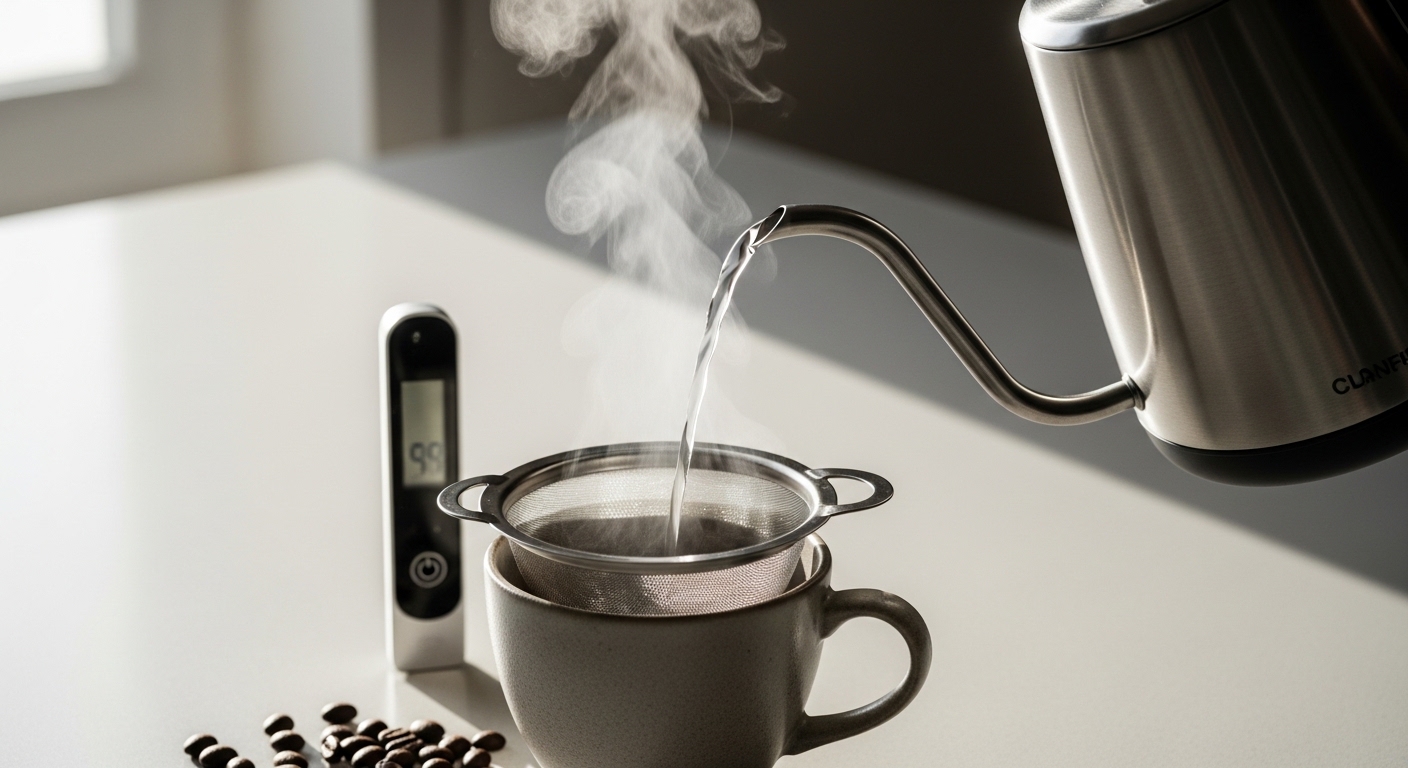
Quick Answer: What is the ideal water temperature for coffee?
For most brew methods, the ideal water temperature for coffee is hot enough to extract properly without pushing the cup into bitterness. In practical home brewing, that usually means water that is just off the boil for many coffees, especially lighter roasts, while darker roasts often benefit from slightly gentler brewing. The real point is not chasing one magical number forever. It is understanding that water that is too cool can make coffee taste sour or weak, while water that is too aggressive for the coffee can make it taste bitter, harsh, or roast-heavy.
If you have ever wondered whether your water is too hot, too cool, or just making good beans taste disappointing, this guide will help you understand how temperature changes extraction—and how to use it without overcomplicating your morning coffee.
Why water temperature matters more than many people realize
A lot of people think hot water is just hot water. If it looks steamy, they assume it is close enough. Sometimes that works well enough to make drinkable coffee, but it does not always make good coffee. Water temperature plays a direct role in extraction, which means it changes how much flavor the water pulls from the grounds and which parts of that flavor become most noticeable in the cup.
If the water is too cool, the coffee may not extract enough sweetness, body, and balance. The cup often tastes weak, sharp, or unfinished. If the water is too aggressive for the coffee—especially with darker roasts—the brew may become bitter, rough, or burnt-tasting more easily. That is why temperature is not just a technical detail. It is one of the main levers that shapes whether your coffee feels balanced or disappointing.
This is also why cafés and serious home brewers pay attention to temperature. It is not because they enjoy making coffee look complicated. It is because temperature really changes the cup.
The basic logic: hotter water extracts more, cooler water extracts less
This is the core idea that makes everything else easier. Hotter water generally extracts flavor more effectively and more aggressively. Cooler water extracts less. That means hotter water can help pull more sweetness and depth from coffees that are hard to extract, especially lighter roasts. But it can also push bitter, harsh, or roast-heavy flavors harder if the coffee is already easy to extract or roasted quite dark.
So when people ask, “What is the best water temperature?” the honest answer is not one fixed number for every bean and every brewer. The smarter answer is: use enough heat to extract the coffee well, but not so much aggression that you ruin the balance.
That may sound less exciting than a magic formula, but it is far more useful in real life.
What happens if the water is too cool?
When water is too cool for the coffee you are brewing, the most common result is under-extraction. That usually shows up as coffee that tastes sour, weak, thin, or oddly incomplete. The coffee may smell promising, but the flavor feels like it never fully developed in the cup.
This is especially common with lighter roasts, which are denser and generally harder to extract. If you use water that is too gentle, the brew often highlights sharp acidity without enough sweetness or body to support it. People then assume the beans are “too acidic” or that the coffee is bad, when the real problem may simply be that the water never gave the coffee a real chance.
So if your coffee feels weak and sour at the same time, water temperature deserves suspicion immediately.
What happens if the water is too hot?
Very hot water is not always a problem. In many cases, especially with lighter coffees, properly hot water is exactly what helps the brew taste complete. But when the coffee is already easy to extract—or when the roast is darker—too much heat can push bitterness, dryness, harshness, or roast-heavy notes harder than you want.
This is one reason darker coffees often taste rougher when brewed too aggressively. The water is not literally burning the coffee during brewing, but it is extracting the darker roast character more strongly. That can turn a bold coffee into an unpleasantly burnt, bitter, or ashy one.
If your coffee tastes harsh, bitter, or strangely aggressive despite decent beans and grind, temperature may be part of the problem—especially if you are using darker roast coffee.
Why roast level changes the ideal brewing temperature
Roast level is one of the best guides for thinking about temperature. Lighter roasts are usually more demanding. They often benefit from hotter water because they need more extraction energy to unlock sweetness and balance. Darker roasts are easier to extract, so they often benefit from a slightly gentler approach.
This is why one water temperature can feel perfect for a washed light roast but too aggressive for a dark supermarket coffee. The coffees are simply not asking for the same treatment.
So a very practical rule looks like this:
- Light roast: usually wants hotter water
- Medium roast: usually works well in a flexible middle zone
- Dark roast: often benefits from slightly gentler water
This rule is not absolute, but it is an excellent starting point for making sensible choices.
Why brew method changes how temperature behaves
Water temperature does not operate in isolation. It interacts with the brewing method. In pour-over, water temperature combines with grind size, pouring style, and flow speed. In French press, it combines with immersion time and grind. In espresso, it interacts with grind, pressure, and shot dynamics. That means the same temperature can feel different depending on how the coffee is brewed.
This is why blindly copying a temperature recommendation without considering the brew method can be unhelpful. A light roast in V60 may benefit from very hot water, while a dark roast in French press may become rough and overdone under the same conditions.
The real goal is always the same: balanced extraction in the cup, not temperature purity for its own sake.
Ideal temperature thinking for pour-over
Pour-over often rewards hotter water, especially with lighter roasts. Since V60 and similar brewers can easily drift into under-extraction if the grind is too coarse or the flow is too fast, good heat often helps the coffee taste fuller and more complete. Many disappointing pour-overs are not disappointing because the beans are bad—they are disappointing because the brew was too cool and too weak.
That said, with darker roasts or coffees that already taste harsh, backing off the heat slightly can produce a smoother, more pleasant result. Pour-over is sensitive enough that temperature tweaks can genuinely matter.
If your V60 tastes sour and thin, hotter water is worth trying. If it tastes bitter and roast-heavy, gentler water may help.
Ideal temperature thinking for French press
French press is generally more forgiving than pour-over, but water temperature still matters. Since the coffee steeps in full immersion, hot water can extract quite thoroughly over time. With medium and darker coffees, water that is too aggressive can make the cup heavier and rougher than it needs to be. With lighter coffees, good heat can help the brew avoid tasting dull or underdeveloped.
French press is a great example of how temperature and steep time work together. If the brew is long and the water is very aggressive, bitterness can show up more easily. If the brew is short and the water is too cool, the cup may feel weak and incomplete.
So in French press, you should think about temperature as part of the whole extraction picture, not as a standalone trick.
Ideal temperature thinking for drip coffee makers
With automatic drip brewers, you often have less control over water temperature directly. That is why machine quality matters. Some machines simply brew at better temperatures than others. If a machine brews too cool, the coffee may feel flat or sour no matter how good the beans are. If the machine overdoes things or keeps the coffee on a hot plate too long afterward, the result may feel cooked or rough.
For home users, this means the water temperature problem in drip coffee is often partly a machine problem. If your drip coffee consistently tastes weak or strangely dull, it is worth asking whether the brewer itself is extracting at a good temperature—or not.
Sometimes the issue is not your recipe. It is the machine’s relationship with heat.
Ideal temperature thinking for espresso
Espresso is more sensitive still because it concentrates everything. Temperature interacts with pressure, grind, shot time, and roast level. If the espresso is too cool for the coffee, the shot may lean sour and thin. If it is too aggressive, especially with darker beans, bitterness and roast harshness may show up fast.
For many beginners, espresso temperature feels intimidating because so many variables are already moving. But the basic truth remains the same: lighter coffees usually benefit from more extraction energy, darker coffees often need a gentler hand.
The mistake is thinking temperature alone will save a badly dialed shot. It matters, but it works with the rest of the system.
How to know if your water is too cool
Your coffee often tells you. Common signs of too-cool brewing water include:
- sour or sharp taste
- weak or watery body
- unfinished feeling in the cup
- muted sweetness
- especially disappointing results with lighter roasts
If those signs appear and your grind and ratio are already reasonable, water temperature is a strong suspect. This is one reason people should not blame acidity alone. A coffee can taste “too acidic” because it was brewed too cool to become balanced.
How to know if your water is too aggressive for the coffee
Common signs include:
- bitter or drying finish
- harshness that overwhelms sweetness
- dark roast tasting burnt or smoky in a bad way
- coffee feeling heavy but not satisfying
Again, temperature is not always the only cause. Grind may be too fine, brew time may be too long, or the coffee itself may be heavily roasted. But if your brew seems too harsh despite otherwise sensible choices, slightly gentler water is worth testing.
Do you need a thermometer?
Not always. A thermometer can be helpful, especially if you want to learn how different temperatures affect your coffee. But many home brewers can do very well by understanding the general logic and brewing consistently. For example, using water just off the boil for lighter roasts and letting the kettle calm slightly for darker roasts is already a very workable approach.
The bigger problem is not usually the absence of a thermometer. It is the absence of awareness. If you never think about temperature at all, you may repeat avoidable mistakes forever. If you understand the role of heat, you can improve a lot even without obsessing over exact digits every morning.
The best practical approach for most home brewers
If you want the simplest useful framework, do this:
- Use properly hot water for lighter roasts and coffees that taste under-extracted.
- Use slightly gentler water for darker roasts or coffees that taste harsh.
- Change only one variable at a time.
- Let taste guide whether the temperature helped.
This works because it keeps temperature in its proper place: important, but not isolated from the rest of brewing.
Common mistakes people make
Mistake 1: Using very cool water because they fear bitterness
This often creates sour, weak, under-extracted coffee instead of “gentler” coffee.
Mistake 2: Treating every roast the same
Lighter and darker coffees usually do not want identical brewing heat.
Mistake 3: Blaming temperature for every bad cup
Temperature matters, but grind, ratio, water quality, and brew time still matter too.
Mistake 4: Chasing a magic number instead of tasting the cup
The real goal is balance in the cup, not loyalty to one internet-approved figure.
FAQ
Should I use boiling water for coffee?
For many lighter coffees, very hot water works well. For darker roasts, backing off slightly can sometimes produce a smoother cup. The coffee itself matters.
Why does my coffee taste sour even with good beans?
One likely reason is that the water was too cool, which can lead to under-extraction and leave the cup sharp and unfinished.
Can water that is too hot make coffee taste burnt?
It can make darker or already harsh coffees taste more bitter, rough, or roast-heavy. The water is not literally burning the coffee, but it can extract the unpleasant side of the roast more aggressively.
Conclusion: the ideal coffee temperature is the one that helps the cup feel balanced
The ideal water temperature for coffee is not one sacred number for every situation. It is the temperature that helps your coffee extract fully enough to taste sweet, balanced, and complete without becoming harsh or bitter. Lighter roasts usually want more heat. Darker roasts often want a gentler hand. Once you stop chasing temperature myths and start tasting what heat is doing in the cup, you make much better decisions—and your coffee gets much more consistent as a result.
