
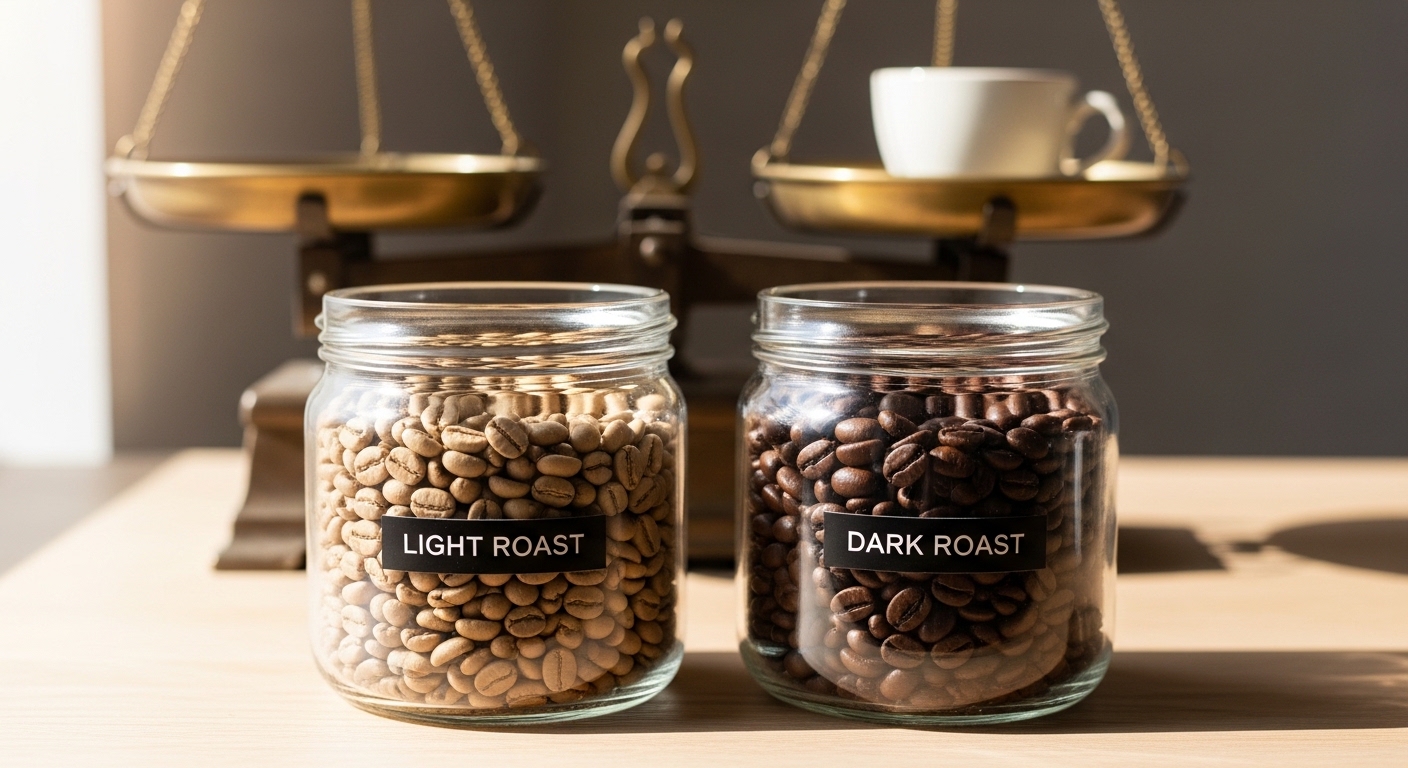
Quick Answer: Which roast has more caffeine—light or dark?
It depends on how you measure. If you measure coffee by scoops (volume), light roast can end up with slightly more caffeine because the beans are denser. If you measure by weight (grams), the caffeine difference between light and dark roast is usually small. Roast level changes taste far more than it changes caffeine.
If your goal is more caffeine, the biggest factor is often the bean type (Arabica vs Robusta) and your serving size—not light vs dark.
Why this myth won’t die
Dark roast tastes stronger—more bitter, smoky, and intense—so people naturally assume it has more caffeine. But “strong taste” is not the same thing as “more caffeine.” Roast level is mostly a flavor decision, not a stimulant decision.
Once you understand the difference between taste strength and caffeine strength, buying coffee gets much easier.
Roast level vs caffeine: what roasting actually changes
Roasting changes the bean’s structure, moisture, and flavor compounds. It also changes how the bean behaves when ground and brewed. But caffeine is relatively stable compared to many aroma compounds. That’s why roast level impacts taste far more than it impacts caffeine.
The biggest “caffeine swing” most people experience comes from differences in:
- Serving size (a big cup of drip vs a small espresso shot)
- Bean species (Robusta typically higher than Arabica)
- Brewing method and how much coffee you use
The key detail: volume vs weight
This is where the confusion comes from. Light roasts are usually denser than dark roasts. Dark roasting makes beans expand and become lighter (more air inside).
So if you measure coffee by scoops (volume), a scoop of light roast can contain more coffee mass than a scoop of dark roast—potentially leading to slightly more caffeine. But if you weigh your coffee in grams, you remove most of that difference.
If you measure by scoops (volume)
Light roast may end up with slightly more caffeine, because you’re likely getting more coffee mass in the scoop due to density.
If you measure by grams (weight)
The difference is usually small. If you use 20g of coffee, it doesn’t matter much whether it’s light or dark—caffeine will be fairly similar compared to the huge impact of species and serving size.
So which should you choose: light or dark?
Choose based on flavor and your brewing method, not caffeine myths:
- Light roast: brighter, more aromatic, more “origin” character (can taste sour if under-extracted).
- Medium roast: balanced, sweet, easiest for most people.
- Dark roast: bold, smoky, more bitterness, less nuance (often forgiving in milk drinks).
If you constantly fight bitterness, a medium roast is often the easiest win. If you want clarity and fruity notes, light roast can be amazing—if brewed well.
The bigger caffeine factors (what actually matters)
1) Arabica vs Robusta
If you truly want more caffeine, the biggest shift usually comes from choosing Robusta or a blend that includes Robusta. That change can be more noticeable than roast differences.
2) Brew method and serving size
A large cup of drip coffee can contain more total caffeine than a single espresso shot. Espresso is more concentrated, but the serving is smaller. If you drink two large coffees, you’ll feel it regardless of roast.
3) How much coffee you use (ratio)
If you want a stronger caffeine hit, using more coffee (or drinking a larger serving) increases caffeine intake more reliably than changing roast level.
Practical caffeine tips (without ruining your sleep)
If your goal is “more energy,” you still need to protect sleep. Otherwise caffeine becomes a debt cycle.
- Drink coffee earlier in the day if sleep is a problem.
- Don’t chase energy with bigger and bigger doses.
- If you want coffee later, try decaf or half-caf.
If you want a science-backed overview of coffee effects, the health benefits guide connects the dots.
Common confusion: “strong coffee” vs “strong caffeine”
Here’s a simple way to avoid confusion:
- Strong taste = bold, bitter, intense flavor (often dark roast, more extraction).
- Strong caffeine = more total caffeine in your cup (species, dose, serving size).
If your coffee tastes too bitter but you still want caffeine, don’t use darker roasts as a “caffeine strategy.” Use better brewing and consider bean type instead.
FAQ
Which roast is best for espresso?
Many people enjoy medium to medium-dark for espresso, especially for milk drinks. But light roast espresso can be excellent if you like bright, complex shots and you dial it in carefully.
Why does dark roast feel stronger?
Because the roast flavor is intense and bitterness is more noticeable. That sensory intensity feels “strong,” even if caffeine isn’t higher.
Can I make light roast taste less sour?
Yes—sourness is often under-extraction. Use a slightly finer grind, hotter water, or a longer brew time. Keep everything else consistent and adjust one variable at a time.
Conclusion: roast changes flavor more than caffeine
If you measure by scoops, light roast can sometimes deliver slightly more caffeine due to density. If you measure by weight, the difference is usually minor. The smarter takeaway is: choose roast for flavor, and choose species/dose/serving size for caffeine. That’s how you stop chasing myths and start getting the cup you actually want.
