
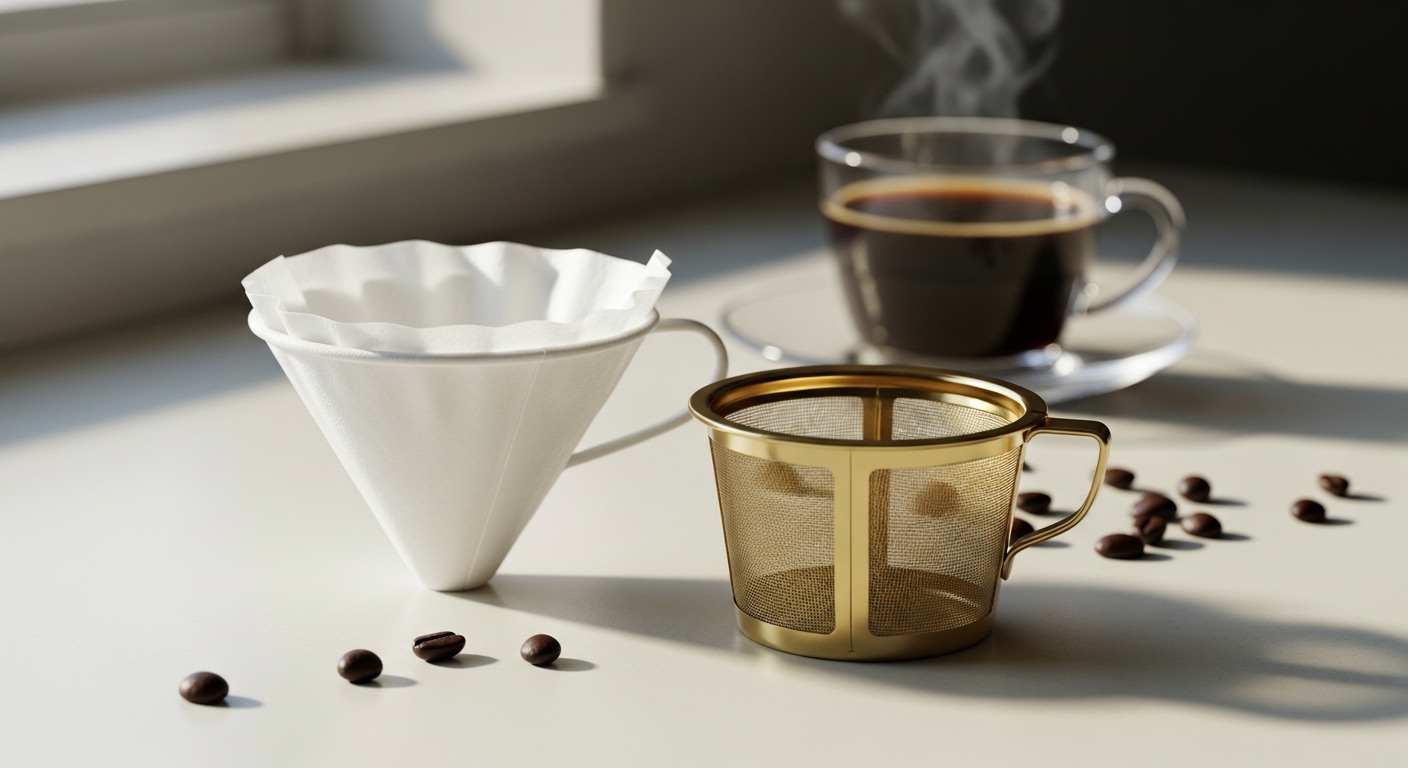
Quick Answer: Do paper and metal filters really change coffee flavor?
Yes—very noticeably. A paper filter usually makes coffee taste cleaner, lighter, and more defined because it traps more oils and fine particles. A metal filter usually makes coffee taste heavier, fuller, and richer because it lets more oils and tiny coffee particles pass into the cup. Neither one is automatically “better.” They simply create different experiences from the same beans.
If you want more clarity and separation between flavors, paper is usually the better choice. If you want more body, more texture, and a cup that feels stronger in the mouth, metal often wins. The smartest move is to choose the filter that matches the kind of coffee you actually enjoy drinking.
Why the filter matters more than beginners expect
Most people think the filter is just there to “hold the coffee in place.” That is only part of the story. A filter also decides what gets into the final cup and what gets left behind. That one job changes texture, aroma, body, and even how sweetness and acidity feel on the palate.
This is why two coffees brewed with the same beans, same ratio, and same grind can still taste surprisingly different if one uses paper and the other uses metal. The bean did not change. The filter changed the way the coffee reaches your mouth.
If you have ever wondered why pour-over often tastes “cleaner” than French press, filter behavior is one of the biggest reasons. The difference is not only the brewer. It is also the way paper or metal controls oils and sediment.
The core difference in plain English
Here is the simplest version:
- Paper filters block more oils and fine particles.
- Metal filters let more oils and fine particles through.
That creates a very different cup. Paper tends to highlight clarity, brightness, and separation. Metal tends to increase texture, heaviness, and “coffee presence.”
Neither result is more “correct.” This is not a moral issue. It is a preference issue. Some people hear “clean” and think “better.” Others hear “full-bodied” and think “better.” Both are reasonable.
What paper filters do to coffee
Paper filters are popular because they produce a cup that many people describe as clean, bright, and well-defined. By trapping oils and a lot of the fine sediment, paper makes it easier to notice the coffee’s structure without extra “weight” clouding the experience.
In practical terms, paper-filtered coffee often feels:
- lighter in the mouth
- cleaner on the finish
- more transparent in flavor
- better at showing fruit, floral, or delicate notes
This is one reason paper filters are so common in V60, Chemex, and many automatic drip machines. If you want the bean’s details to stand out clearly, paper is a strong ally.
But paper has trade-offs too. Some people feel paper-filtered coffee can taste thinner, less “cozy,” or less satisfying if they love body and texture. A cup can be beautifully clear and still feel too light for someone who wants a heavier coffee experience.
What metal filters do to coffee
Metal filters allow more coffee oils and very fine particles into the cup. This usually creates a brew that feels fuller, heavier, and sometimes more intense even when the ratio is the same. It can make coffee feel more “substantial” in the mouth, which is exactly why many people love French press and certain reusable metal pour-over filters.
In practical terms, metal-filtered coffee often feels:
- richer and heavier
- more textured
- less sharply separated in flavor
- more likely to show some sediment or muddiness
This is great if you like coffee that feels bold and round. It is less ideal if you want extreme clarity and a super clean finish. Metal gives you more “presence,” but sometimes less precision.
Why oils change the experience so much
Coffee oils carry aroma and texture. When more of those oils reach the cup, coffee tends to feel heavier and more enveloping. That is a big reason metal-filtered coffee can feel richer. When paper removes more of those oils, the cup feels cleaner and often easier to read in terms of flavor separation.
This is not just about “strength.” It is about mouthfeel. A paper-filtered cup can have excellent flavor and still feel lighter. A metal-filtered cup can feel robust and satisfying even if the flavor details are a little less sharp around the edges.
So when people argue about paper vs metal, they are often really arguing about what kind of coffee feeling they prefer in the mouth.
Paper filter flavor profile: who usually likes it?
Paper filters often appeal to people who want:
- cleaner cups
- brighter, more transparent acidity
- less sediment
- more obvious tasting-note separation
- less heaviness in the finish
If you enjoy tasting individual notes like citrus, berry, florals, caramel, or tea-like structure, paper usually helps those qualities show up more clearly. This is especially relevant for lighter or more delicate coffees.
Metal filter flavor profile: who usually likes it?
Metal filters often appeal to people who want:
- more body
- a richer mouthfeel
- a stronger “coffee” presence
- more oils in the cup
- less dependence on disposable paper filters
If you love French press, stronger everyday cups, or coffee that feels fuller and rounder, metal often matches that preference better. It can also be more satisfying for people who feel paper-filtered coffee tastes too light.
How filter choice changes common brew methods
V60 and other pour-over brewers
With V60, paper filters are the standard because they support the method’s strength: clarity. But reusable metal filters exist, and they change the cup noticeably. A metal V60-style filter can make the brew feel less crisp and more textured. Some people love that because it softens the “sharpness” of very bright coffees. Others feel it takes away what makes V60 special in the first place.
If you already like the clean elegance of V60, paper is probably your better match. If you wish your V60 felt a bit fuller, a metal filter might be worth trying.
French press
French press is a classic metal-filter experience. It naturally gives more body and more sediment than paper-filter methods. That is why people often describe it as “rich” or “bold.” If you dislike muddy texture, French press may frustrate you. If you love a hearty cup, it may feel perfect.
This is also why French press and V60 are such a useful comparison: they show the paper-vs-metal difference very clearly.
Automatic drip coffee makers
Many drip machines use paper filters, but some use reusable metal baskets. The paper version usually creates a cleaner, tidier cup. The metal basket often creates a fuller cup with more sediment and more oils. If your drip coffee tastes too thin, a metal basket may give you the body you want. If it tastes too muddy, paper may clean it up immediately.
Chemex
Chemex uses thick paper filters that create one of the cleanest coffee styles around. If you like ultra-clean, elegant coffee, that is the appeal. If you find Chemex too light or too “tea-like,” then your taste may simply lean more toward body and texture than toward extreme clarity.
Does paper remove flavor?
This question comes up a lot. The honest answer is: paper does remove some oils and tiny particles that contribute to body and texture. So yes, it changes what reaches the cup. But calling that “removing flavor” is too simplistic. Paper is not stripping coffee down to nothing. It is changing the balance in favor of clarity over heaviness.
That means if you love big body, paper can feel like it took something away. If you love clean definition, paper can feel like it revealed what was hidden.
Does metal make coffee stronger?
Metal often makes coffee feel stronger because more oils and fines enter the cup, increasing body and intensity. But that does not always mean there is more total extraction or more caffeine. It is often a texture and concentration perception issue. The coffee feels bolder because more material reaches your mouth.
This is why people sometimes switch from paper to metal and think the coffee became dramatically “more powerful.” What they are often feeling is more body and more suspended solids, not necessarily a radically different brew chemistry.
The convenience trade-off
Paper filters are convenient in one way and inconvenient in another. They are easy because cleanup is simple: throw the filter away and rinse the brewer. But they are disposable, which means you need to keep buying them.
Metal filters are convenient because they are reusable, but they require more careful cleaning. Oils and fine coffee particles stick to them, and if you do not wash them properly, they can make coffee taste stale or dirty over time.
So the choice is not only flavor. It is also about routine. Do you prefer buying filters and having easier cleanup, or do you prefer reusing one filter and washing it more carefully?
Which one is better for beginners?
For many beginners, paper filters are easier because they produce cleaner cups and reduce some of the mess and muddiness that make troubleshooting harder. If your coffee tastes weird, it is easier to isolate grind and ratio issues when the cup is not full of extra fines.
Metal can still be great for beginners who know they prefer heavier coffee. But if you are trying to “learn what coffee tastes like” in a clearer way, paper often gives you a cleaner classroom.
How to choose the right filter for your taste
If you are unsure, use this simple guide:
- Choose paper if you want clarity, brightness, and cleaner texture.
- Choose metal if you want body, richness, and a fuller mouthfeel.
- Use both if you like different coffee styles for different moods.
That third option is underrated. You do not need to join a “team.” You can use paper when you want a clean morning pour-over and metal when you want a richer weekend cup.
A simple side-by-side experiment
If you want to understand the difference quickly, do this at home:
- Use the same coffee, same grind, and same ratio.
- Brew one cup with paper and one with metal.
- Let both cool slightly.
- Compare body, clarity, finish, and aroma.
This is one of the easiest coffee experiments you can do because the effect is usually obvious. It also teaches you more than reading arguments online ever will.
FAQ
Do metal filters always create sediment?
Usually more than paper, yes. How much depends on the filter design and grind consistency, but some extra fines and texture are normal.
Do paper filters make coffee healthier?
Paper removes more oils from the cup, while metal lets more through. But if your focus is taste, the more practical difference is body and clarity rather than turning this into a health debate.
Can I reuse paper filters?
Technically some people try, but it is usually not a great idea for flavor, consistency, or convenience. Paper filters are designed to be disposable.
Conclusion: filters don’t just hold coffee—they shape it
Paper and metal filters create meaningfully different cups. Paper highlights clarity, cleanliness, and separation. Metal highlights body, oils, and fullness. If you understand that, the choice becomes much easier. Instead of asking which filter is “best,” ask the better question: do you want a cleaner cup or a richer one? That answer usually tells you which filter belongs in your routine.
