
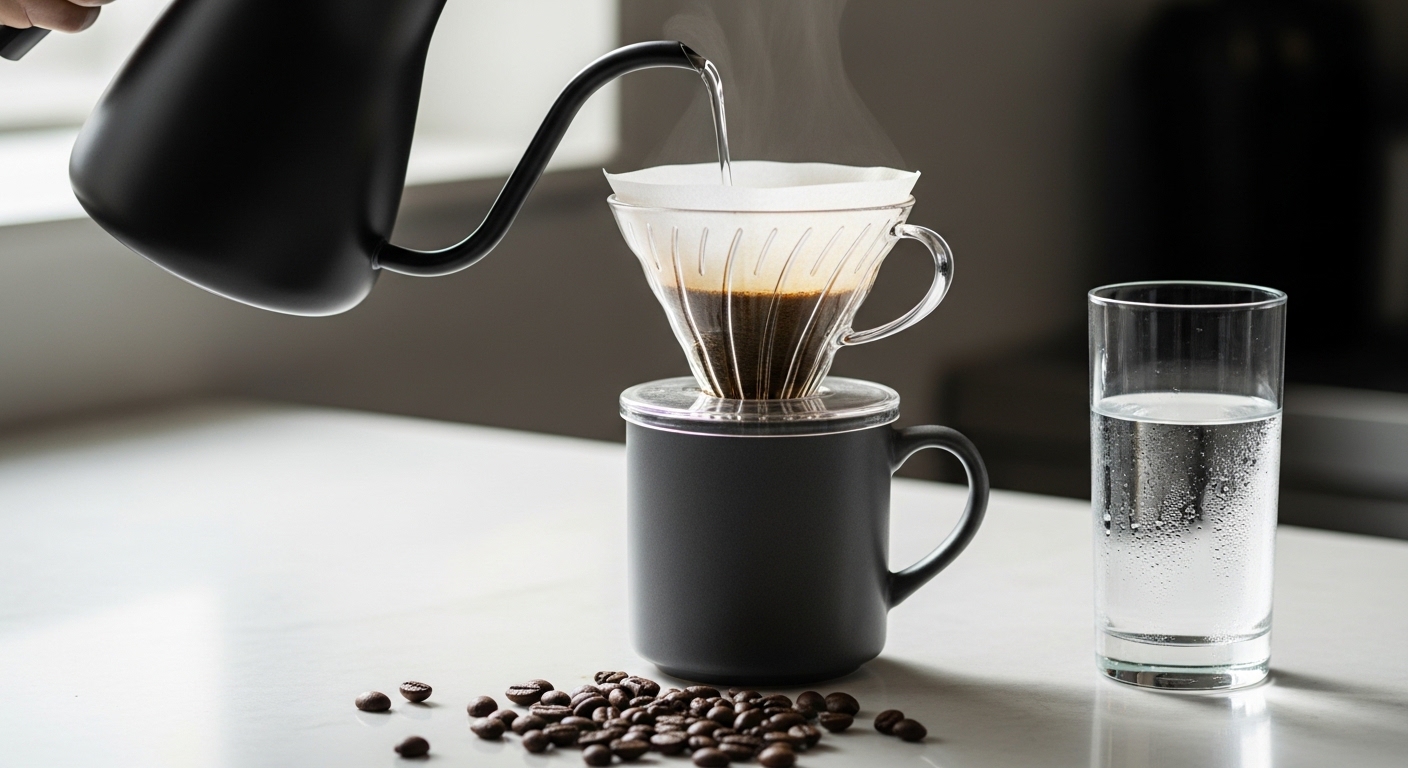
Quick Answer: Does water really make a big difference in coffee?
Yes—water makes a huge difference in coffee. Since brewed coffee is mostly water, the quality, taste, and balance of that water strongly affect how the final cup tastes. If the water is too harsh, too dull, heavily chlorinated, or inconsistent, even excellent beans can taste flat, bitter, or strange. Good water helps coffee taste clearer, sweeter, and more balanced. Bad water quietly ruins more home coffee than most people realize.
If your coffee tastes disappointing even when the beans seem good and the brewing method seems fine, water may be the hidden problem. This guide will help you understand why water matters, how it changes flavor, and how to improve it without overcomplicating your life.
Why water matters so much in coffee
A lot of people obsess over beans, grinders, and brewing gear while giving almost no attention to the one ingredient that makes up most of the drink: water. That is a mistake. If your water tastes bad by itself, it will almost never produce great coffee. If your water tastes dull, overly mineral-heavy, flat, or full of chlorine, the coffee often reflects that immediately.
This is one of the biggest reasons café coffee can feel cleaner and more balanced than home coffee even when the same beans are used. Good cafés usually care a lot about water. At home, many people assume tap water is “close enough” without ever testing whether it actually supports the coffee well.
So yes, water matters because coffee is mostly water. But it also matters because water is what extracts flavor from the grounds. That means water is not just a passive ingredient. It is an active part of how the coffee becomes the coffee.
The simplest rule: if your water tastes bad, your coffee probably will too
This is the most practical rule in the whole topic. You do not need to begin with chemistry charts. Start with your mouth. If your tap water tastes unpleasant, heavily chlorinated, metallic, or stale, there is a very good chance it is hurting your coffee too.
That does not mean water must taste “special” to make good coffee. It just needs to taste clean, pleasant, and neutral enough to support the beans instead of fighting them. The better your water tastes on its own, the better your odds of making coffee that tastes clean and balanced.
This simple filter helps a lot because it cuts through overthinking. Before you blame the beans, the grinder, or yourself, taste the water honestly.
What bad water can do to coffee
When water is poor for coffee, the damage shows up in a few common ways. The cup may taste:
- flat or lifeless
- harsh or rough
- too bitter
- strangely muted
- less sweet than expected
- oddly chemical or chlorinated
This is why water problems are so frustrating. They often do not create one dramatic obvious flaw. Instead, they make everything feel slightly worse. The coffee is never fully clear, never fully sweet, never fully satisfying. It feels like something is missing, and people often blame the coffee beans when the real issue started long before brewing ended.
Why chlorine is such a common enemy
One of the most common water problems at home is chlorine or chlorine-like taste in tap water. If the water smells like a swimming pool or has that faint chemical edge many city water supplies have, the coffee often suffers. Delicate notes disappear, sweetness gets masked, and the whole cup can feel harsher than it should.
This is especially noticeable with lighter, cleaner coffees where subtlety matters. A chlorinated water profile can flatten the very things that make good coffee interesting. Even darker coffees can suffer, though the problem may hide behind roastiness more easily.
If your water smells strongly treated, improving that one issue alone may raise your coffee quality more than buying a new brewer.
Why “hard” or “soft” water changes the cup
Water is not only about chlorine. The mineral content matters too. In very simple terms, water that is too hard or too soft can change how coffee extracts and how the final cup feels. Some waters pull flavor differently, which can make coffee taste brighter, flatter, rougher, or more muted depending on the situation.
This is why coffee sometimes tastes surprisingly different when you brew the same beans in different cities, different houses, or even in the same home after a water filter changes. The coffee did not suddenly become worse. The water changed the extraction and the flavor expression.
You do not need to obsess over perfect mineral science on day one. But it helps to understand that water is not one universal neutral liquid. It has character, and that character enters your cup.
Can bottled water make coffee better?
Sometimes, yes. If your tap water is unpleasant, bottled water can make a noticeable difference. Many people discover this by accident: they brew coffee away from home with different water and suddenly the cup tastes better. That does not automatically mean every bottled water is ideal, but it does show how much water can matter.
The goal is not to assume that “bottled” means “best.” The goal is to use water that tastes clean and works well with coffee. Some bottled waters are better choices than others depending on their mineral profile, but even a decent clean bottled water can outperform bad tap water in many homes.
If your home coffee feels consistently disappointing, testing a brew with a different clean water source is one of the smartest troubleshooting steps you can take.
Can filtered water help enough?
Very often, yes. For many people, filtered water is the most practical sweet spot. It can reduce chlorine and improve taste without forcing you into a complicated water ritual. If your tap water is only moderately problematic, a decent filter may be enough to make the coffee noticeably cleaner and sweeter.
This is why filtered water is such a common recommendation. It is not always the “ultimate” solution in every technical sense, but it is a highly practical improvement for a huge number of home brewers. And practical solutions matter more than theoretically perfect ones you will never actually use.
If you want the simplest path to better coffee water, filtering is often where to start.
Why boiling bad water does not fix bad water for coffee
This is a common assumption. People think that if they boil the water, it becomes automatically “good” for coffee. But boiling mainly changes temperature. It does not magically remove all the taste issues, mineral imbalances, or unwanted character that may be hurting the cup.
If the water already tastes rough or chemical before you boil it, the coffee may still carry that problem afterward. Temperature matters for extraction, yes, but water quality and water temperature are not the same issue.
So if your coffee still tastes off even though the water was heated properly, it is worth asking whether the problem started with the water itself—not with how hot it became.
How water affects different brew methods
Pour-over / V60
Pour-over tends to reveal water issues clearly because the method often emphasizes clarity and delicate flavor. If the water is poor, V60 can taste flat, harsh, or strangely closed-off even with great beans.
French press
French press can sometimes hide water flaws a little more because the cup is heavier and fuller-bodied, but bad water still reduces sweetness and overall quality. The coffee may feel duller or rougher than it should.
Drip machine
Drip coffee often suffers heavily from water problems because people already treat drip brewing casually. If the machine is mediocre and the water is mediocre too, the result can feel lifeless very quickly.
Espresso
Espresso is highly sensitive, and water affects both taste and machine health. If the water is unsuitable, the shot may taste wrong and the equipment may also suffer over time. This is one reason many serious espresso users pay close attention to water.
The easiest way to test whether water is your problem
If you want a simple real-world test, brew the same coffee as similarly as possible using two different waters. For example, compare your normal tap water with a cleaner filtered water or a decent bottled water you enjoy drinking. Keep the coffee, grind, and method the same. Then taste the cups side by side.
This kind of test is powerful because it removes guessing. If the cleaner water makes the cup noticeably sweeter, clearer, or more balanced, you have your answer. Water was not a side issue. It was one of the main issues.
That simple comparison teaches more than endless speculation.
What “good coffee water” feels like in the cup
When the water suits the coffee better, the change often feels like this:
- sweetness becomes easier to notice
- the cup feels cleaner and more open
- bitterness is less harsh
- notes are easier to identify
- the finish feels less rough and more balanced
This is why good water can feel like “suddenly better beans,” even when the beans never changed. Water gives the coffee a better chance to express itself.
When you should stop overthinking and just improve the obvious
The water topic can become nerdy very fast, and that scares people off. But most home brewers do not need to begin by chasing perfect mineral engineering. They need to begin by fixing the obvious.
If your water tastes bad, improve it. If your coffee gets cleaner and sweeter with filtered or better-tasting water, keep doing that. You do not need to win a chemistry competition. You need better cups.
This matters because people often avoid practical improvement while reading endlessly about theoretical perfection. Coffee rewards sensible action much more than endless debate.
A practical checklist for better water at home
If you want a simple system, use this:
- Taste your water by itself.
- If it tastes unpleasant, do not expect great coffee from it.
- Try filtered water first if available.
- Compare the same coffee with different water sources.
- Stick with the option that makes the cup cleaner and sweeter.
That is already enough to solve a lot of home coffee problems without turning the process into a hobby inside the hobby.
Common mistakes people make
Mistake 1: Treating water like it is invisible
Water is not a background detail. It is the main ingredient in brewed coffee.
Mistake 2: Blaming the beans before tasting the water
Sometimes the beans are fine. The water is what is holding them back.
Mistake 3: Assuming boiling solves everything
Boiling changes temperature, not all the flavor and composition issues that may affect the coffee.
Mistake 4: Ignoring how water changes from place to place
The same coffee can taste different in different homes or cities partly because the water is different.
FAQ
Can tap water make good coffee?
Yes, sometimes. If the tap water tastes clean and balanced, it can absolutely work well. The problem is that many tap waters do not taste neutral enough for great coffee.
Is filtered water always better than tap water?
Often, yes—but not automatically in every case. The key question is whether the filtered water actually tastes better and makes the coffee taste cleaner and sweeter.
Why does my coffee taste better when I’m away from home?
One big reason may be different water. Many people assume it is the beans or the café magic, when water is actually one of the biggest differences.
Conclusion: water is not a minor detail—it is one of the biggest coffee ingredients
If your coffee tastes worse than it should, water deserves real attention. Since coffee is mostly water, poor water can flatten sweetness, hide clarity, and make good beans feel disappointing. The smartest first step is simple: taste your water honestly, and if it tastes off, improve it. Once the water gets better, the coffee often does too—and sometimes by a lot more than people expect.
