
Quick Answer: What is coffee bloom?
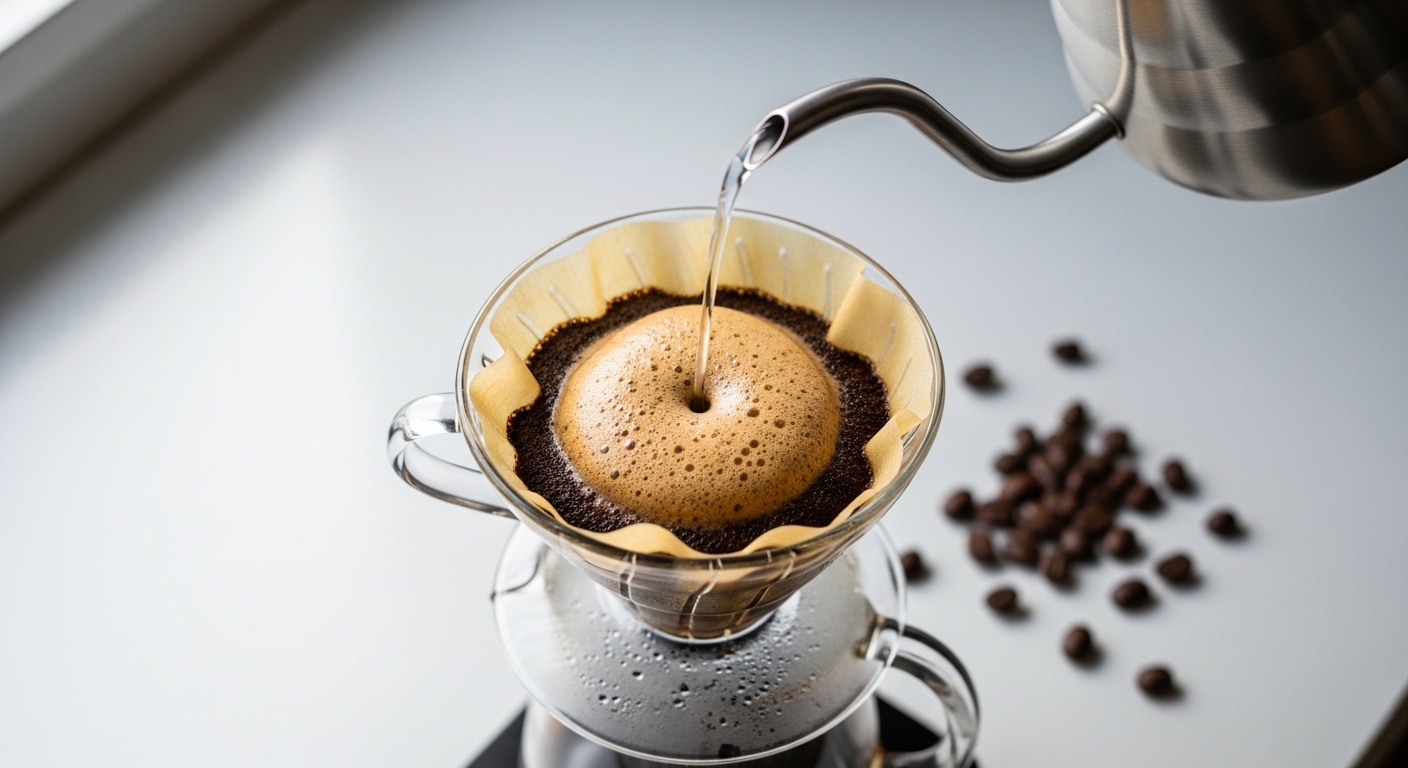
Coffee bloom is the bubbling, swelling, or puffing up that happens when hot water first hits fresh coffee grounds. It happens because the coffee is releasing carbon dioxide that built up inside the beans after roasting. In simple terms, bloom is a visible sign that gas is escaping from the coffee as brewing begins. Fresh coffee usually blooms more dramatically than older coffee because it still contains more trapped gas.
Bloom matters because too much trapped gas can interfere with even extraction. When you give the coffee a chance to bloom first, you usually help the rest of the brew become more balanced and consistent.
Why coffee bloom gets so much attention
If you watch people make pour-over coffee online, you will notice that they often talk about the bloom almost like it is a sacred ritual. They pour a little water first, wait, stare at the coffee bed, and then continue brewing. To beginners, this can look overly dramatic. It can feel like one more complicated coffee rule that exists mainly to make simple things seem harder.
But the bloom is not fake coffee theater. It is a real physical process with a practical effect on brewing. Freshly roasted coffee holds carbon dioxide. When hot water first hits the grounds, that gas begins escaping quickly. If the brew moves forward without giving that gas a moment to release, extraction can become less even because water has a harder time saturating the coffee bed properly.
So bloom matters—but not because it is magical. It matters because it helps the coffee and the water interact more evenly from the start.
Why fresh coffee puffs up when brewing
The short answer is carbon dioxide. During roasting, coffee beans go through major internal changes. One result is that gases, especially carbon dioxide, build up inside the beans. After roasting, the coffee gradually releases that gas over time. This is one reason freshly roasted coffee can feel so aromatic and active.
When you grind the beans and add hot water, the release speeds up dramatically. That is why the coffee bed may swell, bubble, foam a little, or rise unevenly during the first pour. What you are seeing is not “the coffee getting stronger.” You are seeing gas leaving the grounds.
This is also why older coffee often blooms less. Over time, much of that gas has already escaped, so the visual puffing becomes less dramatic.
What bloom tells you about freshness
Bloom can be a useful freshness clue, but it is not a perfect lie detector. In general, fresher coffee tends to bloom more. Older coffee tends to bloom less. That said, the exact bloom also depends on roast level, grind size, brewing method, and how the coffee was stored.
So if a coffee blooms strongly, that is usually a good sign that it still has plenty of gas and life in it. If it barely blooms at all, that may suggest the coffee is older or less lively. But you should not judge freshness from bloom alone. Smell, roast date, storage, and cup quality still matter too.
Think of bloom as one useful clue, not the entire verdict.
Does every brew method need a bloom?
Not in the exact same way. Bloom matters most in manual brewing methods where you control the first contact between water and coffee, especially pour-over. In those methods, a deliberate bloom step can make the rest of the brew more even and more predictable.
In immersion methods like French press, bloom can still matter, but it usually feels less dramatic because the coffee will stay fully in contact with water for longer anyway. In espresso, degassing and freshness still matter a lot, but the process shows up differently because espresso uses pressure and a much finer grind. So yes, bloom is relevant across coffee brewing broadly—but it matters most visibly and practically in pour-over style brewing.
Why bloom matters most in pour-over coffee
Pour-over depends on even saturation. If the first water does not wet the coffee bed properly because gas is fighting back, the rest of the brew may become uneven. Some areas may extract well, while others stay under-extracted. That is one way sourness, weak cups, or confusing flavor can show up.
When people bloom coffee in a V60 or similar brewer, they are trying to do one very practical thing: get the grounds evenly wet and allow gas to escape before the main brewing begins. That makes it easier for later pours to move through the bed more uniformly.
So the bloom is not about elegance. It is about setting up the rest of the extraction to succeed.
What a good bloom usually looks like
A good bloom usually looks like the coffee bed getting evenly wet, then swelling or puffing slightly as gas escapes. You may see bubbles. You may see the surface rise and break gently. The main thing you want is even saturation, not a dramatic performance.
If one side stays dry while another side erupts with bubbles, the bloom is not doing its job as well as it could. A bloom does not need to look beautiful for social media. It needs to help the bed get evenly prepared for brewing.
This is important because beginners often think a giant dramatic bloom means success. Not necessarily. A calmer, more even bloom is often more useful than a flashy one.
How much water should you use for a bloom?
You do not need to obsess over one sacred number. The practical goal is to use enough water to wet all the grounds thoroughly without immediately turning the bloom into the full brew. In most home setups, that means a small first pour that gives the bed a chance to saturate and release gas.
The details vary by recipe, dose, and brewer, but the purpose stays the same: cover the grounds evenly, avoid leaving dry pockets, and then pause briefly before continuing. If you do that well, you are already capturing most of the value of blooming.
What matters more than the exact number is whether the grounds actually got wet and had a moment to release gas.
How long should you let coffee bloom?
Again, the most practical answer is: long enough for the first burst of gas release to happen and for the bed to settle a little. You are not waiting forever. You are giving the coffee a short head start before the main extraction begins.
A lot of recipes suggest a brief pause, and that is usually enough. The bigger issue is not whether you waited exactly the “perfect” number of seconds. The bigger issue is whether you bloomed at all and whether the grounds were evenly saturated.
If your coffee often tastes uneven, sour, or oddly hollow, it is more useful to improve bloom quality than to chase one magical countdown number.
Why older coffee blooms less
Older coffee has already released more of its trapped gas over time. That means when hot water hits the grounds, there is simply less carbon dioxide left to escape dramatically. The bloom looks quieter, flatter, and less active.
This is one reason bloom can act as a freshness clue. If coffee that used to bloom strongly suddenly barely reacts, something probably changed in freshness or storage. It does not prove the coffee is bad, but it often suggests it is not at the same lively stage anymore.
This also helps explain why pre-ground coffee often blooms less impressively than freshly ground whole beans. It has usually lost more gas before brewing even begins.
Can too much bloom activity be a problem?
Sometimes very fresh coffee can bloom so actively that it becomes harder to brew evenly if your technique is shaky. This is especially true in methods that demand more precision. A very lively bloom is not automatically bad, but it can be a sign that the coffee is still highly active and may need more careful handling.
This is one reason people sometimes say very fresh coffee can behave differently—especially in espresso. The coffee is still releasing a lot of gas, and that can affect extraction consistency. So while bloom is often a good freshness sign, “more dramatic” is not always automatically “better in every possible way.”
As usual in coffee, context matters more than dramatic visuals.
Does bloom affect taste directly?
Yes, indirectly but meaningfully. Bloom helps improve extraction by allowing the first trapped gas to escape and by helping water reach the coffee bed more evenly. That means the rest of the brew can proceed with fewer dry pockets and fewer unevenly extracted areas.
If bloom is skipped or handled poorly in a sensitive pour-over setup, the coffee may taste more sour, weak, or inconsistent than it should. That does not mean every bad cup is “a bloom problem.” But bloom is one of the early steps that influence whether the rest of the extraction has a fair chance to work well.
So bloom is not flavor by itself. Bloom is preparation for better flavor.
The easiest way to bloom coffee properly
If you want the simple version, do this:
- Add a small first pour.
- Make sure all the grounds get wet.
- Let the coffee puff and release gas briefly.
- Continue brewing once the bed looks evenly saturated.
That is enough for most home brewers. You do not need to turn bloom into a dramatic ceremony. You just need to respect what it is trying to achieve.
Common bloom mistakes people make
Mistake 1: Leaving dry pockets in the bed
If some grounds stay dry, the bloom is already less useful because the bed is not being prepared evenly.
Mistake 2: Treating bloom as pure performance
The goal is not the prettiest puff. The goal is better saturation and smoother extraction.
Mistake 3: Thinking no bloom means automatically bad coffee
Less bloom may mean older coffee, but bloom intensity alone does not tell the whole story.
Mistake 4: Obsessing over exact timing more than even wetting
A sensible bloom done evenly matters more than chasing one perfect countdown while the bed is still uneven.
FAQ
Does more bloom always mean fresher coffee?
Often it suggests fresher coffee, but not perfectly. Roast level, grind size, and storage can affect bloom too.
Do I need to bloom French press coffee?
You can, but it is less critical than in pour-over. Bloom is most practically important in methods where even first saturation matters more to the flow and extraction pattern.
Why does pre-ground coffee bloom less?
Because much of the trapped gas may have already escaped before brewing, especially if the coffee has been ground for a while.
Conclusion: bloom is just fresh coffee releasing gas—and helping you brew better
Coffee bloom is the visible release of gas, mainly carbon dioxide, when hot water first hits fresh coffee grounds. It matters because that gas can interfere with even extraction if it is not given a chance to escape early. Fresh coffee usually blooms more, older coffee usually blooms less, and pour-over methods benefit the most from a thoughtful bloom step. Once you understand bloom as a practical brewing tool instead of coffee theater, it becomes much easier to use well—and much harder to overcomplicate.
