
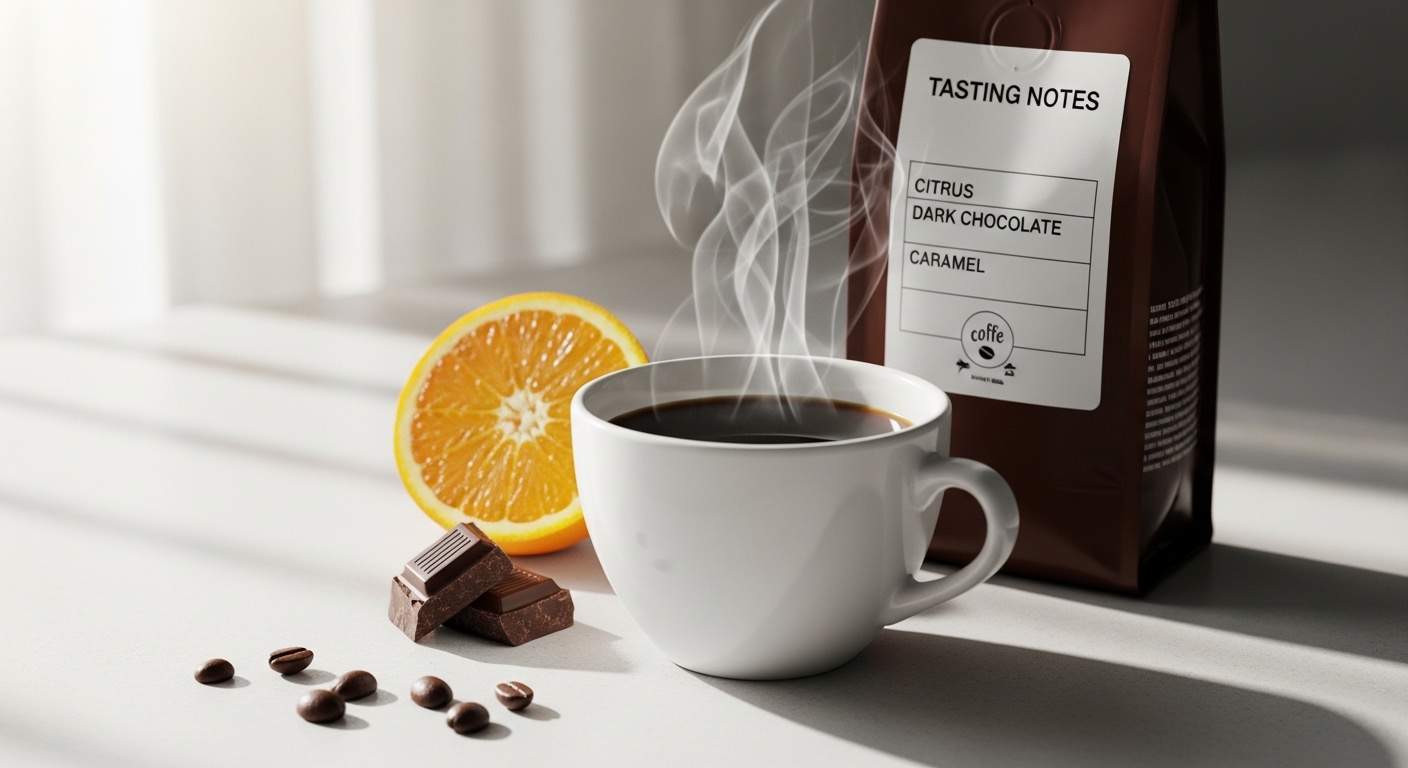
Quick Answer: What are coffee tasting notes?
Coffee tasting notes are descriptions of flavor similarities, not literal added ingredients. When a bag says a coffee has notes of blueberry, chocolate, or citrus, it does not mean those things were mixed into the coffee. It means the aroma, acidity, sweetness, or aftertaste of the coffee reminds the taster of those foods. In simple terms, tasting notes are a way of translating complex flavor into language people already understand.
This is why your coffee may not literally taste like a blueberry muffin even if the bag mentions berries. The note is a comparison, not a promise of dessert-level realism.
Why tasting notes confuse so many people
A lot of beginners read a coffee bag and feel like the industry is trolling them. The package says things like jasmine, stone fruit, brown sugar, bergamot, or blueberry jam. Then they brew the coffee, take a sip, and think, “This just tastes like coffee.” That reaction is completely normal.
The confusion comes from taking the notes too literally. Most people expect those words to function like flavor labels on candy or flavored tea. But coffee tasting notes do not work like that. They are more like reference points. They help you notice whether the coffee leans bright, sweet, nutty, fruity, floral, or roast-heavy. They are trying to describe the character of the coffee, not claim that someone secretly poured orange juice or melted chocolate into the bag.
Once you understand that, coffee notes become much more useful and much less annoying.
What tasting notes are actually trying to communicate
When roasters or tasters write tasting notes, they are usually trying to communicate a few big things at once:
- sweetness style
- acidity style
- body and texture
- aromatic character
- aftertaste impression
For example, if a coffee says chocolate, caramel, almond, the message is usually: this coffee may feel sweet, comforting, lower in bright acidity, and more familiar. If a coffee says citrus, berry, floral, the message is usually: expect something brighter, lighter, more aromatic, and more fruit-forward.
So the notes are not random poetry. They are usually giving you a rough map of the cup.
Why coffee can remind people of fruit, chocolate, or flowers
Coffee contains a huge range of aromatic compounds created through origin, processing, roasting, and brewing. Those compounds can overlap with the kinds of smells and flavors people associate with other foods. That is why a coffee may remind someone of berries, orange peel, cocoa, hazelnut, or jasmine without containing any of those ingredients.
This is not as weird as it sounds. Wine works the same way. People talk about blackcurrant, cherry, tobacco, or vanilla in wine, not because someone added them, but because the aroma and taste remind them of those references. Coffee uses a similar language system.
So when you see “notes of citrus,” the real meaning is usually something like: the acidity reminds the taster of orange, lemon, or grapefruit brightness. It is about resemblance, not literal composition.
Why your coffee may not taste exactly like the bag says
This is one of the most important parts. Even if the tasting notes are honest, your cup may still not match them perfectly. That happens for several reasons:
- your brew method changes flavor expression
- your grinder may limit clarity
- your water quality affects the cup
- the coffee may be older than when it was first tasted
- your personal palate may notice different things
This is why a coffee that was described as blueberry and florals might show up in your cup as “bright and a little sweet” instead of “wow, fresh blueberries.” That does not mean the roaster lied. It may just mean the notes are showing up in a softer or less obvious way in your setup.
Tasting notes are not laboratory guarantees for every home cup. They are directional guidance.
The difference between broad notes and very specific notes
Some bags use broad notes like chocolate, fruit, or nutty. Others get very specific and say things like blackberry jam, blood orange, milk chocolate, or candied pecan. Usually, the more specific the note, the more it reflects the taster’s attempt to describe a precise impression.
That precision can be helpful, but it can also intimidate beginners. If a coffee says “bergamot” and you have no idea what bergamot tastes like, that note is not helping you much. In those cases, it is smarter to translate the note into a broader meaning. Bergamot often suggests a citrus-floral quality. That is already more useful.
So do not get stuck on obscure note language. Try to understand the bigger flavor family it points toward.
How origin and processing influence tasting notes
Tasting notes are not invented in a vacuum. The coffee’s origin and processing often influence what kinds of notes show up. Some coffees are more likely to lean toward chocolate and nuts. Others tend to show more fruit or florals. Processing style can also shape whether the cup feels cleaner, juicier, sweeter, or funkier.
This is one reason tasting notes can actually be useful for shopping. Over time, you may notice patterns. Maybe you consistently enjoy coffees with caramel, cocoa, and almond notes. Or maybe you realize you prefer berry, citrus, and floral coffees. That information can help you buy more intelligently instead of gambling every time.
So tasting notes are not only fancy description. They can become a practical decision tool once you learn your preferences.
Why brew method changes how tasting notes show up
A coffee does not express itself the same way in every brew method. A V60 might make the cup taste cleaner and make fruity or floral notes easier to notice. A French press might make the same coffee feel heavier and rounder, with body taking more attention than delicate details. Espresso can intensify sweetness or acidity and make some notes feel much stronger—or much harder to separate clearly.
This is why you may love the bag notes conceptually but struggle to find them in your cup. Your brew method may be emphasizing different aspects of the coffee than the roaster experienced during cupping or testing.
It also means tasting notes are not fake just because they show up differently in different brewers. Coffee is dynamic. Extraction changes perception.
How roast level changes what notes you taste
Roast level matters a lot. Lighter roasts often make origin-driven notes easier to notice because less roast character covers them up. That is one reason lighter coffees are often described with fruit and floral notes. Darker roasts tend to push the flavor profile toward chocolate, toast, smoke, nuts, or roast-heavy bitterness, sometimes hiding more delicate origin character.
This is also why some people say they “never taste the notes.” If most of the coffee they drink is very dark roast, the roast flavor may dominate so strongly that the more subtle note language feels unrealistic. That is not a failure of your taste buds. It is often just the style of coffee you are drinking.
If you want to notice tasting notes more clearly, coffees that are not roasted too dark often give you a better chance.
A smarter way to read coffee tasting notes
Instead of reading tasting notes literally, try this approach:
- Chocolate / caramel / nuts usually means comforting, sweet, round, familiar
- Citrus / berry / stone fruit usually means brighter, fruitier, more lively acidity
- Floral / tea-like usually means delicate, aromatic, lighter-bodied
- Spice / cocoa / roast usually means deeper, warmer, heavier impression
This translation method helps a lot. You stop expecting literal flavor miracles and start using the notes as a preview of the coffee’s personality.
How to actually start noticing tasting notes in your own cup
You do not need a professional palate to get better at this. You just need a calmer way of paying attention. Here is a practical method:
- Smell the dry coffee first.
- Smell the brewed coffee before sipping.
- Take a sip and ask: is it bright, sweet, nutty, fruity, or roasty?
- Compare what you taste to broad flavor families, not obscure specifics first.
- Let the coffee cool a bit and taste again—many notes become easier to notice once it is less hot.
This approach works better than trying to force yourself to detect “candied mango” on command. Start broad. Precision comes later, if it comes at all.
Why some people never seem to taste the notes
Usually it is not because they are incapable. It is because one or more of these things is happening:
- the coffee is brewed poorly
- the grinder lacks consistency
- the coffee is stale
- the roast is too dark
- the person expects literal flavored-coffee intensity
All of those make note detection harder. If the coffee is flat, bitter, or dull, tasting notes become much more difficult to notice. That is why freshness, grind, and brew quality matter so much. Good note language cannot rescue a bad cup.
It is also worth saying this clearly: not every coffee drinker needs to care deeply about tasting notes. They are useful, but they are not a moral achievement. If you mainly want coffee that tastes good to you, that is already enough.
Do roasters ever exaggerate tasting notes?
Sometimes, yes. Not every bag is equally grounded or equally useful. Some roasters are careful and realistic. Others write note lists that feel more like branding than honest guidance. That is why experience matters. Over time, you learn which roasters describe coffee in a way that actually helps you and which ones seem to be writing fantasy copy.
That does not mean all note language is fake. It means you should treat notes as informed guidance, not sacred truth. The best roasters usually give notes that feel directionally accurate even if your exact cup is a little different.
How tasting notes can help you buy better coffee
Once you stop reading notes literally, they become much more useful for buying decisions. If you know you usually enjoy coffees with chocolate, caramel, and nut notes, you can look for those profiles more often. If you know you love bright citrus and berry coffees, the notes help you narrow your options quickly.
This is especially helpful when buying online, where you cannot smell the coffee first. Notes become a rough flavor map that helps you avoid buying blindly.
In that sense, tasting notes are not only for coffee geeks. They can save ordinary buyers money and disappointment too.
Common mistakes people make
Mistake 1: Taking notes literally
Tasting notes are comparisons, not added ingredients or guaranteed dessert flavors.
Mistake 2: Ignoring brew quality
If the coffee is brewed badly, the notes will be much harder to notice clearly.
Mistake 3: Expecting every palate to notice the same thing
Different people notice different aspects of the same coffee. That is normal.
Mistake 4: Assuming note language is always fake because it sounds fancy
Some note lists are exaggerated, but many are genuinely useful once you understand how to read them.
FAQ
Why doesn’t my coffee literally taste like blueberries if the bag says blueberry?
Because tasting notes describe resemblance, not literal ingredients. The coffee may have a berry-like sweetness or aroma without tasting like actual blueberry juice or cake.
Are tasting notes real or just marketing?
They can be real and useful, though some brands express them better than others. The best way to think of them is as directional flavor guidance.
Do darker roasts show tasting notes less clearly?
Often yes. Darker roasting can cover up more delicate fruit and floral notes with stronger roast character.
Conclusion: tasting notes are flavor clues, not flavor promises
Coffee tasting notes are meant to help you understand the style and character of a coffee, not trick you into expecting literal fruit juice in the cup. Once you read them as comparisons rather than guarantees, they become much more helpful. They can guide your buying, improve your expectations, and teach you what kinds of coffees you actually enjoy. The smartest move is simple: use tasting notes as a map, then let your own cup tell you the rest.
