
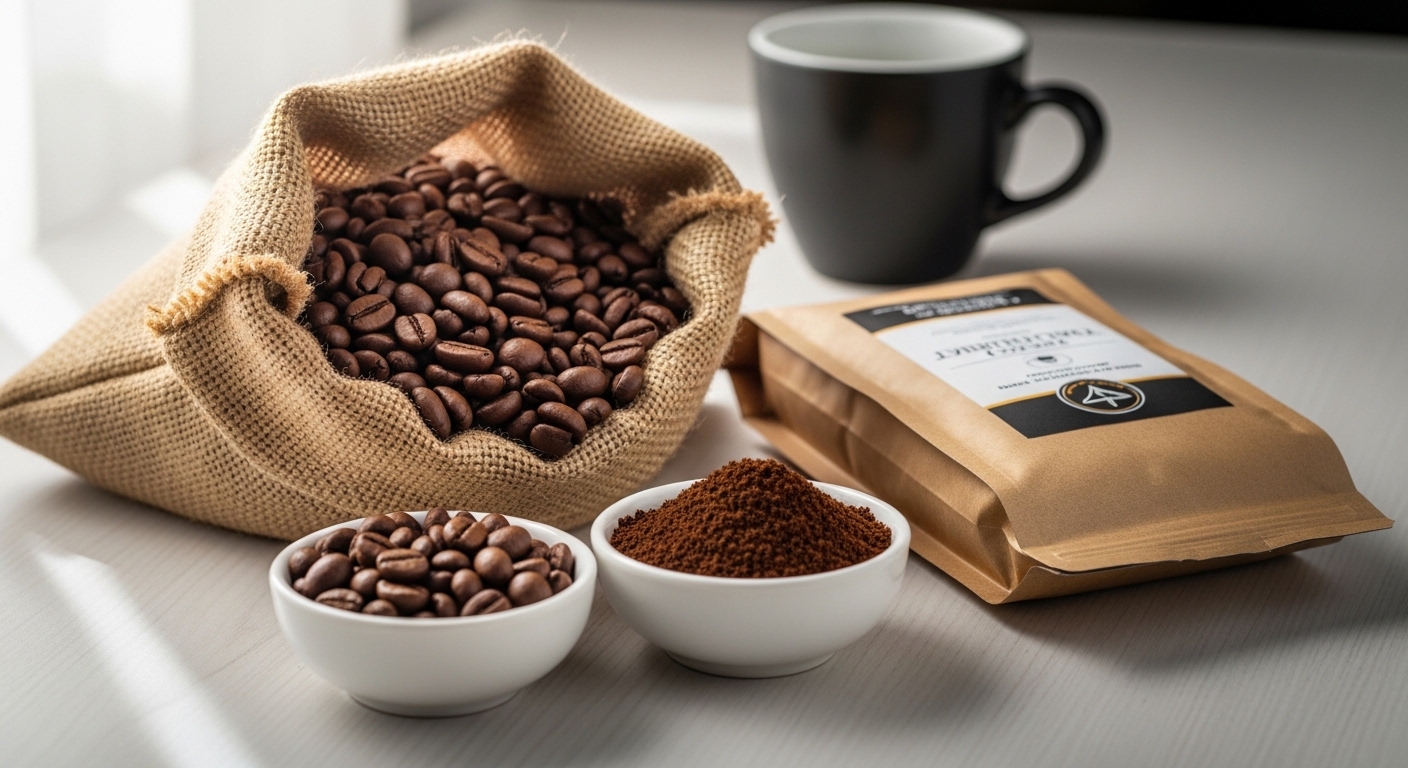
Quick Answer: Is whole bean coffee better than pre-ground coffee?
Yes—whole bean coffee is usually better than pre-ground coffee if you care about freshness, aroma, flavor clarity, and brewing control. The main reason is simple: once coffee is ground, it starts losing aroma and freshness much faster because much more surface area is exposed to air. Whole beans protect that flavor longer. That said, pre-ground coffee can still be the right choice for some people if convenience matters more than maximum quality.
If you have ever wondered whether whole bean coffee is genuinely worth the extra effort—or whether coffee people are just being dramatic again—this guide will explain the real difference in practical terms.
Why this question matters more than it sounds
At first glance, this sounds like one of those coffee debates that only exists to make simple things seem complicated. Beans are beans, right? Grind them or buy them already ground—what is the big deal? That reaction makes sense until you actually compare the two side by side.
Once you do that, the difference becomes much easier to understand. Whole bean coffee often smells more alive, tastes more expressive, and gives you more control over the final cup. Pre-ground coffee often loses freshness faster and locks you into one grind size that may or may not suit your brewing method well. So the question is not really “Are coffee people being fussy?” The real question is whether you care more about convenience or quality and flexibility.
That is why this topic matters. It is not about elitism. It is about understanding what you gain, what you lose, and what actually fits your life.
The biggest difference: freshness disappears much faster after grinding
This is the most important point in the whole comparison. When coffee is still in whole bean form, much of its aroma and freshness stays protected inside the bean. Once the coffee is ground, that protection is gone. The surface area increases dramatically, and the coffee starts losing aromatic compounds much faster.
That means pre-ground coffee begins the race against time much earlier. Even if it was good coffee at the beginning, it often becomes flatter, duller, and less exciting sooner than whole bean coffee stored well and ground right before brewing.
This is why people talk so much about fresh grinding. It is not because they enjoy extra kitchen steps. It is because grinding is one of the biggest freshness turning points in coffee.
Why whole bean coffee usually smells better
If you want the fastest real-world proof that whole bean has an advantage, smell it after grinding fresh. Fresh-ground whole bean coffee often releases a much stronger, richer, more vivid aroma than coffee that has been sitting pre-ground for a while. That smell difference is not imaginary. It is one of the clearest signs that more aromatic life remained protected inside the bean until the moment you needed it.
This matters because aroma is a huge part of flavor. Coffee that smells more alive often tastes more alive too. When aroma fades, the cup often feels flatter, less sweet, and less expressive. So even before the water hits the grounds, whole bean coffee often has an important advantage: it still has more to say.
That is why many people who switch from pre-ground to fresh-ground whole bean immediately feel like coffee suddenly got more interesting.
Why grind control is such a big advantage for whole beans
Freshness is only part of the story. Whole bean coffee also gives you control over grind size, and grind size matters a lot. Different brew methods need different grind sizes. Espresso needs very fine grind. Pour-over usually wants medium-fine. Drip coffee often wants medium. French press usually wants coarse. Cold brew usually wants coarse to extra-coarse.
When you buy pre-ground coffee, someone else already made that decision for you. That might work okay if the grind happens to match your brew method closely enough. But if it does not, you are stuck. You cannot go finer to fix sour coffee. You cannot go coarser to reduce bitterness. You lose one of the biggest tools for controlling flavor.
This is why whole bean coffee is not just “fresher.” It is more useful. It lets you actually adapt the coffee to your brewer instead of forcing your brewer to accept whatever grind you were given.
Why pre-ground coffee is often a compromise
Pre-ground coffee is not automatically terrible. Let’s be fair about that. It can still make perfectly drinkable coffee, and for many casual coffee drinkers it feels much easier to live with. The problem is that pre-ground coffee is almost always a compromise in two directions at once:
- it loses freshness faster
- it locks you into a grind you did not choose
That means even good pre-ground coffee usually becomes less flexible and less expressive over time. It may work “fine,” but fine is different from excellent. And if you care about getting the best possible flavor from the bag, compromise starts becoming more noticeable.
This is why pre-ground coffee often tastes acceptable but rarely exciting for long. It starts with fewer advantages and loses quality faster after opening.
When pre-ground coffee still makes sense
Now for the honest part: pre-ground coffee can still make sense for a lot of people. If convenience matters most, if you do not own a grinder, or if you just want a simple daily coffee routine without extra steps, pre-ground may be the better fit for your real life. There is nothing morally wrong with that.
This matters because coffee advice sometimes acts like whole bean is the only respectable path. That is not true. The real question is whether you value the gains enough to justify the effort. If your priority is speed and simplicity, pre-ground coffee might be a perfectly reasonable choice—especially if you buy manageable quantities and store it carefully.
So yes, whole bean is usually better for quality. But “better” does not always mean “better for your actual lifestyle.”
Who should definitely choose whole bean coffee
Whole bean coffee is especially worth it if:
- you brew pour-over, espresso, French press, or multiple methods
- you care about freshness and aroma
- you want more control over flavor
- you buy better coffee and want it to stay expressive longer
- you enjoy experimenting and improving your brew
If any of those sound like you, whole bean is usually the smarter move. Otherwise, you may keep paying for coffee quality that never fully reaches your cup because the freshness and grind control were sacrificed too early.
Who can still be happy with pre-ground coffee
Pre-ground coffee may still be enough if:
- you mainly use one simple brew method
- you value convenience more than maximum flavor
- you do not want to buy a grinder right now
- you go through coffee fast enough that freshness loss matters less
- you just want decent coffee without turning it into a hobby
That is a perfectly legitimate way to drink coffee. The important thing is not pretending the two options are identical. They are not. But your life does not have to revolve around squeezing every possible flavor note out of the bag if that is not what you want.
How storage changes the comparison
Storage matters for both kinds of coffee, but it matters even more for pre-ground coffee because the freshness decline is already moving faster. Whole beans still need decent storage, of course. If you leave them open in a bright warm kitchen for too long, they will fade too. But pre-ground coffee is simply more fragile from the start.
This is one reason people often think all coffee “goes bad fast.” Sometimes the real problem is that they mostly buy pre-ground coffee, which starts losing its best qualities much sooner. The coffee may still be drinkable, but the difference between drinkable and exciting gets larger every day.
So if you use pre-ground coffee, storage matters a lot. If you use whole beans, storage still matters—but you have more room to protect the coffee before brewing.
Why whole bean matters even more with better coffee
The better the coffee, the more whole bean tends to matter. If you are buying ordinary mass-market coffee mainly for caffeine and routine, the upgrade to whole bean may feel nice but not life-changing. But if you are buying fresher, more expressive coffee with specific tasting notes or a recent roast date, grinding fresh becomes much more important.
Why? Because higher-quality coffee often has more subtle aroma and flavor to preserve. If you grind it too early and let it fade, you are basically paying for potential that never reaches the cup. That is one reason specialty coffee drinkers care so much about grinders and freshness. It is not posturing. It is about protecting what they paid for.
So if your coffee is expensive enough that you actually care about how it tastes, whole bean becomes much easier to justify.
Does whole bean coffee automatically make coffee better?
Not automatically. Whole bean gives you a better chance at great coffee, but it does not guarantee it. If the beans are poor quality, stale before you even buy them, badly roasted, or ground with a terrible grinder, the result can still be disappointing. Whole bean is an advantage—not magic.
This matters because some people buy whole bean once, do not notice a huge improvement, and conclude that the whole thing was hype. Sometimes the real issue is that the grinder is bad, the water is bad, or the coffee itself was not impressive to begin with. Whole bean helps most when the rest of the setup can actually support it.
So yes, whole bean is usually better—but it still works best as part of a sensible overall brewing setup.
The hidden benefit: whole bean teaches you more about coffee
There is another advantage people do not mention enough: whole bean coffee teaches you more. Once you control the grind, you start seeing how grind size changes taste. You begin noticing freshness more clearly. You understand why one brew method likes one grind and another method likes something different. Coffee becomes less mysterious and more understandable.
Pre-ground coffee limits that learning because many key decisions are already made for you. That may be fine if you do not want to think about coffee much. But if you want to improve, whole bean gives you a better path.
This is one reason switching to whole bean often makes people feel like coffee suddenly became more interesting. They are not only tasting more. They are understanding more.
A practical decision guide
If you want the simplest possible answer, use this:
- Choose whole bean if flavor, freshness, and brewing control matter most.
- Choose pre-ground if convenience matters most and you are okay with some quality loss.
- Choose whole bean immediately if you brew multiple methods or buy better coffee regularly.
That is the real trade-off. Whole bean is usually better for the cup. Pre-ground is usually easier for the routine.
Common mistakes people make
Mistake 1: Assuming the difference is only about being “fancy”
The real difference is mostly about freshness and grind control, not status.
Mistake 2: Buying great coffee pre-ground and then storing it too long
That usually means you are losing the most interesting part of the coffee before you finish the bag.
Mistake 3: Thinking whole bean alone solves everything
Whole bean helps a lot, but grinder quality, water, and brewing still matter too.
Mistake 4: Assuming pre-ground is always bad
Pre-ground can still be practical and perfectly fine for many people. It is just usually a compromise on freshness and control.
FAQ
Can pre-ground coffee still taste good?
Yes, absolutely. It can still taste good, especially if it is fresh enough and matched reasonably well to your brew method. It just tends to lose its best qualities faster.
Is whole bean worth it if I only drink drip coffee?
Usually yes, especially if you care about freshness and want more control. But if convenience matters much more, pre-ground can still be a practical choice.
Do I need an expensive grinder for whole bean coffee to be worth it?
No, not necessarily expensive—but a decent grinder helps a lot. Whole bean shows its full advantage more clearly when the grinding is reasonably consistent.
Conclusion: whole bean usually wins because it protects what matters most
Whole bean coffee is usually better than pre-ground coffee because it protects freshness longer and gives you control over grind size, which directly affects flavor and brewing quality. Pre-ground coffee still has a place for convenience, and for some people that convenience is worth the trade-off. But if you care about aroma, freshness, flexibility, and getting more from your coffee, whole bean almost always gives you a stronger foundation for a better cup.
