
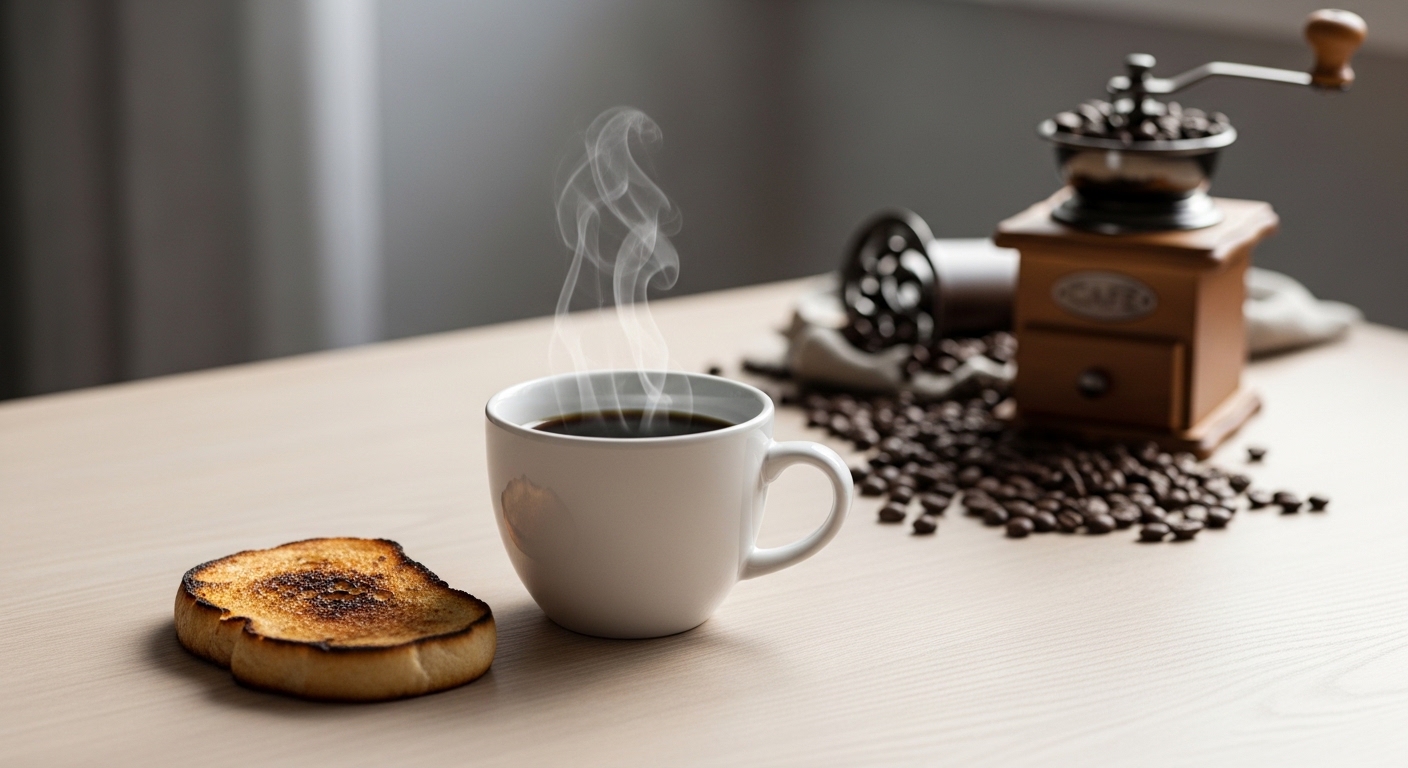
Quick Answer: Why does my coffee taste burnt?
“Burnt” coffee usually comes from one of three things: (1) very dark roasting (smoky/ashy roast flavors), (2) over-extraction (pulling too many harsh compounds), or (3) old coffee oils stuck in dirty equipment. The fastest way to diagnose it is simple: smell the dry beans/grounds, then smell your brewer. If the beans smell like smoke/ash before you brew, it’s likely the roast. If the brewer smells rancid or “old coffee,” it’s often dirty gear. If neither smells burnt but the cup does, it’s usually extraction settings.
This guide shows you how to tell which one it is—and exactly how to fix it—without buying new gear.
First: “burnt” can mean different things
When people say coffee tastes burnt, they might mean:
- Smoky / ashy (like char or campfire)
- Harsh bitterness that dries your mouth
- Flat “old coffee” taste that feels stale and unpleasant
- Scorched aftertaste that lingers too long
These can come from different causes. The goal is to diagnose accurately so you don’t waste time “fixing” the wrong thing.
The 30-second diagnosis (do this before changing anything)
Use this quick test. It tells you where the burnt flavor likely comes from.
Step 1: Smell the beans or grounds
Open the bag and smell the coffee. If it smells strongly like smoke, ash, or charcoal, that flavor is already in the roast. You can’t brew your way out of a roast that tastes like a bonfire—you can only make it slightly less harsh.
Step 2: Smell your brewer
Smell the inside of your French press, drip basket, carafe, reusable filter, or any part that touches coffee. If it smells like old coffee or rancid oil, your equipment is likely adding burnt/dirty flavors to every cup—even if your beans are good.
Step 3: Taste the coffee cooled slightly
Very hot coffee can hide sweetness and exaggerate harshness. Let it cool 3–5 minutes and taste again. If the harsh “burnt” note becomes more clearly bitter rather than smoky, it’s often over-extraction.
Now let’s fix each cause, one by one.
Cause #1: The coffee is roasted very dark
Dark roast is not automatically “bad.” Many people love it—especially in milk drinks. But there’s a point where “dark” becomes “ashy.” In that range, the roast flavor dominates everything else, and it can taste burnt even when brewed correctly.
Signs it’s the roast:
- Beans smell smoky/ashy in the bag
- Beans look very oily or glossy (not always a problem, but common in very dark roasts)
- The coffee tastes burnt across multiple brew methods
How to fix “burnt roast” taste (without changing beans yet)
If you’re stuck with a dark roast bag, you can reduce harshness:
- Use slightly cooler water (dark roasts extract easily; cooler water can reduce harsh notes)
- Grind a bit coarser to reduce over-extraction
- Shorten brew time slightly
- Use milk (milk can soften harsh roast notes)
Those adjustments don’t change the roast, but they can make the cup more drinkable.
The real fix: choose a roast level that matches your taste
If “burnt” is a recurring problem, you’ll likely be happier moving from very dark roast to medium roast. Medium roast is the “sweet spot” for many people: still rich, but with more sweetness and less ash.
When shopping, labels and tasting notes help. Words like “smoky,” “bold,” “intense,” or “extra dark” often signal roast-forward flavor. Notes like “caramel,” “chocolate,” “nuts,” and “sweet” often align with medium roasts that feel less burnt.
Cause #2: Over-extraction (you pulled too much out of the grounds)
Over-extraction happens when water pulls too many harsh, drying compounds from coffee. The coffee can taste bitter, rough, and sometimes “burnt,” especially if the roast is already dark.
Common over-extraction causes:
- Grind too fine
- Brew time too long
- Water too hot (especially for dark roasts)
- Too much agitation (aggressive stirring or heavy pouring)
- Coffee sitting on grounds too long (common in French press if you don’t pour immediately)
How to fix over-extraction (fast)
Use this quick troubleshooting order. Change only one thing at a time:
- Grind one step coarser
- Shorten brew time (or speed up drawdown for pour-over)
- Lower water temperature slightly (especially for dark roast)
- Reduce agitation (stir less, pour gentler)
Most “burnt” cups caused by over-extraction are solved by going slightly coarser.
Fixing burnt taste by brew method
French press: the “coffee sits too long” problem
French press can get harsh if coffee continues extracting after you press. This happens when you leave coffee sitting in the press on the grounds.
Fix: press and pour immediately into a carafe or mug. Don’t let it sit. Also: grind a bit coarser and keep steep time reasonable.
V60 / pour-over: too fine + slow drawdown
In pour-over, a too-fine grind can clog the filter and slow drawdown. That increases contact time and over-extracts, often creating harsh bitterness that people describe as burnt.
Fix: grind slightly coarser and pour steadily. If your brew time is extremely long, you’re likely over-extracting.
Drip machine: temperature + dirty basket issues
Some drip machines can over-extract with long hot-plate time, and old oils in the basket can create a burnt taste. If your coffee sits on a hot plate for too long, it can become unpleasant quickly.
Fix: brew fresh and move coffee to an insulated container if you need it hot for longer.
Cause #3: Dirty equipment (old coffee oils taste rancid)
This one surprises people: old coffee oils can taste like burnt or stale bitterness. Coffee oils stick to metal filters, plastic parts, grinders, and carafes. Over time they oxidize and go rancid—then every cup tastes worse, no matter what beans you buy.
Signs it’s dirty gear:
- Your brewer smells like old coffee even after rinsing
- Your coffee tastes burnt no matter what beans you use
- Your cups taste worse over time, even with “good” beans
- You use a metal filter and rarely deep-clean it
How to clean coffee gear (the simple version)
You don’t need fancy products. You need consistency.
- Daily: rinse thoroughly and dry parts so oils don’t sit wet.
- Weekly: wash with warm water + soap (yes, soap is fine).
- Monthly: deep clean (especially metal filters, carafes, and grinder parts you can safely clean).
If you’re using a grinder, stale oils can build up there too. Even wiping the chute and cleaning the catch cup helps more than people expect.
When “burnt” is actually “stale”
Sometimes what people call burnt is actually stale coffee: flat aroma, harsh finish, no sweetness. Staling is accelerated by oxygen, heat, and time—especially if beans sit open for weeks or you buy pre-ground coffee.
If your coffee used to taste good and now tastes dull and harsh, storage might be the real cause.
A practical “burnt coffee” troubleshooting checklist
If you want one checklist to save, use this:
- Smell the beans: smoky/ashy smell = roast is the cause.
- Smell the brewer: rancid/old smell = cleaning problem.
- Adjust grind coarser if taste is harsh/bitter.
- Lower water temperature slightly for dark roasts.
- Pour/press and serve immediately (don’t “cook” coffee on a hot plate).
This sequence fixes most burnt coffee complaints within a day.
FAQ
Why does my coffee taste burnt at cafés too?
Some cafés intentionally use darker roasts because they work well in milk drinks and taste consistent. Also, equipment cleanliness and holding coffee on warming plates can impact flavor. If you prefer less burnt flavor, ask for lighter roasts or pour-over options when available.
Can I fix burnt coffee by adding salt or sugar?
You can mask harshness, but it’s better to fix the cause. Salt can reduce perceived bitterness in tiny amounts, but it won’t remove smoky roast flavor. Sugar hides problems and can train you to tolerate bad coffee instead of improving it.
Does burnt coffee mean it’s unhealthy?
Conclusion: Diagnose first, then fix the right thing
Burnt coffee isn’t mysterious. It’s usually roast, extraction, or dirty equipment. Smell your beans, smell your brewer, and adjust one variable at a time. Once you fix the real cause, you’ll get sweetness and balance back—and coffee stops tasting like ash or harsh bitterness.
