
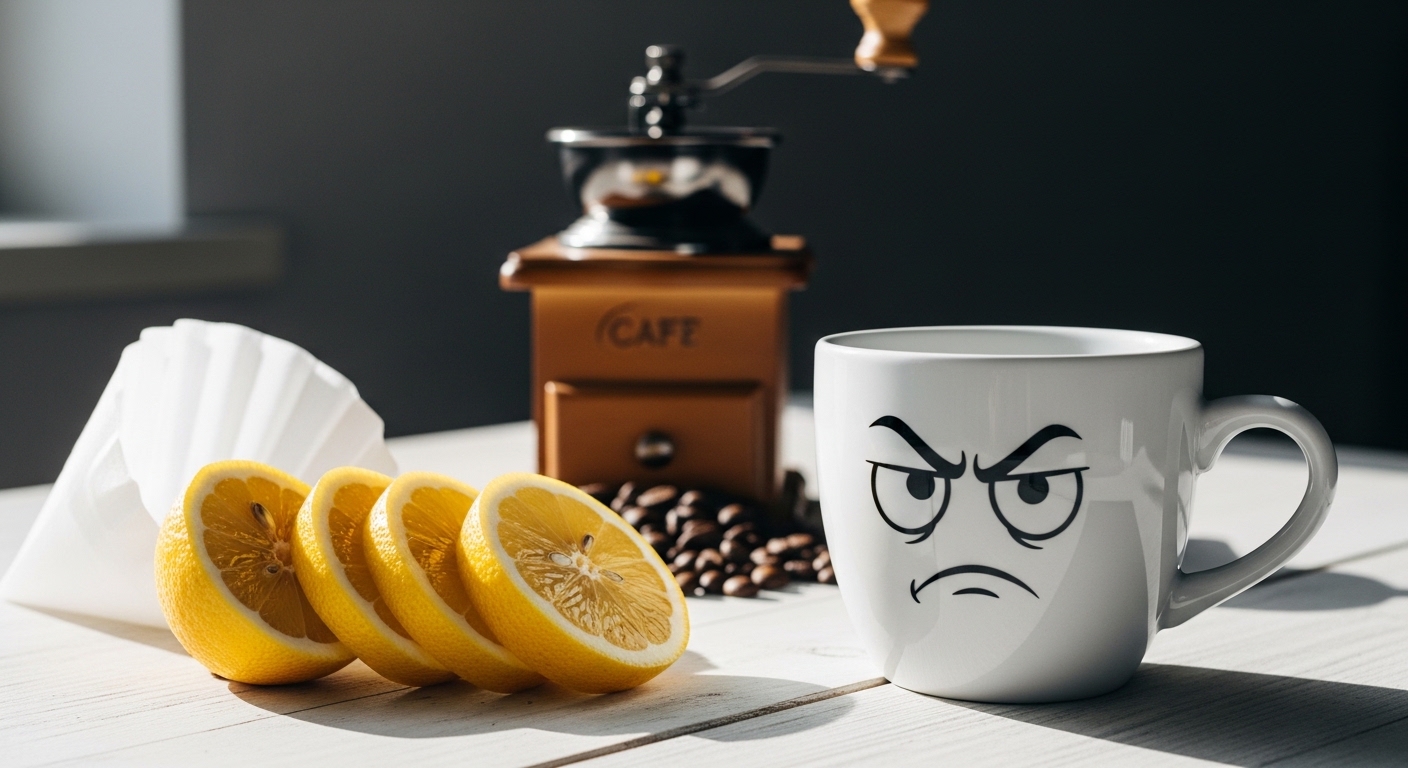
Quick Answer: Why does my coffee taste sour?
Sour coffee is almost always a sign of under-extraction—meaning your brew didn’t pull enough sweetness and balance from the grounds. Instead of tasting rounded and sweet, the cup tastes sharp, lemony, thin, or “green.” The fastest fixes are usually: grind a bit finer, use hotter water, and/or extend brew time. Start with one change at a time so you can see what actually works.
If your coffee tastes sour and weak at the same time, don’t blame the beans yet. It’s very often your extraction settings.
What “sour” coffee actually means (and what it doesn’t)
Let’s clear up a common confusion: coffee can have pleasant acidity, and it can also taste unpleasantly sour. Pleasant acidity feels bright and lively (like citrus or crisp fruit) and is balanced by sweetness. Sour coffee feels sharp, thin, and unfinished—like the coffee never “opened up.”
When people say “my coffee tastes sour,” they usually mean one of these:
- Sharp / lemony bite that overwhelms everything
- Thin body (watery mouthfeel)
- Short, weak finish (no sweetness, no depth)
- Green / grassy notes that feel raw
That combination is classic under-extraction. The good news is it’s usually fixable in minutes.
The extraction story in plain English
Brewing coffee is extraction: water pulls soluble compounds out of coffee grounds. Not everything extracts at the same time. A simplified (but useful) model is:
- Early extraction: brighter acids and sharp notes show up first
- Mid extraction: sweetness, balance, and body develop
- Late extraction: bitter, drying compounds become more noticeable
If you stop too early (or extract too weakly), you get the “early” part without the sweetness and balance—so the cup tastes sour. If you go too far, you get bitterness and harshness. Your goal is the sweet spot in the middle.
The 6 most common reasons coffee tastes sour
1) Grind is too coarse
Coarse grinds reduce surface area, so water can’t pull enough flavor fast enough. This is the #1 reason pour-over and drip coffee taste sour.
Fix: grind slightly finer. Don’t jump five steps—move one step finer and taste again.
2) Water isn’t hot enough
Cooler water extracts less. If your water is too cool, you’ll often get sourness and weak flavor together.
Fix: use hotter water. If you’re brewing light roast, hotter water often helps a lot. If you’re brewing dark roast, you may not need maximum heat—but if you’re getting sourness, temperature is worth checking.
3) Brew time is too short
If water moves through too quickly (fast pour-over drawdown, quick drip, short steep), the coffee doesn’t spend enough time extracting sweetness.
Fix: slow it down slightly—often by grinding a bit finer or pouring more steadily in pour-over.
4) Not enough coffee (ratio too weak)
If your ratio is too weak, you may get a watery cup that highlights sourness.
Fix: increase dose slightly (use more coffee) or tighten your ratio. A baseline many people like is around 1:15 to 1:17 (coffee:water by weight), then adjust to taste.
5) Uneven extraction (channeling or poor pouring)
In pour-over, uneven pouring can cause some coffee to be over-extracted (bitter) while other parts stay under-extracted (sour). The result is a confusing cup: sour and harsh.
Fix: pour steadily, keep the bed level, and avoid pouring only on the edges. A simple consistent pour is better than fancy patterns.
6) Your coffee is very light-roasted (and needs different brewing)
Light roasts are harder to extract. They often need hotter water, finer grind, and careful brewing to taste sweet instead of sour. That doesn’t mean light roast is “bad”—it means it’s less forgiving.
The fastest fixes (do these in order)
If you want a quick troubleshooting path, use this order. Change one variable at a time:
- Grind finer (small step)
- Use hotter water
- Extend brew time (slower pour or longer steep)
- Increase coffee dose slightly
- Improve technique (steady pour, level bed)
In most kitchens, sour coffee is solved by step 1 or step 2.
Fixing sourness by brew method
Pour-over (V60-style) sour coffee fixes
Pour-over is sensitive. If your cup tastes sour, start here:
- Grind slightly finer
- Use hotter water
- Make sure you fully wet the grounds during bloom
- Pour steadily (avoid fast “dump pours”)
- If drawdown is extremely fast, you’re almost certainly too coarse
French press sour coffee fixes
French press is more forgiving, but you can still under-extract if you go too coarse or too short:
- Steep a little longer
- Use slightly hotter water
- Grind slightly finer (but not muddy-fine)
If French press tastes sour and thin, ratio is often the culprit—use a bit more coffee.
Drip machine sour coffee fixes
With drip machines, the most common sour causes are too coarse grind and low water temperature (some machines run cooler than ideal). Also: dirty machines can cause weird flavor.
- Grind a step finer
- Use fresh, good water
- Clean the machine (old oils can distort flavor)
Iced coffee sourness (extra common)
Iced coffee can taste sour if you brew weak or if dilution exposes sharp acidity. If your iced coffee tastes sour and watery, your issue is often both under-extraction and dilution.
Fix: use a method designed to control dilution (like flash brew) and brew a touch stronger on purpose.
Sour vs bitter: a quick taste test
If you’re not sure what you’re tasting, use this quick test:
- Sour: sharp, tangy, feels like the coffee is “unfinished,” often watery
- Bitter: drying, harsh, dark chocolate gone too far, often astringent
If your coffee is bitter, the solution is usually the opposite (grind coarser, cooler water, shorter brew). If your coffee is bitter but you want to smooth it slightly, there’s also a popular micro-trick—after you fix fundamentals.
Do your beans matter here?
Yes, but technique is usually the bigger lever. That said, some coffees are naturally brighter and can taste “acidic” even when extracted well. If you’re very sensitive to brightness, look for coffees described as chocolatey, nutty, or caramel instead of “bright,” “citrus,” or “sparkling.”
Learning to read labels helps you buy beans that match your taste preferences—so you’re not constantly fighting the coffee’s natural character.
FAQ
Why does my coffee taste sour and bitter at the same time?
That often happens when extraction is uneven—common in pour-over with inconsistent grind or pouring. Some parts of the bed over-extract (bitter) while others under-extract (sour). Try a slightly finer grind, steadier pouring, and keep your recipe consistent.
Can stale coffee taste sour?
Stale coffee usually tastes flat and harsh rather than sharply sour, but staleness can make the cup feel unbalanced. If you’re troubleshooting, check freshness and storage too.
Should I fix sour coffee by adding sugar?
Sugar can mask problems, but it won’t solve extraction. It’s better to adjust grind, temperature, and time first—then sweeten if you still want to.
Conclusion: Sour coffee is a settings problem, not a destiny
Sour coffee usually means under-extraction. The cure is almost always practical: grind a little finer, use hotter water, and give the brew more time to extract sweetness. Once you learn this pattern, you can fix sour cups quickly—and you’ll start tasting the coffee’s real flavor instead of sharp “unfinished” notes.
