
Quick Answer: Why does fresh coffee smell so amazing?
Fresh coffee smells incredible because roasting and grinding release a huge number of aromatic compounds—tiny volatile molecules that travel into the air and reach your nose fast. That intense smell is strongest when coffee is freshly roasted, freshly ground, and brewed right away. In simple terms: coffee smells amazing because it’s full of aroma chemicals, and freshness controls how many of them are still alive and ready to escape into your cup and your kitchen.
If your coffee smells weak, stale, dusty, or like “almost nothing,” that’s usually a freshness or storage problem long before it becomes a brewing problem.
Why aroma matters more than most people realize
A lot of people think flavor lives only on the tongue. It doesn’t. A huge part of what we call “taste” is actually smell. That’s why coffee seems dull when you have a cold, and why a freshly opened bag can make your brain wake up before you even take a sip.
When coffee smells rich, sweet, nutty, chocolatey, fruity, or floral, your brain is already building the drinking experience before the liquid even touches your mouth. Aroma is not decoration. Aroma is coffee quality in action.
This is also why stale coffee feels so disappointing. Once aroma fades, the cup loses personality. It may still be “drinkable,” but it stops feeling alive.
What creates coffee aroma in the first place?
Green coffee beans don’t smell like the coffee you know. The magic happens during roasting. Heat transforms the beans, creating hundreds of aromatic compounds that can smell like nuts, caramel, toast, fruit, flowers, spice, smoke, or chocolate depending on the bean and roast style.
These compounds are called volatile compounds because they escape into the air easily. That’s exactly what makes coffee smell so strong and satisfying—but it’s also why freshness matters so much. If the compounds escape or degrade over time, the smell fades.
That means fresh coffee is always a race against time: the beans are full of aroma, and the clock is already ticking.
Roasting: where the smell is born
During roasting, heat triggers chemical reactions inside the bean. Sugars, amino acids, and other natural compounds react and create the smell of “coffee” as we know it. This is why roasted coffee smells radically different from raw green coffee.
Roast level also shapes the aroma profile:
- Light roast: more floral, fruity, bright, tea-like aromas
- Medium roast: balanced caramel, nuts, chocolate, sweetness
- Dark roast: smoky, roast-forward, toasted, bold aromas
This is why some coffees smell like berries and jasmine while others smell like cocoa and toast. The bean matters, but roast level strongly shapes what reaches your nose.
Grinding: the “aroma explosion” moment
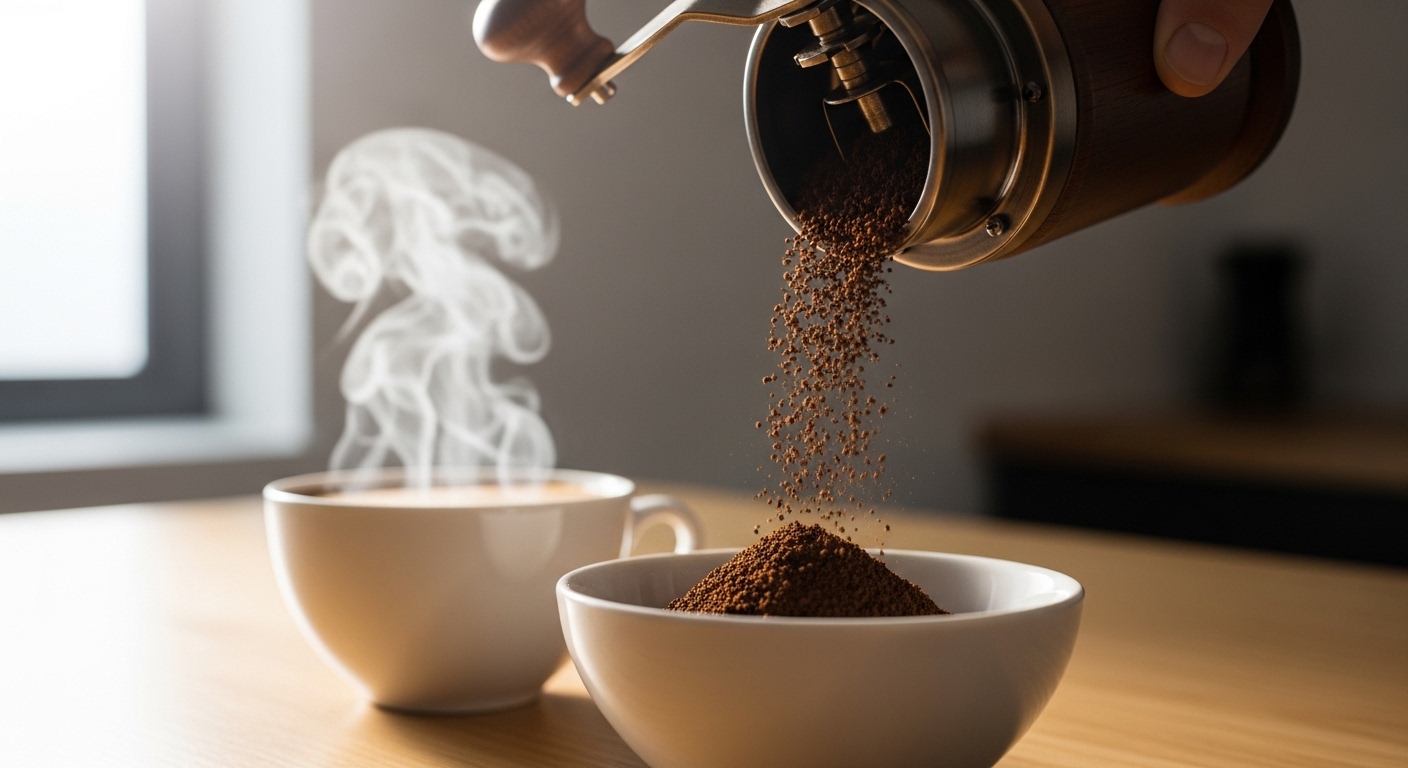
If roasting creates the aroma, grinding releases it fast. Whole beans protect aroma better because much less surface area is exposed to oxygen. The moment you grind, you massively increase surface area, and the smell rushes out.
That’s why a bag of pre-ground coffee can smell strong when first opened and then fade quickly over the next days. Grinding is beautiful for aroma in the moment—but expensive in terms of freshness.
If you want the easiest flavor upgrade possible, this is usually it: buy whole beans and grind close to brewing.
Why the smell fades so fast
Coffee aroma fades because its best compounds are delicate. They are damaged or lost by:
- Oxygen (oxidation)
- Heat
- Light
- Time
- Grinding too early
Think of coffee aroma like perfume in an open bottle. The moment it’s exposed, the best parts begin to disappear. That’s why storage is not a boring detail. Storage is one of the main reasons your coffee smells amazing or disappointing.
Why fresh coffee can smell sweeter than it tastes
Have you ever smelled a coffee and thought, “Wow, this is going to be amazing,” then tasted it and felt slightly disappointed? That happens because aroma and brewing are two different steps. Great smell gives you potential. Good brewing turns that potential into the cup.
If your coffee smells fantastic but tastes flat, one of these is usually happening:
- you under-extracted it
- you over-extracted it
- your water quality is hurting flavor
- your ratio is off
- the coffee smelled fresher than it actually was in the cup
That’s why aroma is powerful—but it still needs brewing fundamentals behind it.
Why some coffees smell more interesting than others
Not all coffee smells the same because not all coffees are the same. Aroma is shaped by multiple factors working together:
- Bean variety (Arabica vs Robusta and sub-varieties)
- Origin (country, region, altitude, climate)
- Processing method (washed, natural, honey)
- Roast level
- Freshness
This is why two coffees can smell completely different even when both are “good.” One might be bright and fruit-forward. Another might smell like chocolate, nuts, and caramel. Neither is automatically better. They are just different styles of aromatic experience.
If you want to understand those differences before buying, the label is your first clue.
The biggest aroma killer: stale coffee
If coffee smells weak, dusty, woody, or like old cardboard, staling is usually the problem. That can happen because the bag is old, the beans were stored poorly, or the coffee has been open too long. Aroma always fades first. Flavor disappointment comes right after.
This is why stale coffee often feels “empty.” The cup may still have bitterness and body, but the interesting smell is gone. Once aroma disappears, the coffee feels flatter no matter how carefully you brew it.
How to keep coffee smelling better for longer
If you want to protect aroma, use the simple rules that actually matter:
- Buy whole bean when possible
- Store it airtight
- Keep it in a cool, dark place
- Don’t buy more than you can use reasonably fresh
- Grind close to brewing
Those five habits preserve aroma better than almost any expensive upgrade.
If you buy in bigger quantities, freezing in portions can also help preserve smell and flavor—if you do it correctly.
Why coffee smells different when brewed hot vs cold
Hot coffee throws aroma into the air aggressively, so the smell hits you immediately. Cold coffee can still be aromatic, but the smell feels less intense because lower temperature releases volatile compounds more slowly. This is one reason many people describe hot coffee as “more fragrant” even when the coffee itself is good in both forms.
If you love strong aroma in iced coffee, freshness matters even more because cold serving naturally feels less aromatic.
Why opening a new bag feels so satisfying
There’s a reason people love opening a fresh bag of coffee. It’s one of the biggest aroma “releases” in the entire coffee experience. You get a wave of concentrated smell all at once, and your brain reads it as freshness, reward, comfort, and anticipation.
That feeling is not imaginary. It’s your nose detecting exactly what you want from coffee: volatile compounds still intact and ready to perform.
Can smell tell you if coffee will taste good?
Smell is a strong clue, but it’s not a perfect guarantee. A coffee that smells rich and alive usually has better odds of tasting good than one that smells flat. But brewing still matters. Bad water, wrong ratio, poor grind, or over/under-extraction can ruin a promising coffee.
Still, if the coffee smells dull before brewing, your chances of a magical cup are low. Aroma is one of the easiest quality checks available to regular people.
A quick aroma test you can do at home
Try this simple comparison the next time you buy coffee:
- Smell the whole beans right after opening.
- Grind a small amount and smell again immediately.
- Brew the coffee and smell the wet grounds and the cup.
- Repeat the same test one week later and compare.
This is one of the easiest ways to understand how quickly aroma fades—and why storage and grinding timing matter so much.
FAQ
Why does coffee smell stronger when freshly ground?
Because grinding exposes much more surface area and releases volatile aromatic compounds quickly into the air. It’s the biggest aroma burst you’ll get before brewing.
Does pre-ground coffee lose aroma faster?
Yes. Once coffee is ground, aroma fades much faster because oxygen can reach far more surface area.
Why does some coffee smell chocolatey and some smell fruity?
That comes from the combination of bean variety, origin, processing, and roast level. Different coffees create different aromatic profiles.
Conclusion: aroma is coffee’s first promise
Fresh coffee smells so good because roasting creates an incredible range of aromatic compounds, and grinding releases them into the air fast. That smell is one of the clearest signs of quality and freshness you can experience at home. If you want better coffee, protect aroma: buy fresh beans, store them well, and grind right before brewing. Once aroma goes, the magic goes with it.
