
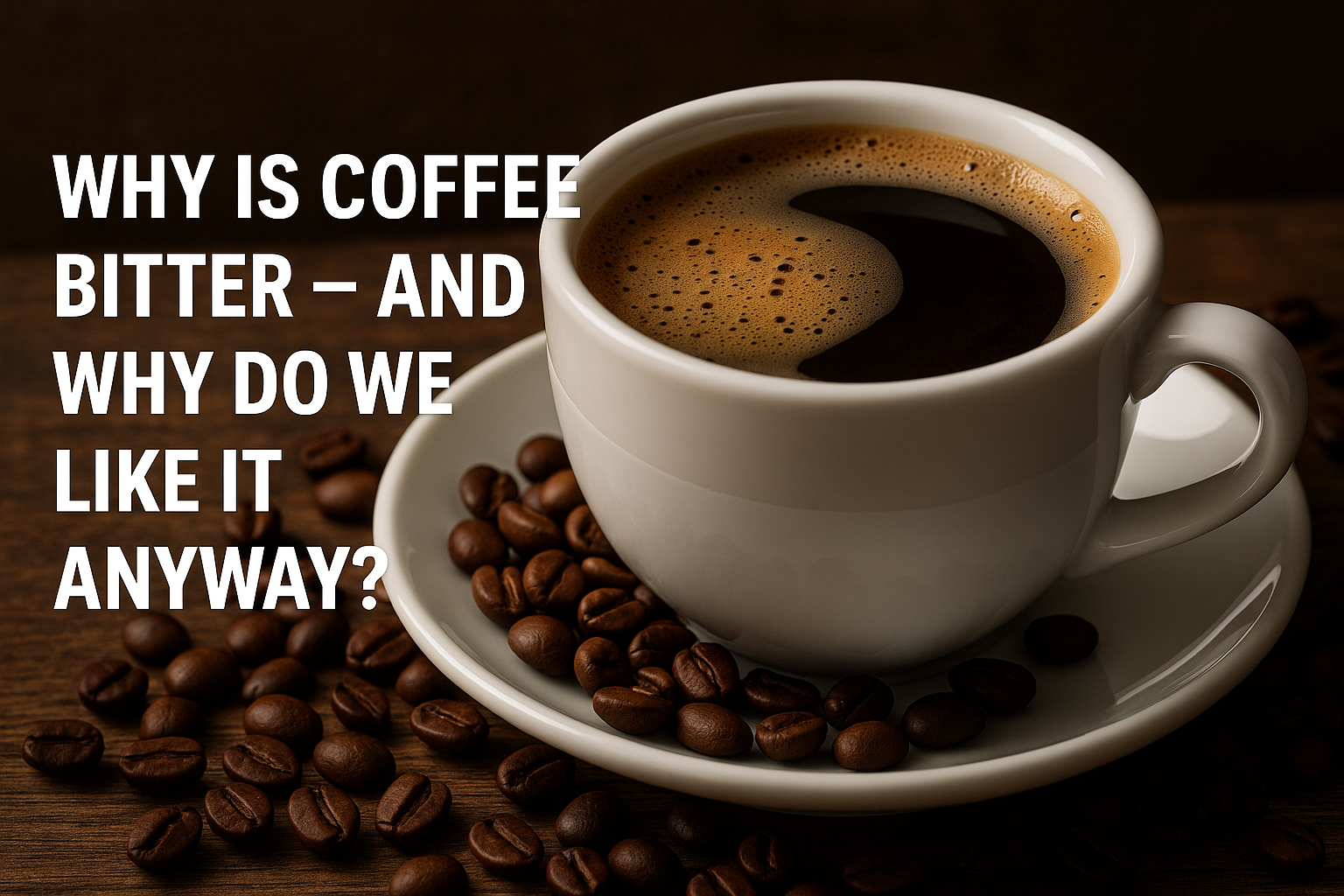
Coffee is loved by millions across the globe, yet one of its defining characteristics—bitterness—is something we usually try to avoid in food. So why do we accept (and even crave) the bitterness of coffee?
From chemistry to psychology and cultural conditioning, the reasons behind coffee’s bitterness—and our love for it—are far more complex than you might expect.
In this article, we’ll break down what makes coffee bitter, how it affects our senses, and why humans are wired to enjoy bitter coffee anyway.
What Makes Coffee Bitter?
The bitterness in coffee comes from a variety of natural compounds, many of which are created during the roasting process.
The main bitter compounds include:
- Chlorogenic acids – found in green coffee beans; break down into bitter-tasting chemicals during roasting.
- Caffeine – mildly bitter on its own, though not the dominant source of bitterness.
- Phenylindanes – created when chlorogenic acids degrade; these are among the most bitter components.
- Quinic acid – contributes to bitterness and astringency.
Dark roasts tend to have more bitterness because they contain higher concentrations of phenylindanes, which form at higher temperatures.
Bitterness Is a Survival Signal… Right?
Humans are naturally programmed to be cautious of bitter flavors. In nature, bitterness often signals toxins or poisonous substances, and our ancestors learned to avoid them.
So why do we willingly drink something bitter like coffee?
That’s where psychology and acquired taste come in.
How We Learn to Love Bitterness
Our relationship with bitterness is more emotional and cultural than it is instinctual.
Here’s how we come to enjoy it:
1. Positive Association
We tend to pair bitter flavors with positive outcomes—like alertness or pleasure. For example:
- Coffee gives you energy → Your brain learns to associate bitterness with benefit.
- Drinking coffee during meaningful conversations or creative work builds emotional reinforcement.
Over time, your brain rewires itself to expect and appreciate the bitterness.
2. Cultural Influence
In some cultures, bitter drinks like coffee, tea, or even amaro (Italian herbal liqueur) are daily rituals. Exposure over time increases familiarity and acceptance.
In fact, research shows that people who regularly consume coffee tend to have a higher tolerance for bitterness—and may even prefer it in other foods too.
3. Individual Taste Sensitivity
Not all palates are the same. People have different numbers of taste receptors on their tongues, especially for bitterness. Some people are more sensitive than others and may prefer milder roasts or sweetened coffee.
Others enjoy bold, black coffee because they perceive it differently.
The Balance of Bitterness
In a well-brewed cup of coffee, bitterness is not overwhelming—it’s balanced by acidity, sweetness, and aroma. In fact, a touch of bitterness gives coffee its depth and complexity.
Baristas and roasters aim for:
- Bitterness = strength and structure
- Acidity = brightness and liveliness
- Sweetness = smoothness and balance
The goal is to highlight the good bitterness while avoiding the harsh, burnt, or astringent kind.
Is Bitterness Always Bad?
Not at all.
Bitterness in coffee serves several important roles:
- Creates contrast with natural sugars and aromatics
- Adds structure and body to the flavor profile
- Enhances complexity, making each sip more interesting
- Evokes mature, acquired taste experiences
Think of other bitter favorites:
- Dark chocolate
- Grapefruit
- IPAs (India Pale Ales)
- Tonic water
- Kale or arugula
These are all flavors that some people grow to love—coffee fits right in.
How to Control Bitterness in Your Cup
If you’re not a fan of strong bitterness, there are many ways to soften it without sacrificing flavor:
☕ Choose a lighter roast:
Lighter roasts retain more acidity and fruitiness, with less bitterness than dark roasts.
☕ Brew with precision:
Over-extraction (brewing for too long) pulls out bitter compounds. Try adjusting:
- Grind size (go coarser)
- Brew time (shorten slightly)
- Water temperature (keep it below 96°C or 205°F)
☕ Add a touch of milk or plant-based cream:
Fat can mellow bitter compounds and smooth the flavor.
☕ Try a pour-over or Aeropress:
These methods give you more control and typically result in a cleaner, less bitter cup.
So… Why Do We Keep Drinking It?
Because bitterness—when done right—is beautiful.
It reminds us that life has contrast: sweet and sour, smooth and sharp, easy and complex. Coffee offers a flavor profile that challenges and rewards the drinker.
It’s more than just taste—it’s ritual, memory, and identity.
Final Sip: The Beauty of the Bitter
Coffee’s bitterness is not a flaw. It’s a feature—one that adds sophistication, emotional depth, and even personal reflection to your daily ritual.
We don’t just tolerate the bitterness in coffee—we learn to love it, because it reflects something deeper:
Not everything that’s good for us is sweet. Sometimes, the best things in life come with a bit of bite.
So the next time you sip your coffee and notice that bitter edge… smile.
You’ve earned that taste.

Passionate about coffee and brewing, our author shares simple, practical tips to help coffee lovers improve their skills. From home brews to barista basics, each post is crafted to make your coffee journey easier and more enjoyable.