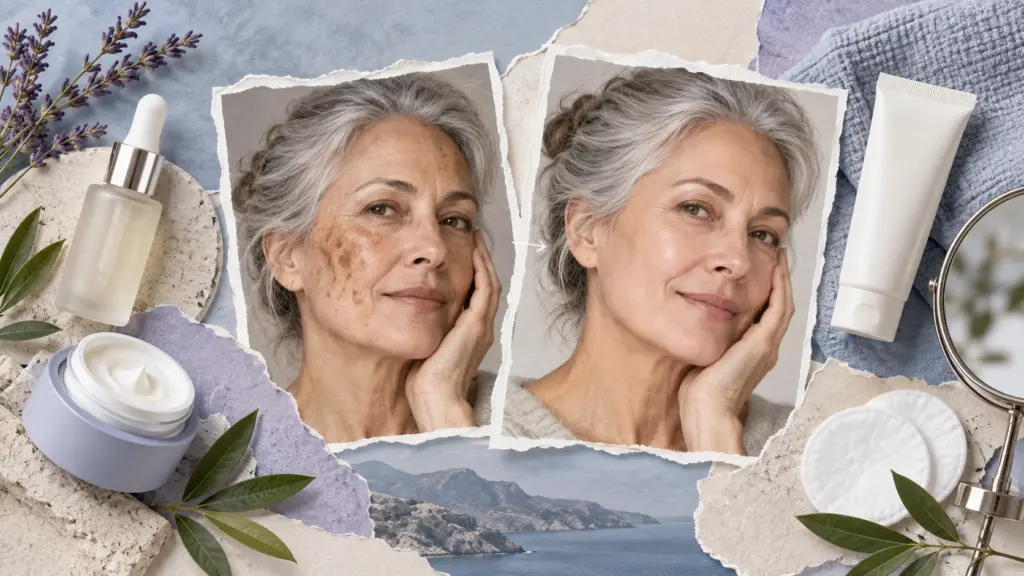
How to remove skin blemishes
Spots from acne, sun damage, friction, and other dark areas can lighten significantly and, in some cases, disappear completely. The result depends on the origin of the pigmentation, how long the mark has been present, and the chosen treatment.
How to start removing skin blemishes
Before choosing a bleaching agent, acid, or procedure, it's important to understand where the stain came from.
This happens because a mark left by acne usually behaves differently from a blemish caused by the sun, friction, or melasma.
The more accurately the cause is identified, the greater the chance of choosing a treatment that truly makes sense.
Note when the stain appeared.
Some simple questions can help guide the next step.
- Did the spot appear after a pimple?
- Does the region get a lot of sun?
- Is there frequent friction in that area?
- Did your skin darken after hair removal?
- Do the spots appear on both sides of the face?
- Is the brand growing or changing?
These details help differentiate between common hyperpigmentation and a condition that warrants evaluation before any attempt at lightening.
Can acne scars disappear completely?
In many cases, yes. After inflammation, such as a pimple, the skin may produce more pigment in that area and leave a dark mark.
When this pigmentation is more superficial, it can gradually lighten with the skin's natural renewal process and the use of appropriate active ingredients.
Among the most commonly used ingredients are azelaic acid, vitamin C, niacinamide, retinoids, and some exfoliating acids.
There's no point in lightening one brand only to continue creating others.
Those who still have active acne also need to take care of new pimples.
If the inflammation continues to appear, new marks may emerge while the old ones are being treated.
Therefore, controlling acne is often part of the treatment for blemishes.
Avoid squeezing pimples.
Manipulating a pimple increases inflammation and trauma to the skin.
This can increase the chance of a darker spot appearing later and also promote scarring.
How to treat sunspots
The face, hands, arms, and chest are among the areas that accumulate the most sun exposure.
Over time, small brown areas may appear, becoming more noticeable as the years go by.
Some superficial blemishes respond to topical lightening agents. Others may require dermatological procedures targeting the pigment.
Sunscreen is part of the treatment.
Sunscreen alone won't remove existing blemishes, but it helps prevent the area from darkening further.
Without this care, the skin continues to receive stimuli to produce pigment, which can make whitening more difficult.
When there is intense sun exposure, physical barriers such as hats and shade can also help.
Vitamin C can help even out skin tone.
Vitamin C is found in many serums aimed at brightening and evening out skin tone.
It can contribute to the gradual lightening of some blemishes, especially when used as part of a consistent routine.
Very old or deep spots, however, may require other approaches.
Niacinamide may be a simpler option.
Niacinamide can help with the appearance of pigmentation and is commonly found in moisturizers and serums for daily use.
It is also used in products that help maintain the skin barrier, which can be beneficial for those with sensitive skin.
Azelaic acid may help with acne blemishes.
Azelaic acid is used in routines aimed at both acne and some forms of hyperpigmentation.
Therefore, it can be useful for those who have both pimples and blemishes at the same time.
Retinoids can accelerate turnover.
Retinoids can promote skin renewal and are part of some dermatological treatments for acne, photoaging, and blemishes.
The problem is that they can also cause peeling, redness, and irritation when used excessively or combined improperly.
They also have important restrictions during pregnancy.
Hydroquinone can be used on more stubborn stains.
Hydroquinone is a depigmenting agent used in some hyperpigmentation treatments.
It can promote significant whitening when properly indicated, but it should not be used indiscriminately or indefinitely.
The concentration and duration of use need to be properly determined.
Avoid using too many acids at the same time.
A common mistake is trying to speed up the whitening process by combining several strong products in the same routine.
When the skin becomes irritated, the inflammation can cause even more pigmentation.
More burning doesn't necessarily mean the treatment is working better.
Lemon and baking soda can worsen stains.
Homemade remedies containing lemon, baking soda, alcohol, and other harsh substances can damage the skin barrier.
In addition to not being a controlled form of treatment, they can cause irritation and new spots.
Lemons require special care because contact followed by exposure to light can cause a significant skin reaction.
How to lighten dark spots on underarms
Darkening of the armpits can be related to friction, hair removal, inflammation, and other factors.
When the area is constantly irritated, using only a whitening product may produce little result.
Reducing friction and controlling the cause of inflammation is part of the treatment.
How to lighten dark spots on the groin area.
The skin in the groin area is sensitive and experiences frequent friction.
Very strong acids or products used without proper adaptation can cause burning and worsen pigmentation.
When darkening is intense, widespread, or accompanied by changes in skin texture, it's worth investigating other causes.
Knees and elbows may also lighten.
These areas are naturally more prone to friction and dryness.
Regular hydration, reduced friction, and appropriate active ingredients can improve the darkened appearance in some people.
Melasma requires ongoing monitoring.
Melasma can lighten significantly, but it tends to return.
Therefore, treatment usually has two objectives: to lighten the visible pigment and to reduce the stimuli that favor its reappearance.
Depending on the case, skin lighteners, prescription medications, and other strategies determined by the dermatologist may be used.
How long does it take for a stain to come out?
The time varies considerably.
A recent, superficial mark may fade over weeks or months. Older or deeper blemishes, however, may take longer.
It's unrealistic to expect any stain to disappear in a few days.
When whitening cream doesn't work
Some blemishes respond poorly to cosmetics because the pigment is deeper in the skin or because the underlying cause is still active.
In these situations, the dermatologist may consider prescription medications, peels, lasers, or other technologies.
Not every dark mark needs to be lightened.
A lesion that is changing should not be automatically treated as a mere cosmetic blemish.
Seek evaluation when available:
- Rapid growth.
- Very irregular shape.
- Significant color change.
- Bleeding.
- A wound that won't heal.
- Persistent pain or itching.
FAQ
Can acne scars disappear? Many can lighten until they are practically imperceptible, especially when they are superficial.
Can sunspots be removed with cream? Some respond to topical lightening agents, while others require dermatological treatments.
Which acid is used for blemishes? Azelaic acid and some exfoliating acids are among the options, depending on the type of pigmentation.
Does Vitamin C lighten dark spots? It can help even out skin tone and contribute to gradual lightening.
Does sunscreen remove blemishes? Not directly, but it helps prevent pigmentation from becoming darker.
Can I use several acids together? Excessive use increases the risk of irritation and can worsen the problem.
Can melasma disappear? It can lighten considerably, but it tends to return and usually requires maintenance.
On the next page, choose the type of stain you want to remove and see which options can be used in each situation.