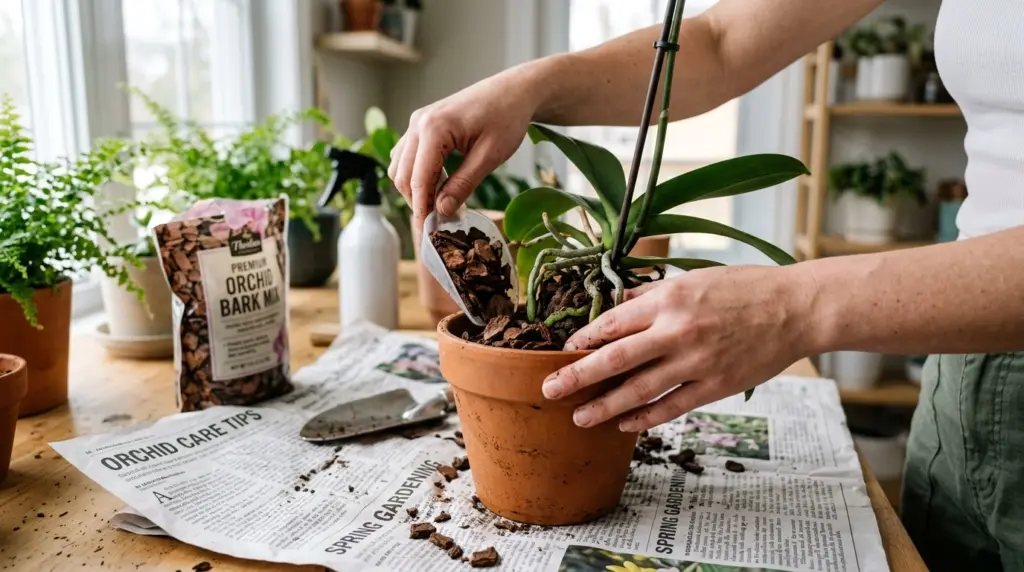
How to repot an orchid step by step, without stressing the plant.
My first attempt at repotting an orchid was quite clumsy, done somewhat hastily and without much prior planning, resulting in a root that was more damaged than it really needed to be at that moment. After repeating the process dozens of times over the years, I developed a step-by-step method that greatly reduces stress on the plant and makes my own collection maintenance routine much easier.
Materials I separate before starting any replanting.
I prepare in advance the new pot, fresh substrate, disinfected scissors, cinnamon powder for healing (already detailed in another article), and a tray to contain the debris, avoiding interrupting the process mid-way to look for something I forgot to set aside beforehand.
How do I remove a plant from its old pot without causing unnecessary damage?
If the substrate is quite dry, I can usually slide the plant out easily, but when it's more compacted, I prefer to gently squeeze the sides of the plastic pot or use warm water to soften the substrate before carefully pulling it out.
How do I remove old substrate stuck to the root?
I gently remove the old substrate with my hand, without forcing it too much where the root is most firmly attached, since pulling with excessive force at this point is one of the most common ways to cause unnecessary damage during repotting.
Complete root inspection, a step I never skip in this process.
As I've already detailed in another article about root rot, I examine each section of the root looking for brown and soft parts that need to be removed, taking advantage of this replanting moment as a natural opportunity to do this more thorough check.
How do I remove compromised roots during this replanting process?
I cut away any affected part with disinfected scissors until I reach healthy, firm tissue, applying cinnamon powder to the cut area, following the same procedure already detailed in another article about treating rotten roots.
How do I choose the right size new pot for this specific plant?
As I've already detailed in another article about types of pots, I avoid choosing a container that is too large, prioritizing a space only slightly larger than the current root system, since an excessively large pot retains more moisture than the plant can properly absorb.
How do I position the plant inside the new pot before filling it with substrate?
I center the base of the plant, ensuring it's at an appropriate height, generally with the crown slightly above the edge of the substrate, avoiding planting it too deep, which would increase the risk of rotting at the more sensitive base.
How do I fill the pot with new substrate around the root?
I add the substrate gradually, gently tapping the pot on the counter from time to time to help the material settle naturally among the roots, without compacting it excessively, which would compromise the good drainage the plant needs.
How do I use a stake if the plant becomes unstable soon after repotting?
If the plant wobbles easily because it doesn't yet have sufficient root anchorage in the new substrate, I use a discreet temporary support, ensuring stability until the new root system develops and can support the plant on its own in that new container.
How long should I wait before watering after completing the repotting?
I wait at least a few days before the first watering, especially if I removed a lot of root during the process, giving the cut time to heal before exposing the recent wound to direct contact with water, reducing the risk of infection during this more sensitive period.
Best time of year to replant, in my experience.
I prefer to replant right after flowering ends or at the beginning of spring, when the plant generally enters a more active growth phase, having more energy available to recover quickly from the natural stress of this process.
I avoid replanting during flowering, unless it's an urgent need.
I avoid disturbing the roots while the plant is flowering, as the stress of repotting at that time can compromise the already open flower or developing bud, reserving that intervention for after the flowering cycle has naturally finished.
A mistake I've made before was replanting in a hurry before a trip.
On one occasion, I tried to quickly repot before traveling, without paying enough attention to the damaged root, and the plant suffered more than necessary while I was away—a mistake that taught me never to rush this process for the sake of scheduling.
How can I better plan for the right moment after learning from this mistake?
Now I set aside a specific day with enough time to do the repotting calmly, avoiding any rush that could compromise the quality of the process or unnecessarily increase the stress caused to the plant during this important intervention.
Recording the date of each replanting in my growing notebook.
I note in my growing notebook, already mentioned in another article, the date of each repotting I do, a record that helps me remember when the next recommended time to check that specific plant will be, avoiding letting too much time pass without this maintenance.
How I clean the countertop and organize my workspace before starting.
I lined the work surface with newspaper or disposable plastic to make cleaning easier after the process is over, since the substrate tends to spread quite a bit during handling, and having an organized space from the start makes the whole experience much less stressful.
How do I decide between reusing an old vase or using a completely new one?
I only reuse an old pot if it's still in good condition and the right size, washing it thoroughly with water and a little diluted bleach before reuse, but I prefer a new pot whenever the plant has needed significant removal of damaged roots.
How do I involve the family in organizing the necessary materials?
I need help separating the substrate or holding the plant during the process when repotting involves several plants at the same time, transforming what could be a solitary and time-consuming task into a lighter and more shared activity at home.
How do I choose between a new substrate identical to the previous one or changing it completely?
If the plant was healthy and thriving in the previous substrate, I keep the same type of material when changing it, but if I notice any signs of problems related to drainage or excessive moisture retention, I take advantage of the repotting as an opportunity to test a slightly different composition.
Questions I've been asked about replanting.
Do I need to repot every orchid as soon as I buy it from the store?
Not necessarily immediately, but I recommend checking the condition of the original substrate, as it often comes with lower quality material that benefits from replacement relatively soon after initial acclimation.
Is it normal for a plant to appear stressed right after repotting?
Yes, some degree of temporary stress is expected, with the leaf eventually losing some firmness in the first few days, but this usually normalizes as the root adapts to the new substrate and container.
How often should I generally repot my orchid?
It depends on the type of substrate used, but I generally recommend reviewing it every one or two years, as the organic material gradually decomposes and loses its ability to drain properly over time.
Developing a consistent step-by-step process for repotting has transformed what was once a stressful task into a routine and even relaxing part of caring for my collection, showing that preparation and patience make all the difference in this process, which is so important for the long-term health of the plant.