Orchid virus: how to recognize and prevent this incurable condition.
I received a concerned question from a reader about a strange, irregular stripe pattern on the leaf of a newly acquired orchid, a symptom that, after considerable research, I realized could indicate the presence of a virus. Unlike other issues already detailed in other articles, this is a problem with no known cure, requiring a very different approach than any other I have encountered before.
Irregular mosaic pattern, the most characteristic sign of this condition.
Viruses in orchids typically manifest as an irregular stripe or mosaic pattern on the leaf, with alternating lighter and darker areas, unlike the more uniform and localized spot already detailed in another article about fungal or bacterial problems.
Because there is no known cure for this type of problem.
Unlike fungi or bacteria, which respond to specific treatment, viruses integrate into the plant's cellular structure in such a way that no currently available product can completely eliminate them, making prevention far more important than any attempt at a cure.
How can I confirm if it's really a virus before jumping to conclusions?
Since the visual pattern can be confused with other causes, such as mild nutritional deficiency, I recommend a specific laboratory test available at a specialized nursery before definitively assuming that the plant is infected with a virus.
Permanent isolation, the only truly effective measure after confirmation.
As soon as I confirm a virus through testing, I keep the plant permanently isolated from the rest of the collection, since the goal becomes containing the spread rather than attempting any treatment that simply doesn't exist for this specific condition.
Based on my research, this is how the virus spreads between plants.
Transmission usually occurs through contaminated tools used on more than one plant, direct contact between leaves or roots, and in some cases through insects that feed on the sap, reinforcing the importance of rigorous hygiene throughout the entire routine.
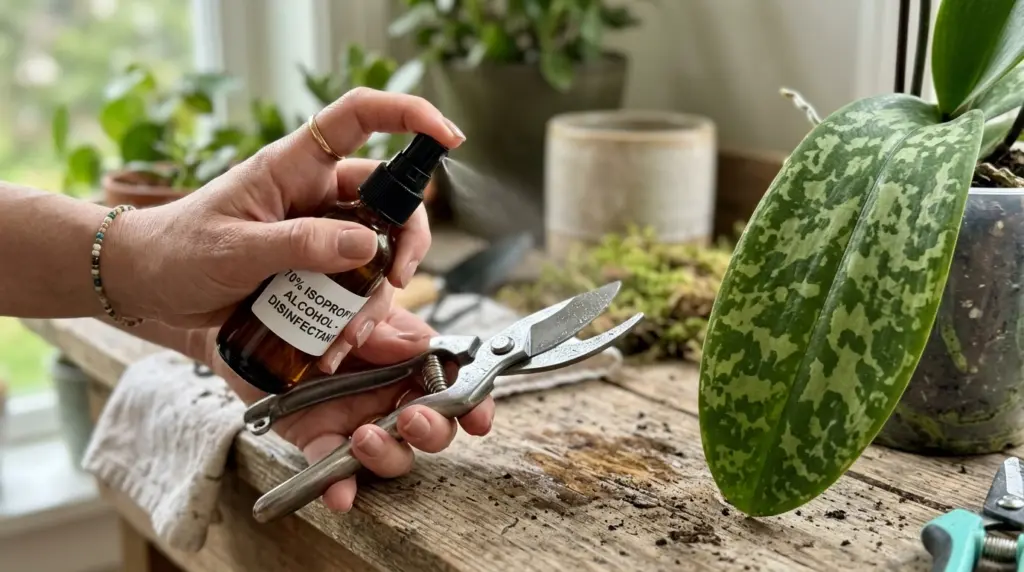
How do I disinfect the tool between each plant to prevent this transmission?
I wipe my scissors and knife with alcohol or a specific solution between each different plant I handle, even if there are no apparent signs of problems, as this basic precaution considerably reduces the risk of accidental virus transmission between healthy plants.
Exercise extra caution with a newly acquired plant of unknown origin.
As I've already detailed in another article about acclimation, I keep all new plants isolated for a few weeks, a precaution that becomes even more critical considering the risk of viruses, since this condition may not present visible symptoms immediately after the initial infection.
How do I choose a reliable supplier to reduce the risk of acquiring an infected plant?
I prefer to buy from nurseries with a good reputation and known hygiene practices, avoiding very informal sources or exchanges without clear provenance, since this initial choice already considerably reduces the risk of bringing viruses into my collection.
A symptom that can appear even when the plant doesn't seem sick in any other way.
A plant infected with a virus can continue to grow and even flower normally for years, only showing the mosaic pattern on the leaf, which makes this condition especially treacherous since it is not always obvious at first glance.
How do I decide if it's still worth keeping a plant confirmed to have a virus at home?
If the plant has sentimental value or is rare, I consider keeping it permanently isolated, but in most cases, I assess whether the risk of keeping it indoors is worthwhile versus simply discarding it to protect the rest of the healthy collection.
How do I responsibly dispose of an infected plant when I choose this option?
I wrap the material well before discarding it, avoiding any accidental contact with another plant during the process, and I thoroughly disinfect any tool or pot that has come into contact with the infected plant before reusing it for another purpose.
I've seen another grower make the same mistake of sharing tools without disinfecting them.
An acquaintance lent me his own pruning shears without disinfecting them between plants during a visit to another grower, a risky habit that reinforces why I always insist on using or bringing my own disinfected tools when visiting someone else's collection.
How I reinforced my own hygiene routine after learning about this risk.
I started keeping a small disinfection kit always nearby during any maintenance of the collection, ensuring that alcohol is readily available between cuts, without having to remember to get the product from another room in the house.
Recording any suspected viruses in my grow notebook.
I note down in my grow notebook, already mentioned in another article, any suspicious mosaic pattern I notice, even before confirmation by testing. This record helps me monitor whether the symptom progresses and decide more confidently on the necessary next steps.
Insect vector, another transmission factor that I also consider in prevention.
As I have already detailed in other articles about mealybugs and mites, some insects that feed on sap can also transmit viruses from one plant to another, further reinforcing the importance of treating any pest infestation quickly, even if it seems like a minor problem at first glance.
How do I assess the risk before accepting seedlings or divisions from another grower?
I inquire about the origin and overall health of the collection of the person offering the exchange, avoiding accepting material of uncertain provenance without this prior conversation, since the generosity of a fellow grower does not eliminate the real risk of accidentally transmitting this incurable condition.
How do I balance concern about the virus without turning into excessive paranoia?
I maintain rigorous hygiene as a constant habit, but I avoid becoming overly anxious about every small color variation in the leaf, since most cases tend to have a simpler cause, and I reserve real concern for patterns that truly fit the characteristic description of that specific condition.
How can I discuss this topic with other growers without creating unnecessary panic?
When explaining about orchid viruses to those starting out in collecting, I try to balance honest information about the real risk with reassurance, reinforcing that basic hygiene and attention when buying orchids drastically reduce the chance of encountering this specific problem on a daily basis.
Questions I've been asked about viruses in orchids.
Is there any treatment that can cure orchids infected with viruses?
Unfortunately, there is currently no cure available, making prevention through rigorous hygiene and isolation of suspected plants the only truly effective strategy against this specific condition.
Does every striped pattern on a leaf mean the orchid has a virus?
Not necessarily, since some varieties naturally exhibit irregular leaf color patterns as a normal genetic trait, so I recommend laboratory testing before drawing a definitive conclusion about this specific symptom.
Where can I get a lab test done to confirm a virus in my orchid?
Some specialized nurseries or plant diagnostic laboratories offer this service, so I recommend researching available options in your area before discarding or permanently isolating a plant based solely on visual suspicion without proper confirmation.
Learning about viruses in orchids taught me the heightened importance of preventative hygiene, showing that some problems truly require rigorous prevention from the start, since there is no second chance for treatment once the infection is already established in the plant.