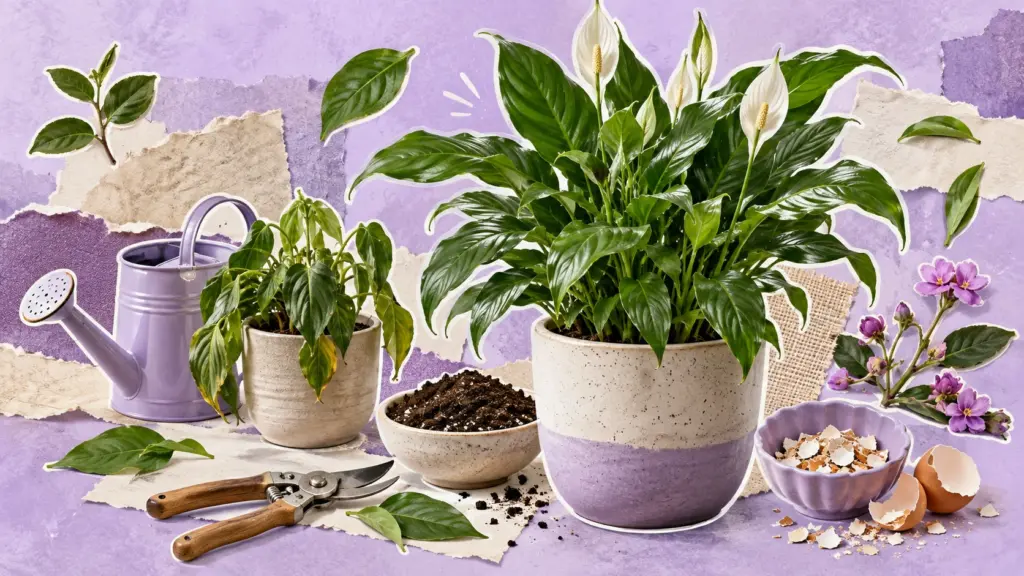
Homemade trick to revive plants
See the homemade trick, learn how to revive the plant, and understand how to stimulate new flowers.
See the homemade trick Reviving a weak plant Stimulate new flowers I WANT TO SEE THE TRICK ➜A home remedy that can help revive the plant.
One of the best-known home remedies for enhancing plant care is to use a simple source of household nutrients in moderation, such as well-dried and crushed eggshells mixed superficially into the substrate. The idea is not an "instant miracle," but rather a light boost within a more complete care routine.
This type of homemade remedy is often interesting because it's affordable, easy to prepare, and helps bring more attention to the plant's routine. But it makes more sense when accompanied by corrections to the pot, lighting, watering, and general maintenance.
In other words: the trick can help, but the real result usually comes from the combination of this reinforcement and the basics done well.
How to apply carefully
- Dry the peels thoroughly before using.
- Grind until it forms small pieces or a fine crumbly mixture.
- Place a small amount on the ground.
- Gently mix on the surface, being careful not to damage the roots.
- Maintain the proper watering and lighting routine for the species.
The most important thing here is to avoid exaggeration. Too much quantity doesn't necessarily mean better results.
How to revive a weak plant in a smarter way.
If your plant is struggling, before focusing solely on fertilization, it's worth following a simple recovery sequence. This usually works better than attacking several problems at once without direction.
1. Observe the condition of the leaves and the soil.
Very dry, yellowed, or wilted leaves can indicate different causes. Touch the soil, check for drainage in the pot, and observe if it receives enough light. This simple diagnosis can change everything.
2. Perform a light cleaning.
Removing dry leaves, damaged branches, and clearly compromised parts helps the plant direct energy toward what can still grow. Light pruning can provide important breathing room.
3. Rebalance water and light.
Many plants suffer because watering has become irregular or because the light doesn't match the species' needs. Correcting this is far more valuable than adding any product indiscriminately.
4. Improve the substrate, if necessary.
If the soil is too compacted, poor, or lifeless, the plant may be having difficulty developing. A looser, well-maintained substrate usually greatly promotes recovery.
This is where the homemade trick comes in best: as a support, not as the only solution.
What can hinder recovery?
- Overdoing it with water: Waterlogged roots are a common problem.
- To expose oneself to strong sunlight all at once: A weakened plant may suffer more.
- Using multiple tricks at the same time: This makes it difficult to understand what really helped.
- Expect an immediate response: Recovery takes time.
- Ignore the species: Each plant responds in a different way.
Often, haste is what sabotages the process the most. Taking good care also means respecting the plant's time.
How to encourage new flowers
After the plant begins to recover, the next desire is usually to see flowers again. And that makes sense. But flowering doesn't depend solely on a "secret ingredient." Flowering generally happens when the plant is more balanced and receives the right conditions.
This means combining good light, well-adjusted watering, pruning when necessary, balanced nutrition, and a favorable environment for the species. When these factors are in place, the plant tends to have more strength to form new buds and sustain flowering.
Habits that can help with flowering
- Ensure adequate light for the plant;
- Water sparingly;
- remove dry or lifeless parts;
- Use homemade supplements in moderation;
- Have patience to allow the natural cycle to respond.
In many plants, flowers appear as a consequence of a more balanced routine—not as an instant response to a single trick.
When less is more
There's a natural urge to "do a lot" when a plant seems to be doing poorly. But in practice, overdoing it with tests often backfires. More fertilizer, more water, more sun, and more homemade remedies all at once can further confuse the process.
The smartest approach is usually to simplify: observe, adjust, reinforce moderately, and monitor the plant's response. This more consistent approach often yields the best results.
Signs that your plant is responding better.
- Firmer leaves with a better appearance;
- Less sagging and less wilting appearance;
- New shoots appearing;
- more vibrant color in the leaves;
- beginning of buds or more active growth.
These signs show that the plant is responding. And that's often more important than seeking radical changes overnight.
Taking better care means observing better.
Ultimately, homemade tricks can be a great ally, but the real difference lies in paying attention. Every plant gives signals. When you learn to read these signals, care ceases to be random and becomes much more effective.
And that's what really helps revive a plant: less haste, less excess, and more consistency in the basics.
When you correct the basics and use balanced home reinforcement exercises, recovery tends to happen much more naturally.
I WANT TO RECOVER MY PLANT ➜Frequently asked questions about homemade plant remedies.
A simple supplement, such as dried and crushed eggshell, can be used sparingly to support general care.
No. The result usually also depends on proper watering, light, substrate, and maintenance.
Ideally, don't overdo it. In gardening, excess isn't always helpful.
Firmer leaves, new shoots, and an overall improvement in vigor are good signs.
Yes, provided it recovers well and receives the appropriate conditions for the flowering cycle.
Generally not. Simplifying helps to avoid excesses and to better understand the plant's response.
The combination of good care—adequate light, proper watering, pruning, and a balanced routine—is usually the most important factor.
Home remedies can be a great help, but it's the combination with observation, balance, and consistency that truly helps your plant grow back beautifully.
I WANT TO ENCOURAGE FLOWERS ➜