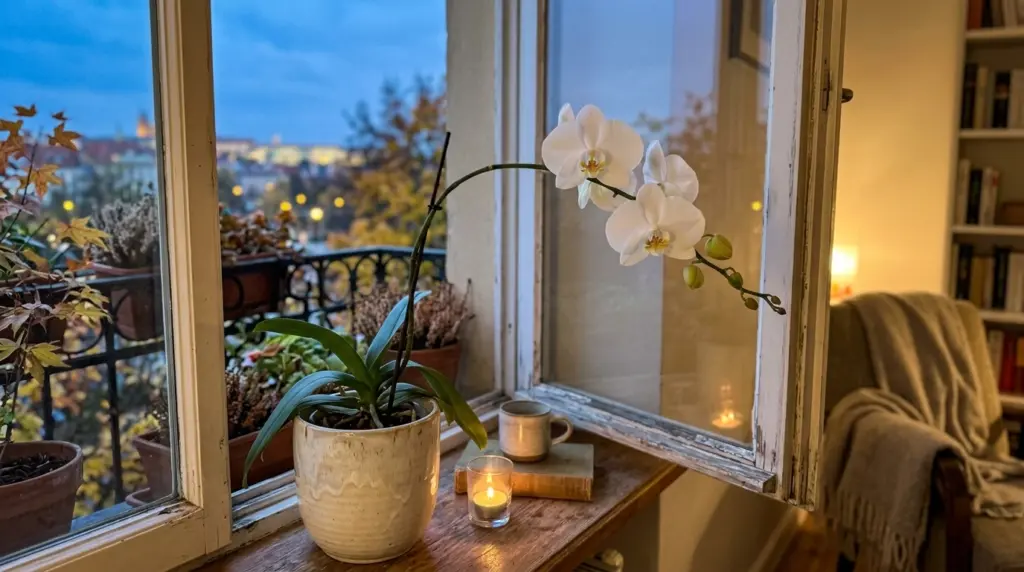
Ideal temperature for orchid flowering
I had a Phalaenopsis that refused to bloom for more than a year, with healthy leaf and vigorous root, but without any sign of new stem. Only after researching I understood that it lacked a specific temperature stimulus, something I had never considered before delving deeper into orchid cultivation.
Why temperature directly influences flowering
Many orchid species, especially Phalaenopsis, need a nighttime temperature drop, usually between autumn and early winter, to receive the necessary hormonal stimulus and start the development of a new flower stem.
Temperature range that I usually seek for the stimulus of flowering
I look for a difference of approximately five to eight degrees between day and night temperatures, over a period of two to three weeks, usually taking advantage of the natural temperature drop that already happens in autumn in many regions.
How do I identify if my region naturally offers this variation
I use a simple thermometer positioned close to the plants, tracking the night temperature over a few weeks in the transition season, confirming whether the natural variation is already sufficient or if I need to intervene in some way to create this difference artificially.
What I did when my house didn't have enough natural variation
At a time when I lived in an apartment with a very constant temperature all year round, because of the central air conditioning of the building, I had to move my most sensitive plants near a window that opened at night, artificially creating the temperature drop that was missing.
Ideal temperature during vegetative growth, outside the flowering phase
Outside the specific stimulus period, I keep my orchids in a more stable range, usually between eighteen and twenty-eight degrees, avoiding extreme variation that could stress the plant unnecessarily during the normal growth phase.
Beware of very low temperature, below ten degrees
Temperature below ten degrees can cause real damage to most home-grown orchids, including leaf spotting and root compromise.In a region with harsher winter, I bring my plants indoors before the outside temperature reaches this dangerous level.
Beware of very high temperature, above thirty-five degrees
Excessive heat, mainly combined with low humidity, also stresses the plant, which can cause flower bud fall not yet open. On a very hot summer day, I strengthen ventilation and humidity around the most sensitive plants to mitigate this thermal stress.
Difference in temperature requirement between different species
Cattleya, already detailed in another article on species, usually tolerates temperature variation a little wider than Phalaenopsis, while Paphiopedilum prefers a cooler and more constant environment. Knowing this specific difference avoids generalizing a single rule for the entire collection.
How positioning in the house affects the temperature the plant receives
Plant near door or window that opens often feels more external variation than a plant in a more protected corner of the internal environment. I consider this difference when deciding where each species is positioned, seeking to balance the specific need for temperature with protection against unwanted extreme.
Patience: how long after the stimulus until flowering appears
After the period of temperature stimulation, it can take weeks or even a few months until the flower stem really arises and develops completely. I learned not to lose patience in this interval, since the internal process of the plant follows a rhythm of its own that can not hurry.
Recording the temperature and the result of flowering over the years
I note in my growing notebook, already mentioned in another article, the temperature I recorded during the transition period of each year, along with the date when each specific plant bloomed later. This history helps me to more confidently predict the expected pattern in the following years.
How do I adjust watering care during the cold stimulus period
During the period of temperature drop to stimulate flowering, I slightly reduce the frequency of watering, since the substrate tends to dry more slowly at lower temperature, and excess water combined with cold can increase the risk of root rot at this specific most delicate time.
Difference between controlled thermal stress and harmful thermal stress
The temperature stimulus for flowering is a controlled and temporary variation, quite different from a prolonged exposure to cold or extreme heat, which causes real damage to the plant.I learned to differentiate these two scenarios, ensuring that the variation sought is always within a safe range, without crossing into the territory of real damage to the health of the orchid.
How do I use the balcony as a natural tool for this stimulus
I take my Phalaenopsis to the balcony at night in the autumn, bringing it back home in the morning, taking advantage of the external temperature drop more pronounced than any variation I could create inside the apartment. It is an extra job for a few weeks, but the result in flowering greatly compensates the effort.
What to do if the flower stem stops growing in the middle of the process
If an already started stem suddenly stops growing, I check first if there has been any recent sudden change in temperature or plant position, since this type of interruption is usually linked to sudden environmental stress.
How do I differentiate lack of temperature stimulus from another flowering problem
Before concluding that the temperature stimulus is missing, I also check if the plant is receiving light and proper fertilization, already detailed in other articles, since the absence of flowering can have more than one combined cause. Only after confirming that the other factors are correct is that I specifically focus on adjusting the temperature as a possible solution to the problem.
Sharing this discovery with other beginner cultivators
After solving this specific problem, I started to mention this tip whenever someone reports similar frustration in a cultivation group, since it is a little known detail among those who are starting and that can make all the difference in a plant that looks healthy, but simply did not receive the right trigger to bloom.
Questions you have asked me about temperature and flowering
Do all orchids need this drop in temperature to bloom?
Not all species bloom in response to another stimulus, such as change in day length, so it is worth researching the specific need of the species you grow before applying this technique.
Can I use the refrigerator to create this cold stimulus artificially?
I do not recommend the refrigerator is usually too cold and dark, and the dry environment can harm more than help. I prefer to always seek a solution that takes advantage of the natural variation of the home environment itself.
After understanding the role of temperature, that Phalaenopsis that had not bloomed for more than a year finally issued a new stem, a reminder that sometimes what is missing for the plant is no longer careful, but the right stimulus at the right time, something that only careful observation over the seasons can really reveal.